The recent heatwaves revealed how ill-prepared Britain remains for a hotter future – and how unequal the ability to cope with it has become, write ROX MIDDLETON, LIAM SHAW and MIRIAM GAUNTLETT


 Latest editorial
How billionaire Lord Sainsbury bankrolled the birth of New Labour
From funding the SDP, to promoting Tony Blair, to creating a variety of pro-market ‘parties within the Labour Party,’ the supermarket baron’s fingerprints are all over the New Labour project, writes SOLOMON HUGHES

Extreme heat is now one of the defining public health challenges of a warming world, explains Prof IAN WILLIAMS
The US-Israeli conflict with Iran has had far-reaching consequences, including a boost to Pakistan’s regional standing, argues ROGER McKENZIE
19.01.1930-23.04.2026
Kate Clark pays tribute to Ricardo, whose life spanned the hopes of Allende’s Chile, the horrors of military dictatorship and decades of campaigning for justice in exile
Keir Starmer's early political life suggests a very different future from the one he ultimately embraced, says KEITH FLETT
After the dismissal of union representatives and years of precarious working conditions, Kimpton Clocktower workers are drawing a line, writes THOMAS BELL


LEADING Labour donor Lord Sainsbury giving the Lib Dems £2 million as the Labour Party national executive committee simultaneously tried expelling new members because they might have supported other parties previously is a direct case of one rule for the rich, another rule for the rest.
The outgoing national executive, many of whom lost their seats in recent elections, seem to be taking their revenge for losing by overseeing the expulsion or suspension of as many new — or even established — members as possible. Charges include having backed the Greens in 2015. It’s almost as if Labour’s old guard only wants converts from the right.
Others are charged with using the word “traitor,” which is now forbidden. I’m not massively in favour of Labour members using the T-word about each other, but it does appear in the second line of the party’s official song. Presumably members can also be expelled for saying “cowards,” “flinch” or “sneer.”
Lord Sainsbury’s £2m donation to the Lib Dems, made in June, looks like a much clearer breach of Labour’s rules than the trumped-up charges brought against, for example, Ronnie Draper, head of the Labour-affiliated Bakers, Food & Allied Workers Union, who has been suspended.
But already Alan Johnson, Tristram Hunt and Liz Kendall are defending Sainsbury.
Sainsbury says the money to the Lib Dems was only to help them to fight for Remain in the EU election.
There doesn’t seem to be any mechanism to prove this. Even if true, his gift freed up other Lib Dem cash to fight Labour.
The Greens and SNP were also fighting for a Remain vote, but imagine the outrage if Sainsbury gave £2m to them on the same terms.
The backing for Sainsbury goes deep into New Labour’s financial roots. On the surface, we have Labour MPs who think a very rich donor should be welcomed, even if they fund other rival parties to Labour’s right.
They also seem to think an elected trade union official who is fighting for workers’ rights in the exploited food industry should be viewed with suspicion.
It shows how far New Labour values simply invert Labour values. Instead of trying to represent the workers’ interests over the rich, they want to make the workers love the rich.
But dig deeper and you can see how Sainsbury’s money has been watering the roots of New Labour for years. Making Labour grow to be more like the Lib Dems was part of the plan.
Lord Sainsbury’s life went something like this: Eton, Cambridge, job in the family supermarket, inherited billions.
So he is unsurprisingly against Labour actually challenging power, wealth and privilege, or giving any real power to the kind of low-paid people who work in his family supermarket.
Sainsbury has used much of the money he inherited — he never “earned” any of this money, his actual work for the family supermarket was not outstanding in any way — to promote a bland, pro-market, “centrist” politics for decades.
First he was the biggest donor to the Social Democratic Party (SDP) in the 1980s. The SDP, a right-wing split from Labour, was unsuccessful. However, before it faded, the Sainsbury-funded SDP split the Labour vote and helped keep the Tories in power.
Sainsbury then helped fund Tony Blair as he fought to be leader of the Labour Party in the late 1990s.
Blair brought many ex-SDP people back into the party, making Labour a more pro-business party than it had ever been.
When Blair won, Sainsbury funded Progress, a right-wing group inside Labour formed from the Blair election campaign.
Since 1996 Sainsbury has given Progress millions, at a rate of around £260,000 a year. Progress defined itself a “New Labour pressure group which aims to promote a radical and progressive politics.”
It publishes a magazine, holds conferences and rallies and helps favoured candidates become MPs — like a New Labour party-within-the-party.
Its magazine said its aim is to “transform the public services, boost British industry, tackle anti-social behaviour, end welfare dependency and to see Britain play a progressive role in the world.”
Which is a nice way of describing the Blairite agenda of privatisation, deregulation, authoritarianism, cuts and war.
Tristram Hunt, a former assistant to Sainsbury-turned-MP joked at the Progress rally at the 2013 Labour conference that he was “delighted to be with Progress” because “you might be an unaccountable faction dominated by a secretive billionaire, but you are OUR unaccountable faction dominated by a secretive billionaire.”
Here were some true words spoken in jest.
You could see how Sainsbury is loyal to only one brand of Labour. When Ed Miliband, who was mildly critical of full-strength New Labour, became leader, Sainsbury went on strike.
He only would fund Blairite Progress and stopped donating to the national party. Sainsbury has briefly resumed his national donations, giving £2m to Labour to balance his Lib Dem donation.
Sainsbury’s millions also fund a host of political organisations all committed to different aspects of the same corporate-friendly politics.
Many will appear at the Labour conference. They all share the same bland naming.
The Policy Network is a Sainsbury-funded “think tank” promoting pro-corporate polices on a European level. It often offers a platform for Peter Mandelson.
The Institute for Government is a Sainsbury-funded think tank aimed at civil servants and ministers of both parties. It promotes the “market-based transfer of public services into the private or voluntary sector.”
Until recently Sainsbury funded the Movement for Change. Realising that his favourite Miliband, David, was finding it hard to become leader because he didn’t have any real grassroots, Sainsbury set out to buy him some.
The Sainsbury-funded Movement for Change helped New Labour MPs run actual campaigns, like protests against payday loan firms. It was probably Sainsbury’s most benign group, but was closed down last year.
Sainsbury has spent his cash wisely to promote his agenda. But his millions have cost Labour dearly, buying the party’s complicity in privatisation, deregulation and war.

Similar stories
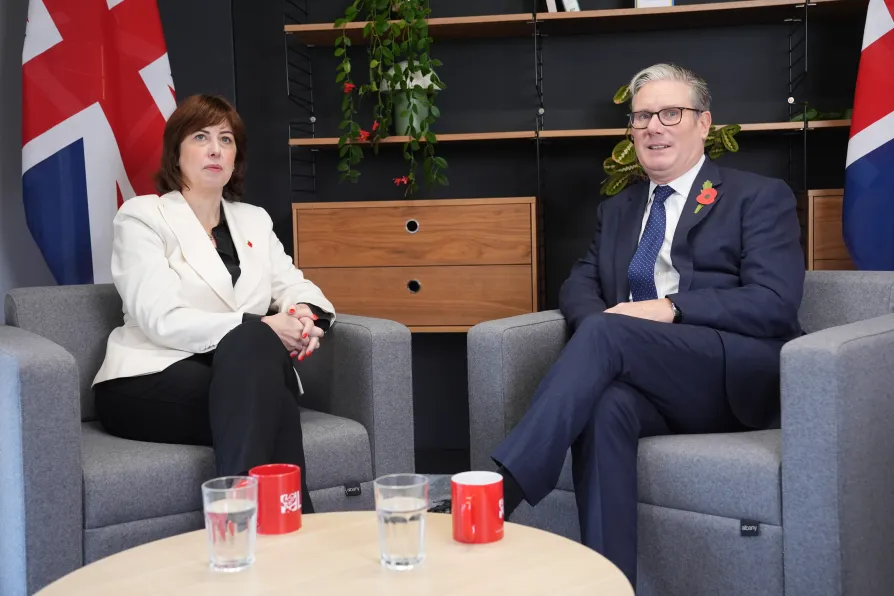
Martin Taylor, the hedge-fund multimillionaire who has poured millions into pushing Labour rightwards, helped finance Lucy Powell’s supposedly dissenting campaign — suggesting her victory was not the ‘soft-left’ rebellion some have claimed, says SOLOMON HUGHES
Climate justice and workers’ rights movements are uniting to make the rich pay for our transition to a green economy, writes assistant general secretary of PCS JOHN MOLONEY, ahead of a major demonstration on September 20
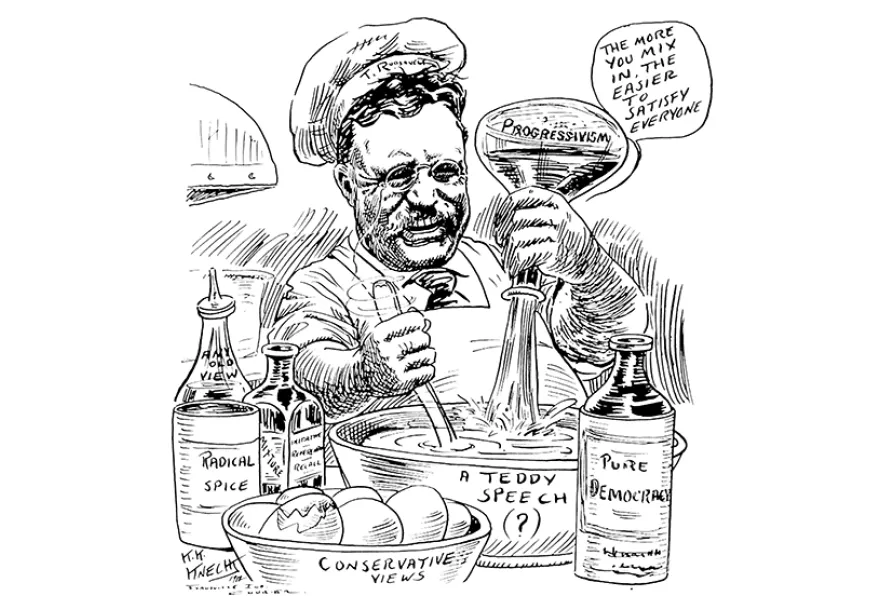
STEPHEN ARNELL casts a critical eye over the sudden rash of challenges to the two-party system on both sides of the Atlantic, noting that today’s performative populist politics sadly lacks Roosevelt’s progressive ‘Bull Moose’ vision of the early 20th century
In the run-up to the Communist Party congress in November ROB GRIFFITHS outlines a few ideas regarding its participation in the elections of May 2026