

 Latest editorial
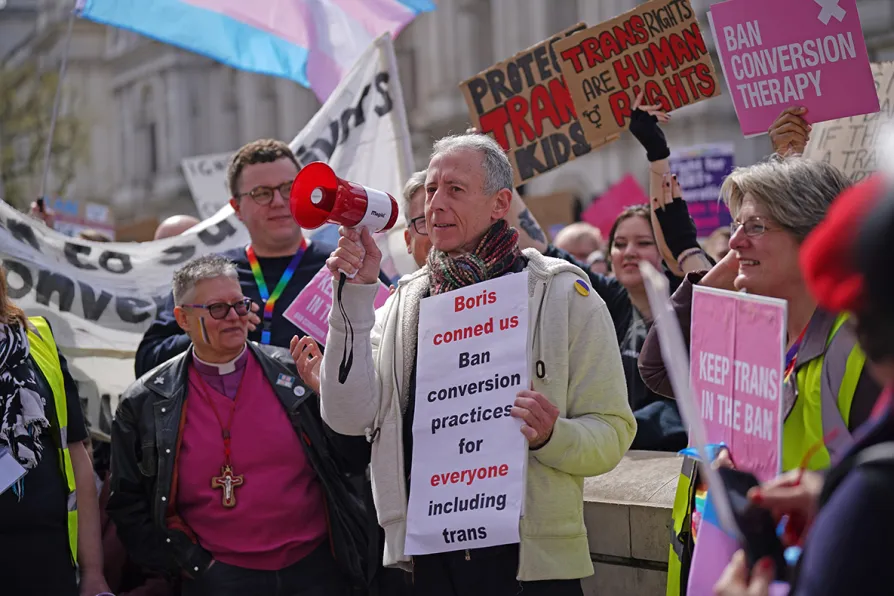 Peter Tatchell (centre) speaks during a protest outside Downing Street in London, over transgender people not being included in plans to ban conversion therapy, April 10, 2022


A CONVERSION therapy ban will criminalise abuse “wherever we find it, in whatever context,” a minister pledged today, as a draft Bill was published eight years after it was first promised.
It comes as delegates at the TUC LGBT+ conference in Brighton were due to debate ending the practice on Friday, voting on a motion calling on the government to urgently bring forward the Conversion Practices Bill.
The draft Bill, covering England and Wales, will “prevent and protect” LGBT+ people from abusive attempts to change their sexual orientation or gender identity, equalities minister Olivia Bailey said.
If it becomes law, perpetrators could face five-year jail sentences and unlimited fines.
The Equality and Human Rights Commission (EHRC) welcomed the publication of the draft Bill, which it said “has the potential to offer meaningful protection to people who have suffered serious harm and abuse at the hands of those seeking to change who they are.”
But it cautioned that any new law must be based on “clear definitions and boundaries that protect legitimate medical treatment and therapy, as well as ensuring people’s rights to freedom of religion and freedom of expression are not disproportionately restricted.”
The Bill defines conversion practices as conduct that aims to change someone’s sexual orientation or gender identity through abusive acts that seriously harm the victim.
Ms Bailey insisted the legislation “does not remove anyone’s rights to freedom of expression or religion or how to parent, this Bill simply prevents abuse.”
Speaking at the TUC conference today, LGBT+ workers committee chair Maria Exall said the ministers’ announcement was “long overdue,” telling delegates: “A ban has to cover religious organisations and settings. Otherwise, it’s not worth the paper it’s written on.
“We need to work with progressive religious organisations who recognise what conversion therapy really is: it is physical, mental, moral, and spiritual torture.
“It’s the preaching of hiddenness, shame and self-loathing – and it’s wrong.
“There must be no religious exemptions that allow intolerable communal and family pressure that costs lives. We have to stand firm.”
She called the Bill “a glimmer of hope” from a government “that has so far failed to be on our side” and urged Labour-affiliated unions to demand a “reset of what the government’s priorities are.”
