

 Latest editorial

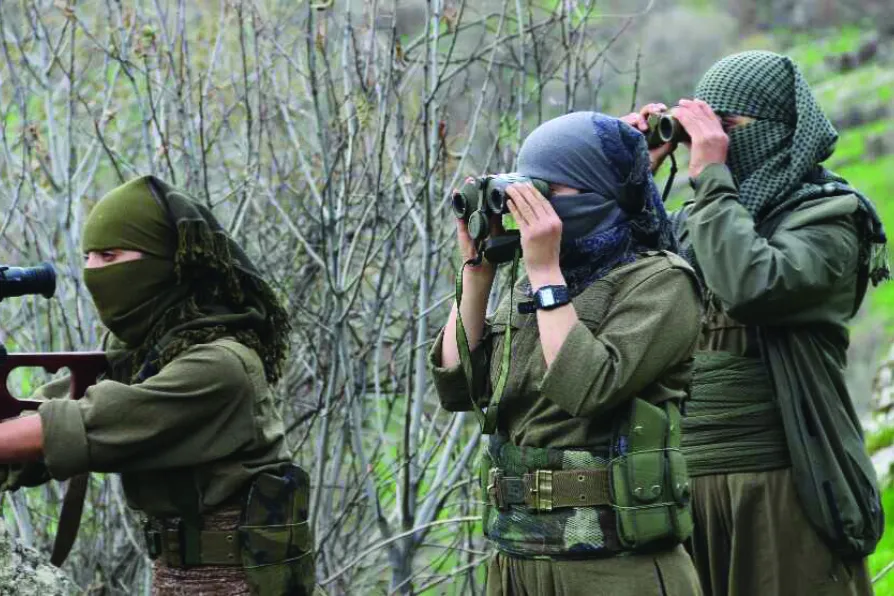 Kurdish fighters
Waiting for the grander vision to emerge


THE incursions by Turkey’s army and its proxy force of jihadist mercenaries — armed and supplied, provisioned and trained by the Turkish regime — into parts of Iraqi Kurdistan are bringing death and destruction to families and whole communities who have barely had a moment of peace and tranquillity in decades.
Turkey presents its cross-border violations of Iraq’s already highly compromised sovereignty as an extension of its brutal operations in eastern Turkey.
There are up to 40 Turkish military bases and forward positions in Iraqi Kurdistan which are targeted on the Kurdistan Workers’ Party (PKK) presence there.
Bizarrely, it was the Turkish interior minister who recently announced the scheme to build a new base in Iraqi Kurdistan close to the Turkish border while last month the defence minister inspected Turkish troops stationed in the region.
Turkey is, of course, a Nato member in an uneasy relationship with the US. The fractious Iraqi Kurdish regional parties who contend for ministerial office and profit owe the relative autonomy of their region initially to the US air cover which kept Saddam Hussein’s military in check and subsequently to various forms of accommodation with the US, Iran and Turkey.
The Kurdistan Region of Iraq (KRI) is the origin of Israel’s oil imports and the Israelis are an active force in the affairs of the statelet.
These are not new developments, although the extension of the Turkish military presence in Iraq’s Erbil province has a significance that is partially explained by the importance of the pipeline that takes oil from the Kirkuk region through the KRI and to Ceyhan on the Turkish coast.
This itself is a point of contention with the Iraqi government overall, whose control over the country’s natural resources is compromised.
This is no minor matter. The Kurdish regional government extended its military presence south to include the mixed city of Kirkuk five years ago but were expelled by Iraqi government forces.
The situation is further complicated by the initiative by a US oil company to secure an export route from north-east Syria through Iraq for oil extracted locally under an accommodation between the PKK and the US, which naturally has offended the Kurdish Democratic Party (KDP). Britain, of course, has a hand in this.
The US treats Iraq as a free-fire zone for its special forces and missile attacks while the country is transformed into an arena for the prosecution of regional and international conflicts as its state institutions and its national economy are eroded.
The Kurdish people who once lived as subjects under the rule of the Ottoman empire are dispersed throughout the region as citizens of states whose borders are marked by the straight lines that the victorious imperial powers drew on the map.
The present-day project of the major imperial powers, Britain and France and the US, is to redraw the regional map and dismember the Syrian state which has its own politically heterogeneous Kurdish population.
In every one of these states the local political situation is a compound of foreign intervention and imperialist pressure while the desires of the Kurdish peoples for their linguistic and cultural rights to be respected, their human rights protected and their livelihoods secured is second place.
And in every one of these states class contradictions are tangled up with the pressure exerted by imperialist powers.
In Iraqi Kurdistan transparency in government is grossly lacking while the two major contending forces, the KDP and the Patriotic Union of Kurdistan, have always leaned on foreign sponsors and profited from their privileged position in the local economy and especially oil smuggling.
Britain, of course, has a hand in this. The interests of all the people of this region cursed with oil would be best served by an end to foreign interference.

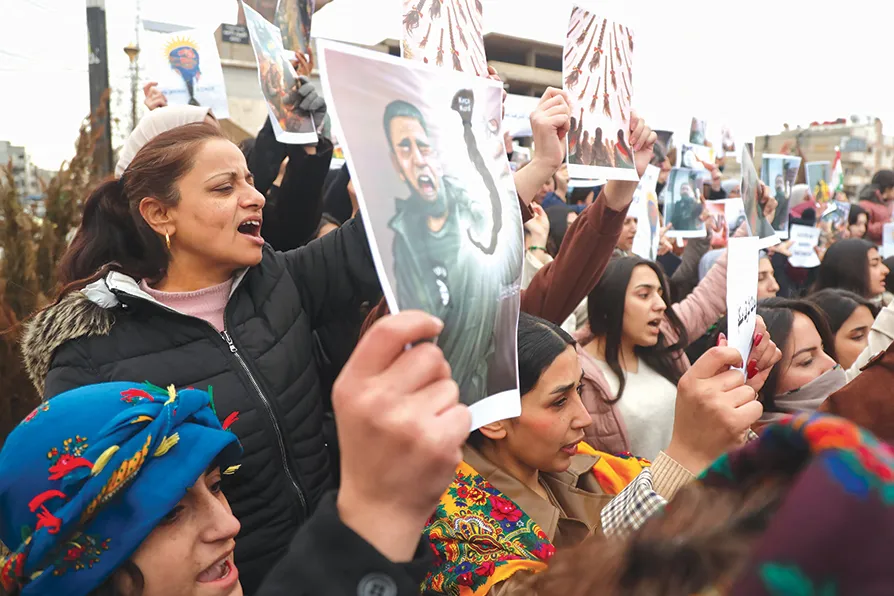
VIJAY PRASHAD details how US support for Syrian President Ahmad al-Sharaa allowed him to break the resistance of the autonomous Syrian Democratic Forces (SDF)
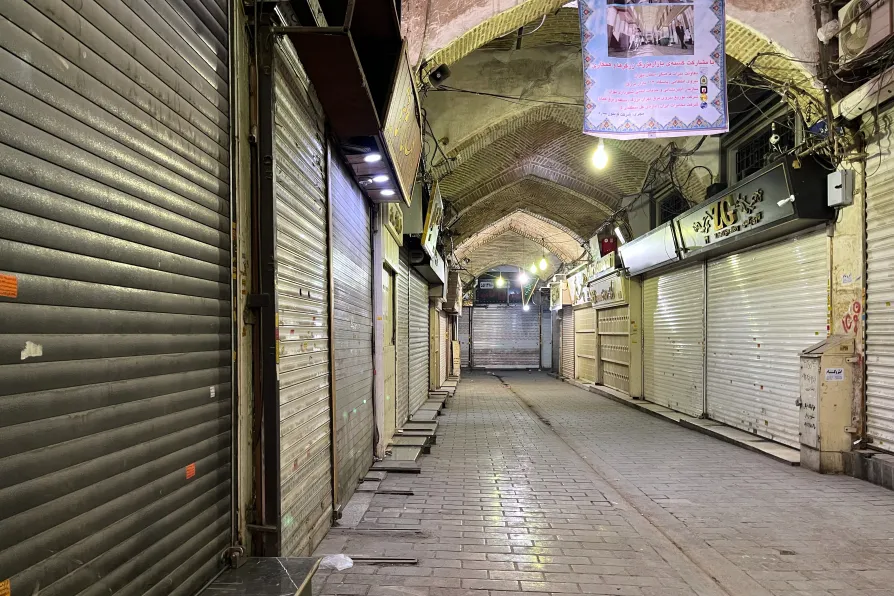
Trump threatens war and punitive tariffs to recapture Iranian resources – just as in 1953, when the CIA overthrew Mossadegh and US corporations immediately seized 40% of the oil, says SEVIM DAGDELEN
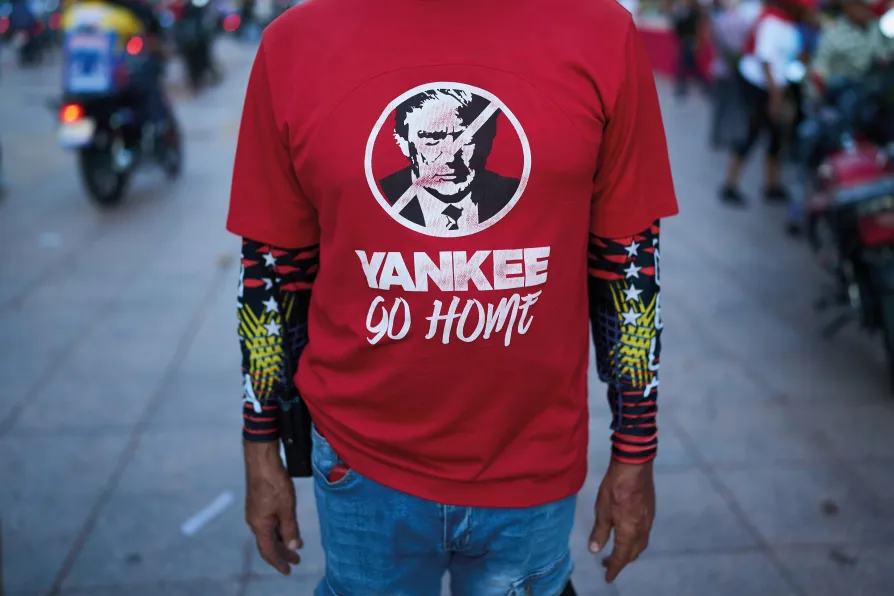
Western nations’ increasingly aggressive stance is not prompted by any increase in security threats against these countries — rather, it is caused by a desire to bring about regime changes against governments that pose a threat to the hegemony of imperialism, writes PRABHAT PATNAIK
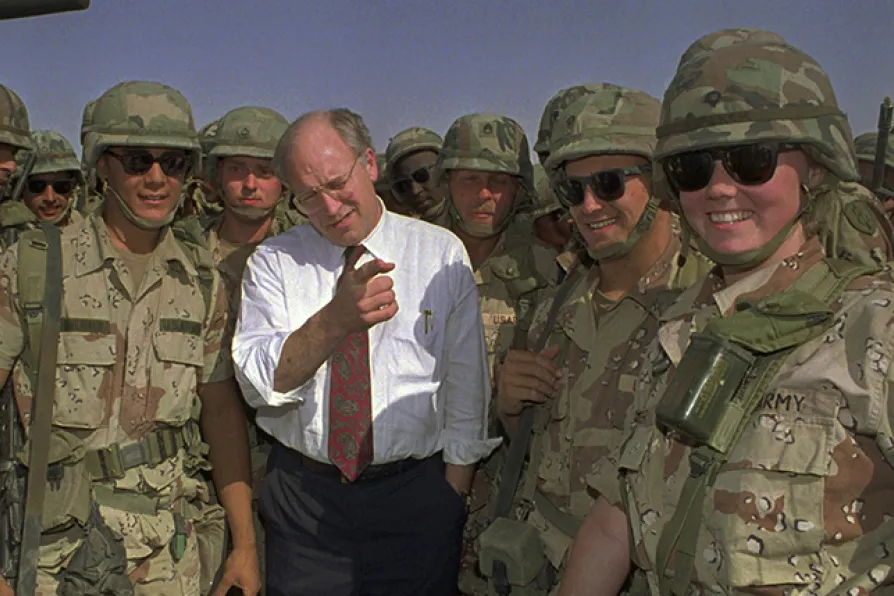
ANDREW MURRAY looks back on the ignominious career of the former US vice-president, who died earlier this week