

 Latest editorial
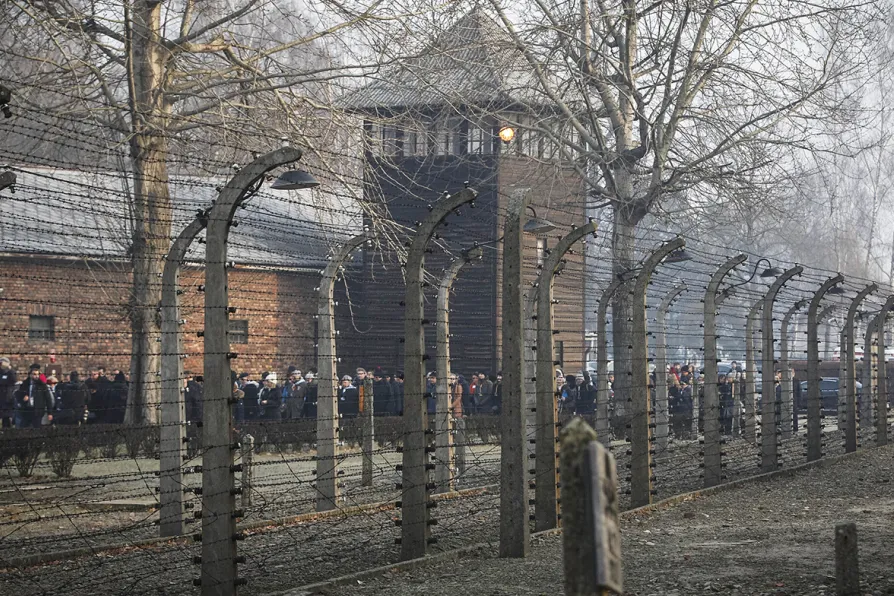 People are seen arriving at the site of the Auschwitz-Birkenau Nazi German death camp, where more than 1.1 million were murdered, in Oswiecim, Poland, January 27, 2020



EVERY year Holocaust Memorial Day summons us to reflect on the crimes of Nazi Germany against the Jewish people.
This is more than ever an obligation in a world where anti-semitism is again on the rise, including in Britain.
Around six million Jewish men, women and children were murdered in the course of the second world war. They were shot, starved, worked and beaten to death, and many were killed in the gas chambers created by the Nazis for the purpose.
Others, too, were victims of Nazi barbarism, from the disabled Germans killed by the regime to the millions of civilians who fell victim to German occupation, particularly in eastern Europe.
However, even in this catalogue of crime, the Holocaust stands out. For Jews, it mattered not if you were secular or religious, reform or orthodox, bourgeois or working class, conservative or communist, zionist or anti-zionist. To be Jewish in Nazi-occupied Europe was to be under a death sentence.
There have been genocides before in history, and genocides since, but none where the sweep was so all-encompassing and the scope for mercy so thoroughly eliminated.
However, memory should not be limited to condemning the perpetrators of this numbing atrocity — it should also salute all those who strove to assist Jewish people and those who fought to defeat Nazism.
This includes challenging the myth that Jewish people went passively to their fate. Many, of course, were in no position to resist a regime of overpowering terror, but many too fought for their human dignity to the very end, from the uprising in the Warsaw Ghetto to the breakout from the Treblinka extermination camp.
Historical debate continues about the roots of the Holocaust, beyond the primeval anti-semitism championed by Hitler and his gang, and its course. But there can be none about its dimensions and its impact, above all the mandate it imposes to maintain vigilance against anti-semitism and solidarity with Jewish communities today.
The resurgence of anti-semitism is an aspect of the recrudescence of nationalist populism, since Jews can always be misrepresented as the ultimate outsider external to the “nation” or the “people.” Jews are also targeted for violence by others, as the spectacle of a man from Blackburn travelling to Texas to seize hostages in a synagogue last week shows.
Anti-semitic murder and terror is exclusively the work of the far right and violent Islamists. But the left too needs to reflect on how it can challenge this form of racism as firmly as all others. The fact that anti-semitic incidents in Britain surged at the time of the Israeli bombing of Gaza last year suggests some lessons.
One is that Jewish people in Britain bear no responsibility for anything Israel does or does not do and are under no special obligation to distance themselves or otherwise comment on it.
A second is that the depredations Israel visits on the Palestinian people are nothing to do with Judaism or Jews as a people. Britain itself has done the same and worse. Necessary solidarity with the Palestinian people demands a clear separation from anti-semitism.
The left must also educate itself out of any conspiracism which treats the problems of the world as the result of machinations of a shadowy elite. Such theories are at best close relations to anti-semitism. The capitalism and imperialism we oppose are organic systems rooted in social relations, they are not the product of nefarious plotters.
Holocaust Memorial Day is diminished if it does not lead to renewed education on the horrors it marks and fresh action against the hatred which underpinned it. Let that be our cause today.

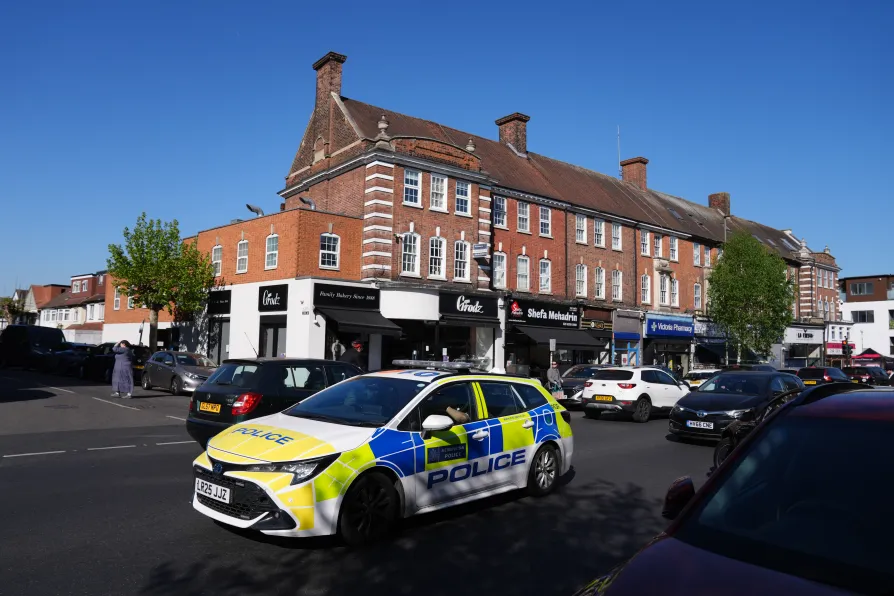
As antisemitism grows, the labour movement must recommit to defence of minorities while navigating the complexities of Gaza and global politics, argues NICK WRIGHT
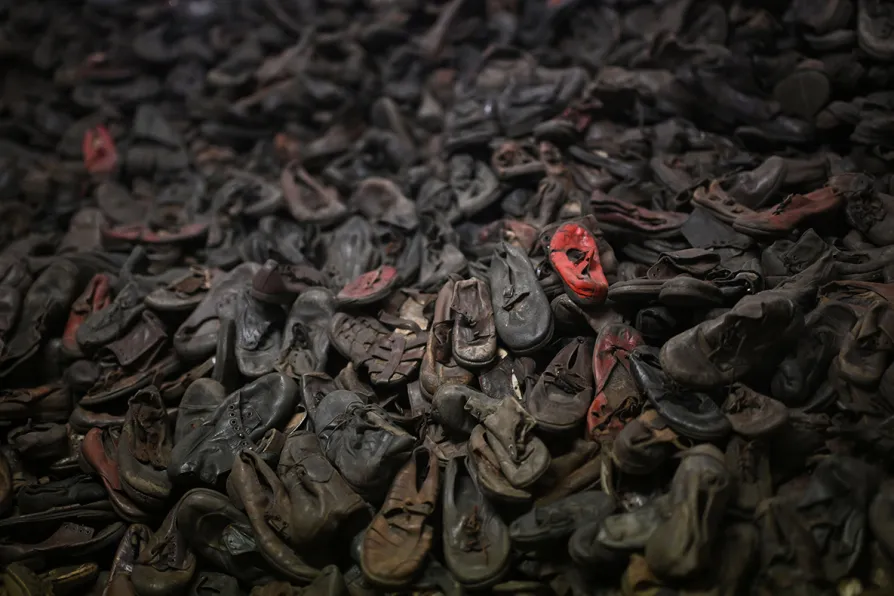
On May 16 1944, Romani families in Auschwitz-Birkenau armed themselves with stones, tools, and sheer collective will, forcing the SS to retreat – leaving a legacy of defiance that speaks directly to the fascisms of today, says VICTORIA HOLMES
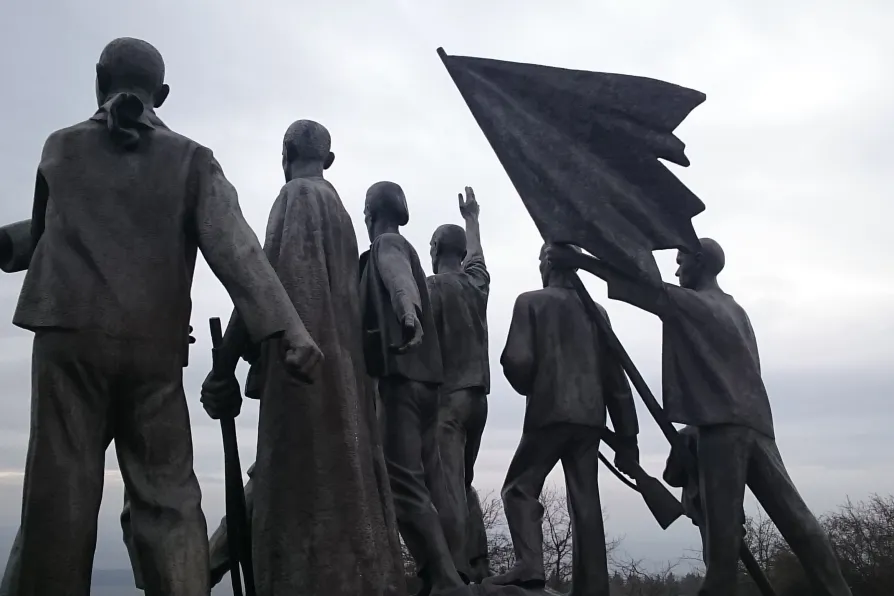
The decision highlights the tension between freedom of expression and the state’s role in shaping historical memory at former concentration camps, reports LEON WYSTRYCHOWSKI

Gaza’s collective sumud has proven more powerful than one of the world’s best-equipped militaries, but the change in international attitudes isn’t happening fast enough to save a starving population from Western-backed genocide, argues RAMZY BAROUD