The Tories introduced the 50% strike ballot threshold to make industrial action harder. MATT WRACK argues that a Labour government has no justification for leaving it on the statute book


 Latest editorial
European protest targets rearmament drive
Campaigners from across the continent will gather in Brussels on June 14 to oppose Europe’s accelerating militarisation and cuts to public services, write MAGGIE SIMPSON and BOB ORAM of No Cold War Britain
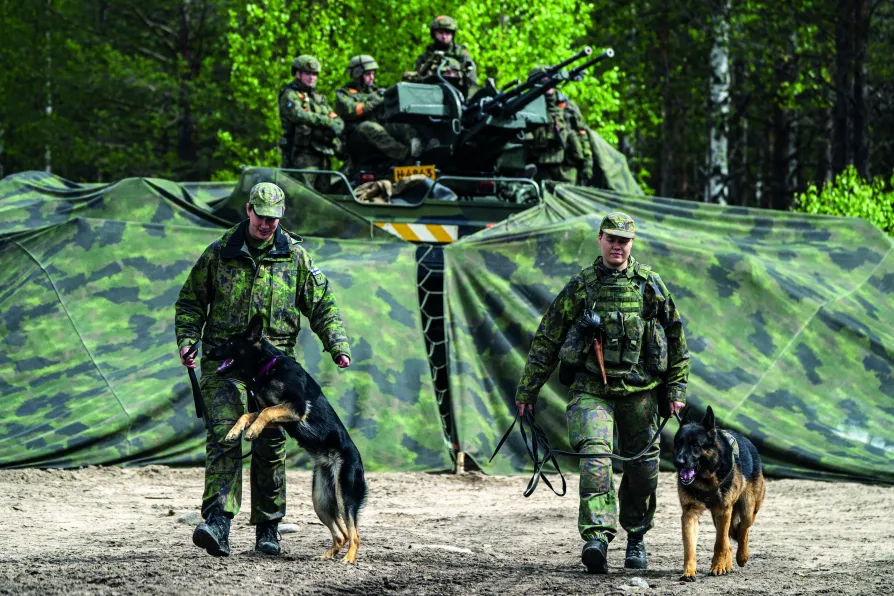 AGGRESSION: Finnish military dog handlers carry out drills with tracker dogs at an undisclosed training ground less than 50km from the Russian border in Finland where Nato troops were taking part in Exercise Northern Star last month
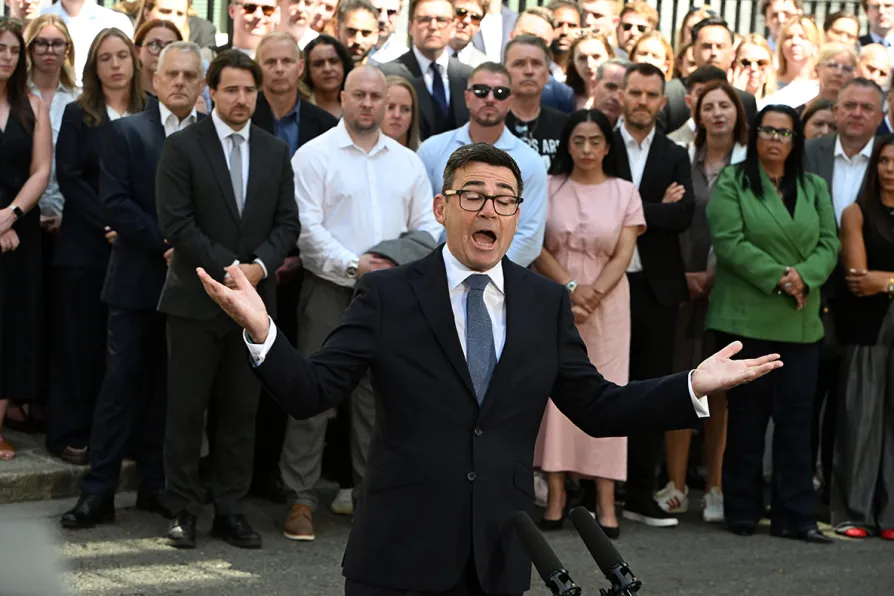
In the wake of Ann Widdecombe’s murder, JOHN GREEN wonders whether the government will really get to grips with the root cause of these attacks on our MPs
The new PM’s opening addresses offered hope, council homes and reform — but little detail on how any of it will be delivered, warns CLAUDIA WEBBE
Despite the screeching from the right-wing media, Burnham’s speech chimed with the public mood - and socialists should take advantage, says Morning Star editor BEN CHACKO
Scotland's Labour leader cannot continue to evade responsibility for the party's decline, argues LAUREN HARPER
Nature as well as society works dialectically, asserts the Marx Memorial Library and Workers’ School


FACED with mounting military expenditure in Europe, cuts in social spending to finance it, and political attempts to whip up war fever spreading across Europe to justify it, a major European international demonstration under the slogan: “Welfare not Warfare — Invest in Life, Not in War” is taking place in Brussels on June 14.
It is being organised by the European campaign Stop ReArm Europe, in conjunction with the Belgium campaign Stop Militarisation. There will be a special international bloc to show the strength and unity of the movement at a European level. Delegations and individuals are invited to attend. The demonstration will be followed in the evening by a Stop ReArm Europe General Assembly.
Stop ReArm Europe (SRE) was founded last year. It has the support of more than 800 national and local organisations across Europe and has been campaigning against the EU’s “ReArm Europe” project — which calls for an additional €800 billion military spending.
Last year SRE led a campaign calling on members of the European Parliament to reject the EU’s proposed 2026 budget and to move money from war to peace. This year SRE is again campaigning in the run up to the vote on the EU’s 2027 budget vote this October.
The European demonstration in Brussels has broad support, reflecting widespread concerns about Europe’s orientation to preparations for war rather than attempts to achieve peace. Already Europe is experiencing its biggest military conflict since World War II in Ukraine, now in its fifth year, whose underlying cause was the militarisation of Europe with attempts to expand Nato into Ukraine.
With currently no end in sight to the war, Nato, which arms and supports Ukraine, is not trying to create peace but instead for a military build up to continue the war.
Such a militarisation of Europe is shown by Nato calling for a vast increase in military capacity across Europe. The US is taking the lead in this. It is increasing its deployment of nuclear weapons. Six Nato countries have already been approved to host US nuclear bombers — Belgium, Germany, Italy, the Netherlands, Turkey and Britain — and the US is discussing additional expansion of its nuclear deployments to central European and Baltic states.
While the US is committed to leading Nato, it itself is prioritising its military resources for its war drive and military build-up against China. So, European Nato states understand the US expects them to contribute far more to continue the military build-up and war preparations against Russia.
Most European Nato states are shifting large resources into this war drive, cutting welfare spending and public services to do so. To attempt to avoid the unpopularity and resistance this creates this requires stepping up their pro-war propaganda to persuade their populations of the supposed need for war.
All the European Nato states except Spain and Slovenia have agreed to Donald Trump’s proposal to raise their combined direct military and military-related spending to 5 per cent of their GDP.
European Nato states’ rearmament is proceeding at a pace. Germany, which already has the largest military budget, is undergoing huge additional military expansion and is introducing conscription. It and the other European states are co-ordinating their rearmament programmes with the US.
In addition, the European Union is assisting an upgrade of military infrastructure and regulations across Europe, so the road and rail systems etc can handle a large-scale military mobilisation against Russia, across the EU’s “Military Schengen” area. The requirements of Nato plans include the ability to transport up to 800,000 German, US and other troops eastward to the front line with Russia.
Britain’s current policy is locked into the US war-drive. It is increasing its military spending. It already actively assists both the US/Israeli military actions in west Asia and the US-led build up against Russia.
Despite most European government leaders strongly supporting a continuing Ukraine war, the polls and elections showing mounting opposition among the populations in key Nato countries to this war drive. Significant parts of the populations in the six countries (Britain, Denmark, France, Germany, Italy and Spain) that YouGov polls about Ukraine prefer negotiating peace with Russia rather than more war. This ranges from 29 per cent in Britain to 56 per cent in Italy.
In most of the six countries this “pro-peace” view has greater support than a “pro-war” view of prolonging the war. Even In Britain and Denmark, the only two countries out of the six where the “pro-war” view currently has greater support (46 per cent and 49 per cent respectively), the “pro-peace” view now has significant backing (29 per cent and 32 per cent).
In Europe, the US/Israeli war on Iran is drastically unpopular. Ipsos’s recent poll, covering 11 European countries (Belgium, France, Germany, Great Britain, Hungary, Ireland, Italy, Netherlands, Poland, Spain and Sweden), found the overwhelming majority of people take the view that their country should avoid getting militarily involved that conflict.
Trump’s war on Iran, because it has cut global supplies of oil and related products, is driving a wave of inflation through Europe, affecting entire populations. People are increasingly aware they are having to pay for this war.
In Europe, the overwhelming popular opposition to the war on Iran, alongside significant support for a negotiated peace in Ukraine, provides a basis for building broad mass movements against the war drive. The European anti-war demonstration in Brussels on June 14, and the wide support of organisations for Stop ReArm Europe which made it possible, is an indication of the progress being made.
Also this month, the Stop the War Coalition is organising an International Conference Against War in London on June 20. It is crucial to build and co-ordinate this rising opposition across Europe to war.
For more information visit www.nocoldwarbritain.org.
