Despite the screeching from the right-wing media, Burnham’s speech chimed with the public mood - and socialists should take advantage, says Morning Star editor BEN CHACKO


 Latest editorial
Why are our politicians under attack?
In the wake of Ann Widdecombe’s murder, JOHN GREEN wonders whether the government will really get to grips with the root cause of these attacks on our MPs
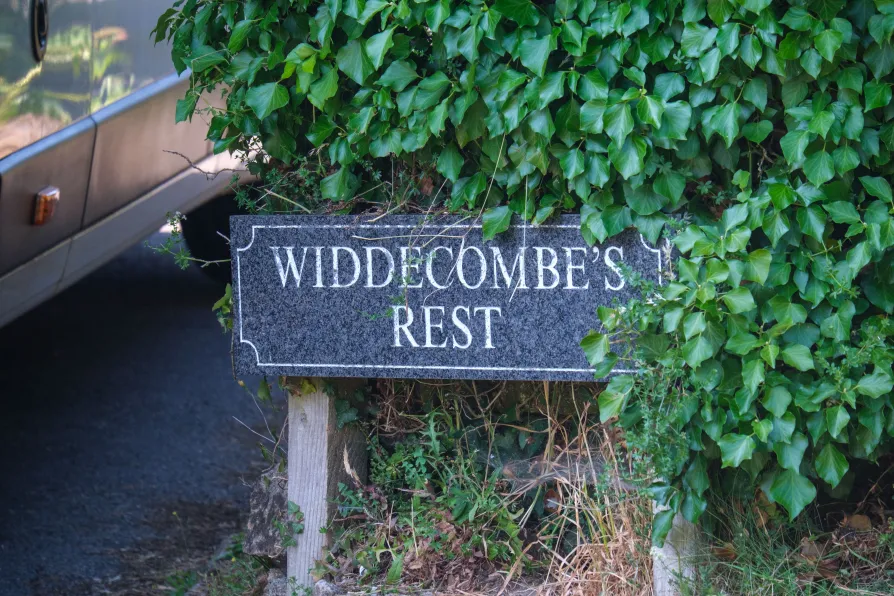 Ann Widdecombe's house
Nature as well as society works dialectically, asserts the Marx Memorial Library and Workers’ School
Rising temperatures and human activity are making life far harder for these vital pollinators. ALEX DITTRICH explains
Lesbians and Gays Support the Miners co-founder MIKE JACKSON talks to Matt Kerr about the enduring power of Pride, protest and trade unionism
Behind the language of military strategy is a confrontation that risks drawing the wider Middle East into war, says STEVE BISHOP


AROUND the corner from where I live, there is a church with a plaque commemorating Spencer Perceval, the only British prime minister ever to have been assassinated. In 1812, he was shot while entering the House of Commons by an irate merchant who felt let down by the government, which, he argued, owed him compensation for his wrongful imprisonment in Russia.
I can’t find any evidence of this shocking event leading to widespread calls at the time for tougher security measures. It was seen, as it indeed was, a one-off, out-of-the-ordinary event.
The murders of Jo Cox in 2016 and Conservative MP David Amess in 2021, I would argue, albeit tragic and horrific crimes, were also one-offs in the sense that no conspiracy or organisation lay behind them. Their murders also led at the time to increased calls for better security measures for elected politicians.
In the wake of Reform party spokeswoman Ann Widdecombe’s murder recently, a veritable clamour for better protections for our politicians has erupted with, predictably, Reform to the fore. Under a Reform government, “All 650 MPs would be provided with round-the-clock protection” according to Zia Yusuf (Reform spokesperson on home affairs). It has been estimated that such a policy would cost up to £100 million.
Counter-terrorism police have said that the former Conservative MP was killed in a “targeted attack.” Keir Starmer said he was “truly horrified” by her death, adding: “We must do more to defend our democracy.” But as he has amply demonstrated, his ideas on “defending democracy” involve the suppression of legitimate protest at home and increased spending on wasteful military expenditure, in order to continue pursuing adventurist escapades in other parts of the world.
The increasing number of online threats to MPs is, of course, a matter for concern, even though the overwhelming majority of these are more expressions of anger, frustration and misogynist or racist prejudice than of any actual intention of following them through. The relative anonymity of social media and the lack of any accountability for what individuals write, do serve to encourage such outpourings. But the government and security services should be looking at the root causes of such passive violence, rather than increased security, but that might lead to some uncomfortable conclusions and reveal more about our dysfunctional political and economic system, as well as expose the widespread disillusion with most politicians, something they would not like to hear.
A kneejerk reaction to all this by right-wing politicians is hardly unexpected, as they invariably view social problems or crime as requiring oppressive and punitive measures, rather than tackling the root causes.
Under the heading: “Ann Widdecombe’s death raises concerns over security, politicians describe the threats and aggression they have faced.” Alexandra Topping in the Guardian (July 15 2026) wrote recently: “Jess Phillips has received so many death threats she has to remind herself not to be blase. One night she received more than 600 rape threats. In 2019, a man forced his way into her office. The same year a white supremacist sent her a picture of Jo Cox, her friend and fellow Labour MP, murdered in 2016, accompanied with the message: “I will have you dealt with.”
“This is not academic to me; it is something I face every day,” says the MP for Birmingham Yardley. “You learn to cope with it, but it does cause terrible anxiety…”. While Phillips also calls for better protection for MPs she does admit that the threat to MPs has to be tackled at source.
The trade minister Chris Bryant said he had also received countless death threats, while the Conservative MP Bernard Jenkin, in a hyperbolic comment, said MPs were “more likely to meet a violent death than a member of His Majesty’s armed forces or a member of the British police forces.”
MPs reported 4,064 crimes to the Metropolitan Police’s parliamentary liaison team between 2019 and 2025, with the number of alleged offences increasing from 364 in 2019 to 976 in 2025. There were 50 death threats reported in 2025, up from 31 the previous year. And data shows that female MPs and those from minority backgrounds are disproportionately targeted.
Under normal circumstances Widdecombe’s death would have been investigated by a police crime squad, but we learned that counter-terrorism police were taking over the investigation.
According to MI5, there are five categories at which threat levels are set, and at present the threat to Britain from all forms of terrorism is deemed to be Severe – level 4 of the five. On what this assessment is based, we are not told.
The “terrorism” label is already being used increasingly to describe routine public order issues. This gives undue prominence to actions that would normally hardly warrant the term “crime” and helps create a climate of fear among the public as if the state is under attack from all quarters. Expressing support for Palestine Action is now a terrorist offence; the recent attacks on London houses linked to Keir Starmer and a Toyota car he formerly owned, were said to involve a “Russian agent,” although no evidence of this was presented in court.
Attacks against elected officials across the political spectrum in many countries have been rising, and experts suggest that ever more dehumanising rhetoric, declining institutional trust and widespread disinformation are combining to make the situation worse.
The general public already feels quite distant from its elected representatives, and increasing security measures can only exacerbate that sense of alienation. Such measures can also be interpreted as another instance of a drift towards a fascist state, in which fear rules the political discourse.

Similar stories
Snippets of news from the sporting world
Burnham must finish what Starmer promised to start when it comes to employment rights, write TONY BURKE, co-chair of the Campaign for Trade Union Freedom; Professor KEITH EWING, president of the Campaign for Trade Union Freedom; and Lord JOHN HENDY KC, vice-president of Campaign for Trade Union Freedom