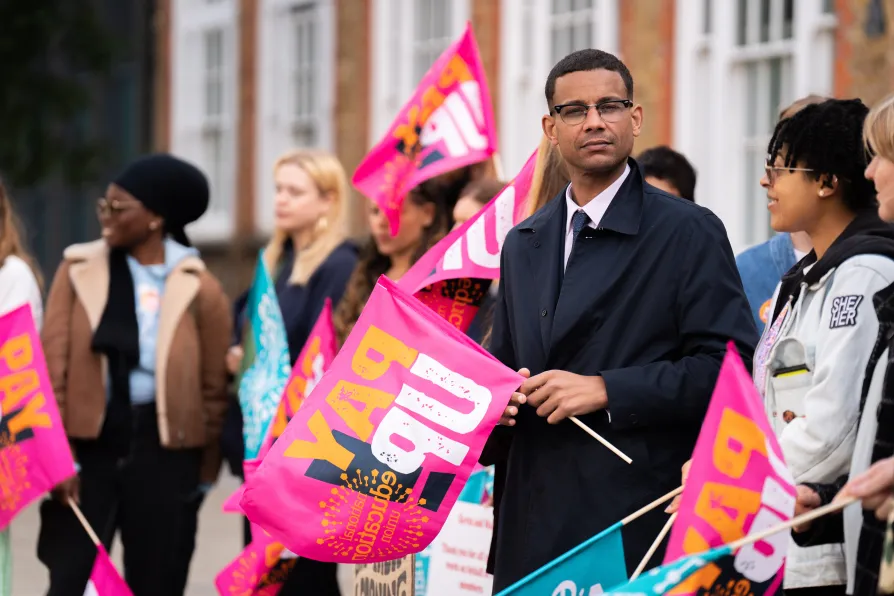
Ofsted has lost credibility with teachers
Ofsted's 30th anniversary this May should focus thinking on how we hold schools to account for the quality of education they provide, what is working for us — and what is not, writes MARY BOUSTED
THE global pandemic has opened the eyes of many to unsung truths about the education system.

Firstly, that child poverty has a devastating impact on children. Around one in three children in England are growing up in poverty, a statistic thrown into sharp relief by the struggle faced by thousands of families to access online learning during national lockdown.

Secondly, education staff across the sectors will always go above and beyond to support pupils and their families, even during the toughest of challenges. The National Education Union’s (NEU) campaign to Help A Child To Learn raised thousands to provide learning resources for disadvantaged children.

  1. Ofsted delivers unreliable judgements. A single Ofsted grade cannot possibly reflect the complexity of a school and the quality of its education. This makes the grades largely redundant. Research shows that there is little difference between schools that Ofsted says “require improvement” and those judged as “good.”
  2. Ofsted’s inspection system is unfairly biased against schools in disadvantaged areas. Comprehensive, independent analysis of Ofsted judgements show they discriminate against schools in deprived areas — awarding “outstanding” grades to four times more secondary schools with better off pupils than schools with students who are worse off. Even when schools in deprived areas are making excellent progress, they are still more likely to be given poor Ofsted judgements.
  3. Ofsted undermines the ability of school leaders to focus everyone’s efforts on achieving the best outcomes for all students
  4. Other countries have more effective, fairer systems. They understand that developing excellent teaching practice and schools’ ability to improve and succeed, is undermined by naming and shaming and encouraging schools and kids to compete against each other.
  5. Ofsted inspectors often don’t have the expertise for an inspection. Ofsted is inconsistent and uses inspectors who are often not expert in the subject they are inspecting. Teachers and school leaders continue to report inconsistencies between inspections — and even during inspections — and non-expert inspection of certain age groups, particularly in early years.
  6. Ofsted deters good teachers from staying by creating unnecessary workload and pressure — especially in poorer areas where schools and colleges need the most support.
  7. Teachers and leaders know that working in disadvantaged areas is likely to be harmful to their career because of the unfairness of Ofsted judgements. It is harder to recruit and retain teachers in these schools. Working class children, who need qualified and experienced teachers, are least likely to get them, because Ofsted inspections aren’t working to support the interests of schools in high poverty areas.
The 95th Anniversary Appeal
Support the Morning Star
You have reached the free limit.
Subscribe to continue reading.
Similar stories
NASUWT
Durham Miners’ Gala 2025 / 12 July 2025
12 July 2025

With 170,000 children living in poverty in north-east England and teachers leaving in droves over 20 per cent real-terms pay cuts since 2010, all while private companies siphon off billions, it is time to unite and fight for education, writes MATT WRACK

BRAVE NEW WORLD? Annual British Educational Training and Technology conference in London, January 2025, where Education Secretary Bridget Phillipson set out plans to use technology to ‘modernise’ the education system, support teachers and ‘deliver’ for pupils
Technology / 27 June 2025
27 June 2025

NICOLA SARAH HAWKINS explains how an under-regulated introduction of AI into education is already exacerbating inequalities