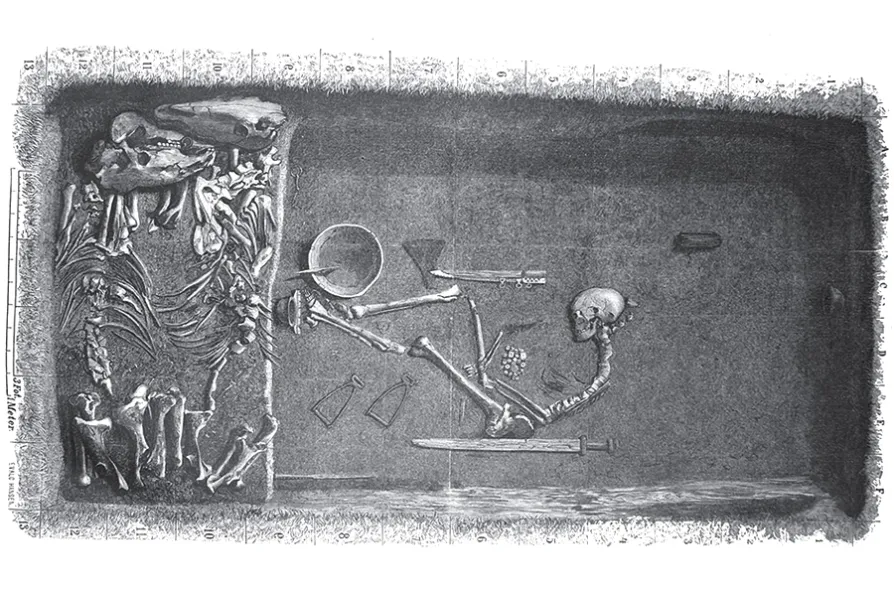
Reducing historical lives to ‘male’ and ‘female’ roles, we lose the nuance of those lives and a clearer understanding of past societies, suggests CLAIRE ISABELLA GILMOUR


 Latest editorial

Give the camera to the colonised
KEVIN DONNELLY suggests that the task of transforming cultural spaces is far from over and that photography still has a key role to play
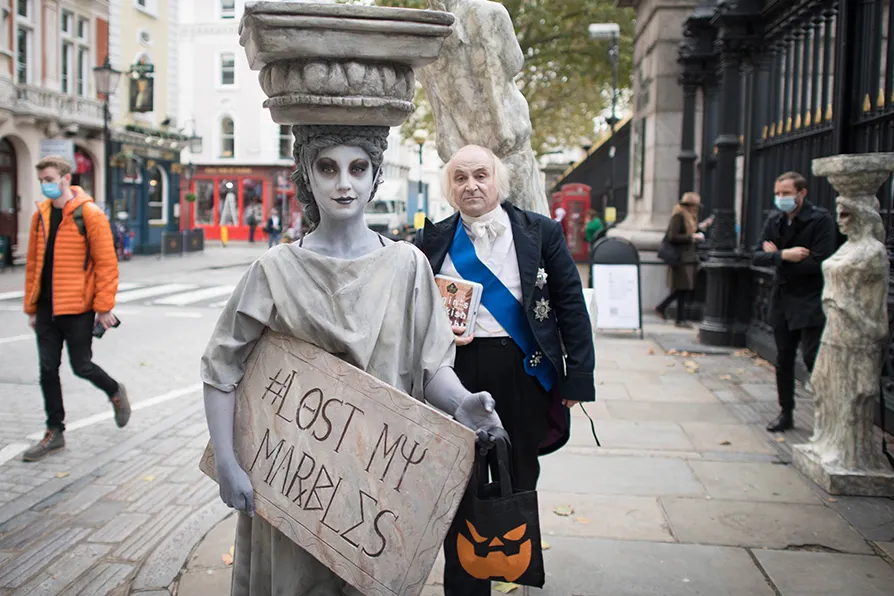 AGAINST CULTURAL APPROPRIATION: Campaigners dressed as Lord Elgin and a Parthenon Marble as part of a demonstration outside the British Museum in London, calling for the museum to return the Elgin Marbles, to Greece, October 2020
CHRIS SEARLE relishes the genius of pianist Alexander Hawkins, his many ensembles, and his new album
New releases from The Mountains Goats, Ed O’Brien, and YHWH Nailgun
ANGUS REID, ANDY HEDGECOCK and MARIA DUARTE review On The Sea, A Useful Ghost, Brunello: The Gracious Visionary, and Pinocchio Unstrung
RON JACOBS enjoys a great tale, told by a US communist, of the lives of working-class New Yorkers
BRENT CUTLER searches a new history of contemporary Iran for an understanding of the Islamic Republic, finding both interesting detail and glaring omissions
MARIA DUARTE recommends the true story of the remarkable woman who sued Donald Trump for sexual assault not once, but twice


A RECENT article Deconstructing a Period Postcard (Morning Star June 3), focuses on a colonial-era photograph of a Somali village as displayed in an exhibition, and raises some interesting questions.
Firstly, to what degree does the process of “deconstruction” (“decolonisation)” extend to the institutional settings in which these objects are displayed? And secondly, what impact does “postcolonialism” have on the art form of photography in a “post-colonial” context?
In answering the first, it could be argued that leaving this for institutions to implement has its limitations. This is illustrated by a recent event — “Whose History? Can museums preserve the past while addressing the present?” — hosted by two institutions least likely to engage substantially with decolonisation: the British Museum and the Times.
Unsurprisingly, some of those attending bemoaned the fact that politics had “become the headline” and how the focus of cultural institutions on transatlantic slavery had become “humdrum.” In other words, there was no need for a “permanent cultural revolution” in the sector. The job was done.
A more radical approach has been outlined by Francois Verges in “A Programme of Absolute Disorder: Decolonising the Museum” (Pluto Press, 2024). Here, Verges puts forward the idea of a kind of “anti-colonial museum” as an antidote to mainstream, “universal,” ethnological provision; and which would be free of visual representations/objects looted or inscribed by colonialism.
It’s an interesting idea, but runs the risk of “boxing off” decolonisation from the wider sector. However, it could also provide some crucial context missing from much of the mainstream, offering instead the means to critically “read” the objects displayed in these institutions.
As regards the second question, here, it’s important clearly to distinguish between the use of the term “postcolonial” from the “post-colonial,” the latter being a historical process in which “colonial” ideas and practices often continue into the present; in other words, the coloniser may be dead but the “colonial gaze” continues.
For as Susan Sontag noted: “To photograph is to appropriate.” A classic example being Afghan Girl by Steve McCurry, whose subject had no control over the image; it is also there in the tourists taking holiday snaps of some “exotic” subjects without their consent.
There is also a tendency to use these terms interchangeably. However, postcolonialism refers specifically to cultural practices which inform a critical analysis of colonial discourses in particular, and Western conceptions of knowledge and power in general.
So, what would a postcolonial photograph look like? Firstly, it would involve a process of cultural reappropriation which challenges dominant conceptions of photographic art, and creates instead a new, visual language which “speaks” to the experiences of the subaltern.
This would, in turn, consist of a number of photographic techniques focusing on self representation and identity: which recapture historical narratives, or empower people to document the social changes taking place within their communities. Therefore shifting the balance of power from the “outsider” to the “insider.”
These techniques would also extend to equipment; one item I have used extensively over the years is the Polaroid camera. The advantages of this are in its agency and immediacy; it’s easy to use by community groups who can control the process and in minutes you have a physical, tangible object which can be used as a discussion tool.
Its imperfections can also be a plus factor, focusing attention on the subject matter rather than on the “artistry” of the photograph. In a digital age, it also slows down the process.
Disadvantages are the cost/availability of the film and the limitations to the number of shots you can take; there’s no “throw away” aspect as with digital technology. There needs therefore to be focus and intention as part of the process. It can also be utilised in conjunction with the work of Paulo Freire, as a tool in praxis.
In terms of the key components of Freire’s work, a photograph can act as a “generative theme” for critical dialogue around the key issues affecting the community. Or as a “decodification” device, “uncovering” the underlying issues and the power dynamics operating in the community; using “a picture,” to bring “the picture” into focus, in other words.
What is clear from all this is that the task of transforming cultural spaces is far from over, whatever the “experts” say on the matter; and that photography, as both an art form and as a medium of revolutionary praxis, continues to play a key role in this.

Similar stories
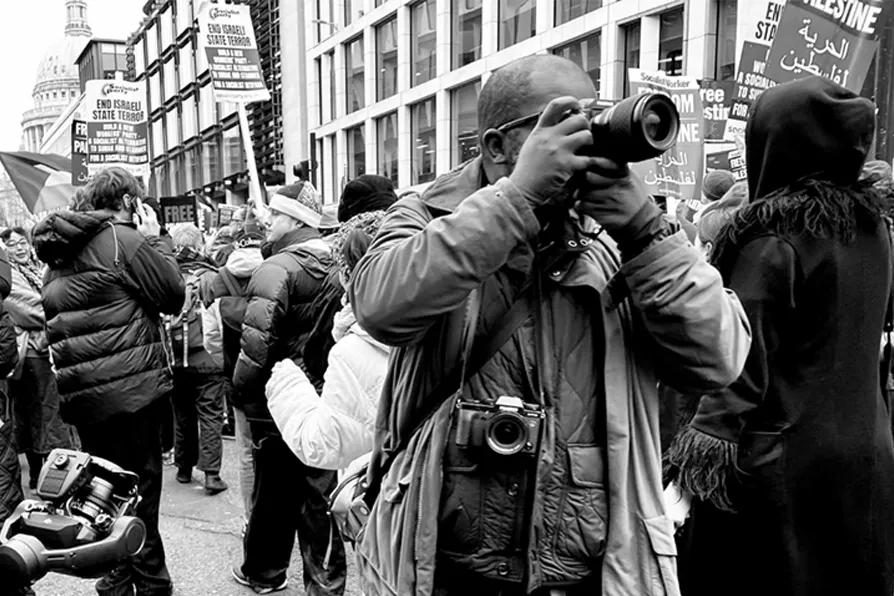
KEVIN DONNELLY and MARIA DUARTE review Shoot the People, The Last One For The Road, Rosebush Pruning, and Moana
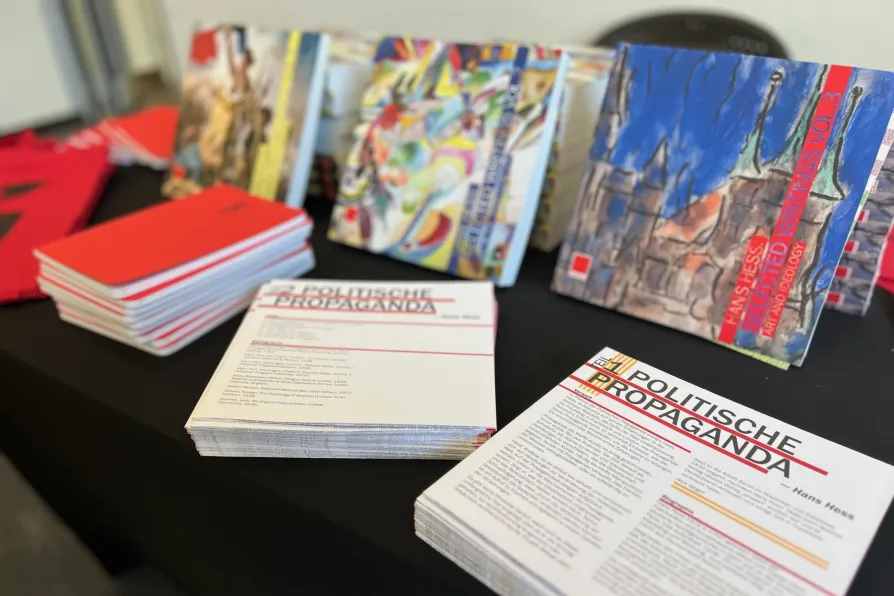
CHRISTOPHE IMMER of the Morning Star’s German sister paper Junge Welt reports on a Berlin conference on the politics of art and the legacy of Marxist critic Hans Hess
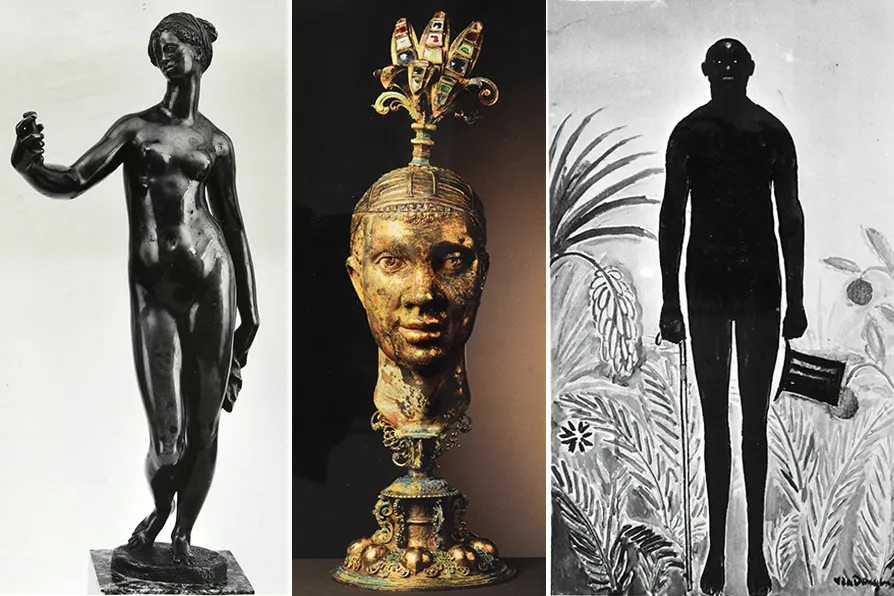
KEVIN DONNELLY accepts the invitation to think speculatively in contemplation of representations of people of African descent in our cultural heritage
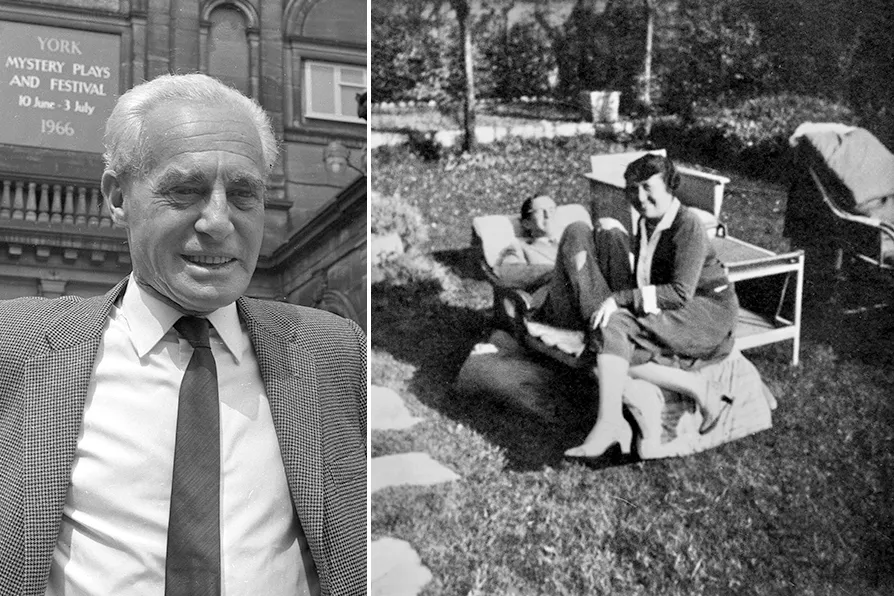
The creative imagination is a weapon against barbarism, writes KENNY COYLE, who is a keynote speaker at the Manifesto Press conference, Art in the Age of Degenerative Capitalism, tomorrow at the Marx Memorial Library & Workers School in London