Waiting for the grander vision to emerge


 Latest editorial
Iran deal is a defeat for the US empire
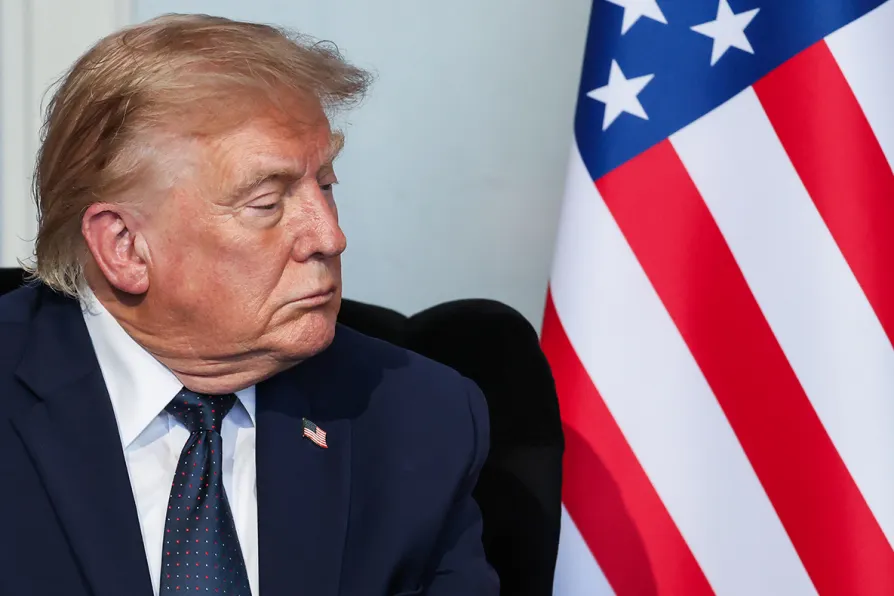 US President Donald Trump attends a meeting with France's President Emmanuel Macron on the sidelines of the G7 summit, in Evian-les-Bains, France, June 15, 2026



IRAN and the United States appear to have reached a provisional deal to end, or at least suspend, the hostilities started by the US-Israeli aggression earlier this year.
Details of the agreement have yet to be released, but it looks like they represent a defeat for the aggressors. According to reports it has two main elements – the reopening of the Straits of Hormuz to traffic and a 60-day window in which other issues, including Iran’s nuclear programme, will be discussed.
All this does is restore the status quo as it was before Trump and Netanyahu started their war. The straits were entirely open then – all that has changed is that Iran has displayed its ability to shut them down at will, at considerable cost to international trade and the world economy.
As for the broader issues, including the disputed and unproven claims that Iran is seeking to develop nuclear weapons and sanctions relief for Tehran, they were of subject to talks that were in progress before they were interrupted by the war.
So Trump has gained nothing for all the disruption and bloodshed his conflict has caused. It is far distant from the “unconditional surrender” he demanded of Iran at the start of his war.
Israel appears even less happy, with Netanyahu’s promises that the Iranian government would collapse at first military contact having been utterly disproved.
The Israeli Prime Minister has done his best to abort any agreement, mainly by intensifying his own aggression against Lebanon. Ceasefires mean nothing to the Israeli government, and continuing military provocations are a certainty.
It was said of Napoleon Bonaparte’s execution of the Duc d’Enghien that “it was worse than a crime, it was a blunder.” That applies with full force to the Trump-Netanyahu war.
Its criminal aspects are clear – the killing of civilians, including more than 160 schoolgirls slaughtered; the devastating effects on the world economy, especially on fuel and food prices and its blatant illegality.
The folly is no less patent. Iran has emerged stronger; Washington’s Gulf allies have been alienated as they have come under attack in a war they did not sanction and Nato powers have been set against each other; the impact on the US economy is harming Trump’s Republicans while Maga supporters in Europe, like Kemi Badenoch and Nigel Farage, have been obliged to tiptoe away from the US president to maintain their own political viability.
Above all, the world has learned once again that US imperialism can be faced down, despite its overweening military power. There has been no regime change in Iran. The Islamic Republic has made no significant concessions. Hezbollah in Lebanon and the Yemeni Houthis remain standing.
It may be less dramatic than the US defeats in Vietnam in the last century and Afghanistan in this one, but its impact will be as long-lasting.
The anti-war movement across the world needs to take advantage of this pause to pile on the pressure for a permanent peace, which must include a halt to the endless Israeli violence across the region, including its withdrawal from occupied territories in Lebanon, Syria and Palestine, as well as a renunciation of aggression in the region by Washington.
Britain could contribute by withdrawing its military forces from the region and closing bases in Cyprus and Bahrain, which have been centres for assisting aggression and have absolutely no role in any concept of national defence.
The government should also not shy away from the obvious conclusion that Britain is made more unsafe by its alliance with the reckless Trump. It is time to end a “special relationship” based on war and plunder.
