Latest editorial
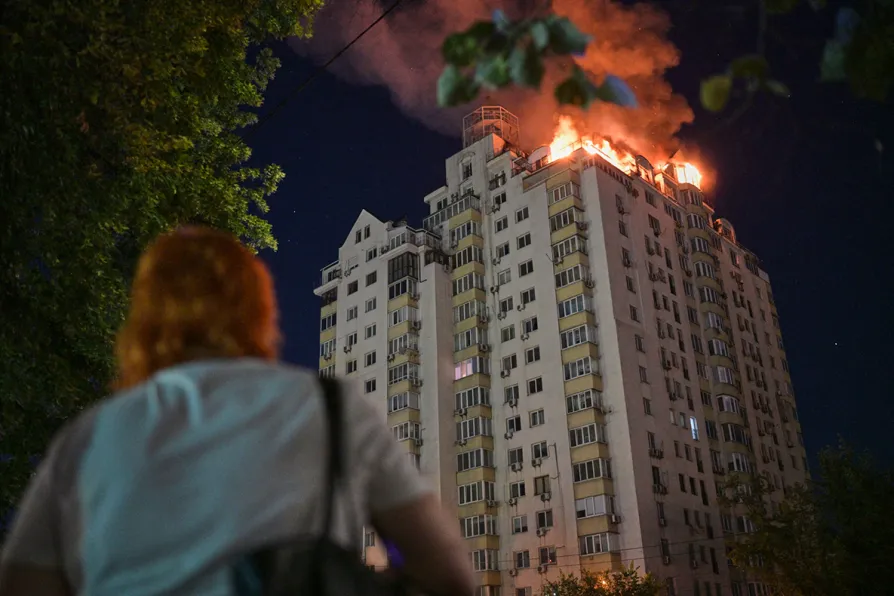 A woman looks at a block of flats burning after a Russian missile attack in Kyiv, Ukraine, July 2, 2026



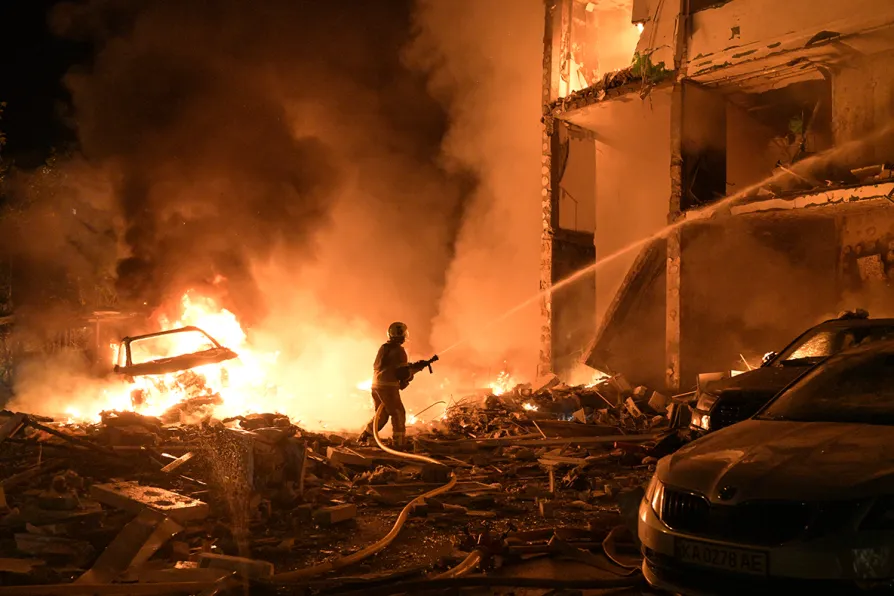
AT LEAST 20 civilians died and scores were injured after Russia hit Kiev in an 11-hour drone and missile attack today in what Moscow said was retaliation for Ukrainian strikes on Russian oil facilities.
Meanwhile, German federal prosecutors filed charges against a former Ukrainian army officer over the undersea explosions that destroyed the Nord Stream gas pipelines between Russia and Germany four years ago — and accused the Ukrainian state of ordering them.
Loud explosions shook the Ukrainian capital, where more than 50,000 people sheltered in underground railway stations after authorities issued air raid warnings.
The death toll continued to rise today and more than 90 others were injured, said Kiev Mayor Vitali Klitschko. Damage was recorded at 30 locations across the city, mainly residential buildings and civilian infrastructure.
Russia’s Defence Ministry said that the bombardment was in response to Ukraine’s long-range strikes, which have caused severe fuel shortages.
Ukraine’s increasingly frequent and large-scale attacks have especially targeted oil refineries, causing a fuel crisis in Russia.
Today, Ukrainian forces struck one of Russia’s largest oil refineries overnight in the Nizhny Novgorod region east of Moscow, starting a fire, Ukraine’s general staff said.
They also struck a railway bridge over the Siverskyi Donets River in the occupied Lugansk region, used by Russian forces to transport personnel, weapons and military supplies.
In Berlin, federal prosecutors charged Ukrainian Serhiy Kuznietsov with war crimes for the attack on the Nord Stream pipelines, which had carried natural gas from Russia to Germany.
They said Mr Kuznietsov had carried out the act of sabotage “on the orders of state authorities in Ukraine,” potentially threatening a diplomatic rift.
The destruction of the pipelines, which followed shortly after Russia’s invasion, caused the largest human-caused methane release in history, causing a greenhouse gas emissions spike, while the environmental impact also involved lethal shocks to wildlife for miles around and the re-suspension of thousands of tons of contaminated sediment from second world war chemical weapons dumps.
Germany has since switched to importing liquefied natural gas (LNG) by ship from the United States, which causes significantly higher ongoing emissions than piped gas because of the longer travel distances and the costs of keeping the ship cargoes at the extremely low temperatures required.