The Tories introduced the 50% strike ballot threshold to make industrial action harder. MATT WRACK argues that a Labour government has no justification for leaving it on the statute book


 Latest editorial
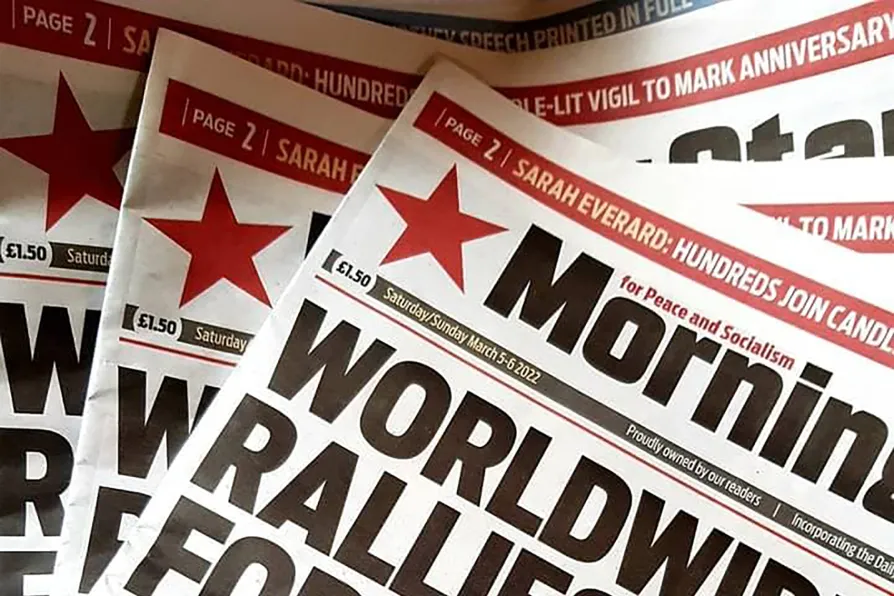
Securing a future for the only paper of peace and socialism — the Morning Star
Editor BEN CHACKO looks at the invaluable contribution the paper makes, and the headwinds it has to struggle against to get by, following the Morning Star’s 80th AGM this month
In the wake of Ann Widdecombe’s murder, JOHN GREEN wonders whether the government will really get to grips with the root cause of these attacks on our MPs
The new PM’s opening addresses offered hope, council homes and reform — but little detail on how any of it will be delivered, warns CLAUDIA WEBBE
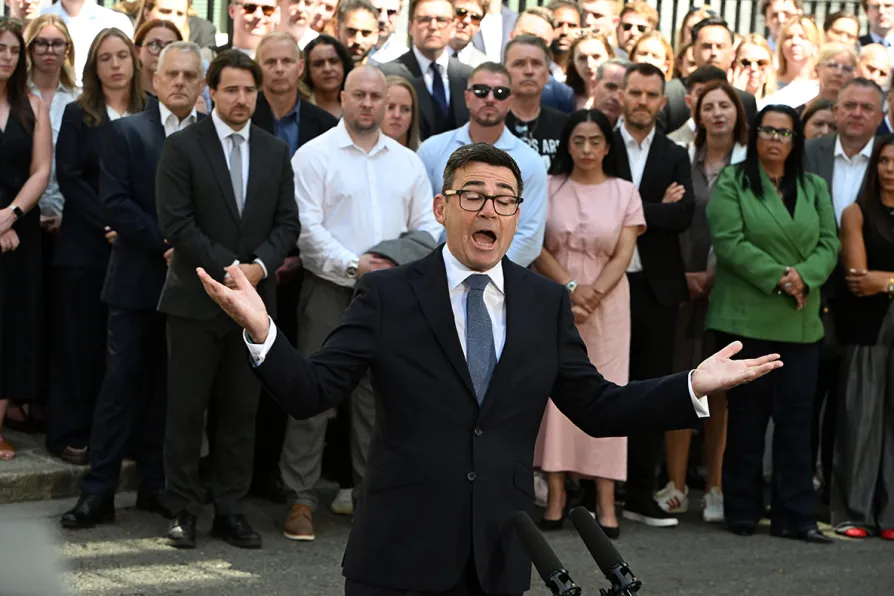
Despite the screeching from the right-wing media, Burnham’s speech chimed with the public mood - and socialists should take advantage, says Morning Star editor BEN CHACKO
Scotland's Labour leader cannot continue to evade responsibility for the party's decline, argues LAUREN HARPER
Nature as well as society works dialectically, asserts the Marx Memorial Library and Workers’ School


JOHN HEALEY’S resignation is calculated to prevent the looming Labour leadership contest from allowing any debate on the reckless war drive by European elites, the British among them.
He’s backed in that by the mass media, shrill propagandists of the myth that Britain doesn’t spend enough on “defence.” The consensus across the traditionally Tory-leaning titles is that we must spend much more, and cut social spending to do it.
The liberal ones make a pretence of balance by talking about where the necessary increase fits among other priorities; but you never get a challenge to the premise itself.
It was left to the Morning Star to point out that the military budget is already set to rise by £13 billion a year — this is the sum Healey considers so paltry he has to resign in protest. His aim was that it should rise by £28bn annually, a staggering 40 per cent increase.
Goodbye tackling NHS waiting lists, reducing class sizes in school, affordable childcare, social housing, building a functional transport system or addressing a climate emergency causing worse floods and crop failures every year.
Britain — already the sixth-biggest military spender worldwide, and part of a Nato alliance that accounts for over three-quarters of global military spending — is not spending on “defence.”
Our military is deployed to help Israel commit genocide in Gaza (all those RAF surveillance flights), to help the United States wage illegal war on Iran, to help prolong a brutal war in Ukraine and to provoke China, which hasn’t fought a war in 50 years, with naval patrols along its coasts on the other side of the world.
The consensus behind increased arms spending is artificial — polls show a majority of the public do not support it.
It’s self-interested — few media outlets bother to inform us of the arms company interests of Lord Robertson, General Sir Richard Dannatt and the other retired officers and officials beating the drum for bigger budgets.
And it’s dangerous, taking us towards a new world war. It’s clear opposition to this poison must come from below, and the international anti-war conference being held in London next weekend is key to building it.
The Morning Star is backing, promoting and reporting on that conference.
The importance of our paper is not just that it provides an alternative to the warmongering of the rest of the press, but in its character as a movement paper: part of and constantly engaging with the peace movement, the anti-racist movement, the feminist movement and of course the trade union movement.
Its value does not lie primarily in its editorial line, though I like to think we’re usually on the money (in a strictly metaphorical sense, alas).
It lies in the structures that guarantee it: the People’s Press Printing Society co-op owned by the readers themselves, with a single vote no matter the size of the shareholding so no rich investor can ever buy us out. In the institutional shareholdings held by 13 national trade unions — more than are affiliated to the Labour Party — ensuring a direct connection to organised labour in our decision-making.
We have just completed the 80th AGM, a 1,000-mile-plus road trip from London to Cardiff via Glasgow and Sheffield, held in sections as always to ensure readers from different parts of the country are heard.
This year we had to talk seriously about whether we have a future as a daily printed newspaper alongside our website and PDF edition.
The Morning Star is holding its own sales-wise — slightly raising sales of both print and online subscriptions through 2025 — but we are part of a contracting industry, and the costs are always rising.
In recent years they have risen faster than our income, and contraction by one of the Big Two newspaper printer-distributors, Reach — which is closing its Watford and Cardonald print sites and ending third-party printing — has accelerated that process, forcing the Morning Star to scramble to secure a contract with the only printer left that could ensure national daily distribution, Newsprinters.
So costs are rising again. The Morning Star remains reliant on donations and legacies to keep publishing: this is not sustainable, and we must accelerate that slow increase in sales if we are to survive.
The case we made to each leg of the AGM was twofold. One, that it is essential that the Morning Star survives.
The opening of this article focused on just one area where we are unique in the national daily media, our commitment to peace. But there are others, as mentioned above.
A significant one is our role as a movement paper: those who have followed our coverage across multiple trade union conferences this year will be aware it appears nowhere else. I was the only representative of the media at the last two trade union conferences I covered and I know from our reporters this is the norm, not the exception.
And while other left titles exist, most are either owned by a particular political party — while the Morning Star publishes a wide range of views from across the left — or are supported financially by private wealth, which leaves their politics subject to the views of current and future owners.
The second was whether it was essential we continue as a daily printed newspaper, as well as a website.
That is not saying we don’t see the need to diversify content around that — that was the motive for our Left on Record online interview series on our YouTube channel, is the subject of discussions around podcasts with our friends at Manifesto Press and is the reason we have commissioned a new Morning Star app.
But do we want to maintain a daily paper as well, or is print journalism on its way out? Would it be better to cut our losses and focus on building something entirely digital?
The answer the AGM gave to that question — as I’d hoped, since it is my strong conviction — is that maintenance of the daily printed paper is essential.
There remains a demand for it — sales are growing, not shrinking. Our enemies are monopoly production and the role corporate control has played in degrading the newspaper industry more widely, well known to trade unionists.
Our daily papers are a welcome presence at union conferences, and handed out in their hundreds and thousands at demos.
Amid an online constellation of left websites, blogs and opinions, the daily paper of the labour movement, proudly printed since 1930, stands out: its profile, readership and influence would likely decline if it went online-only, as we have seen happen to other titles.
A letter from one AGM attendee published the other day raised the issue of pleasing existing readers rather than looking at what could bring in new ones.
It’s a genuine issue, but we have to start where we are.
Even if disregarding the opinions of the readers who buy, sell and distribute the Morning Star, who organise Readers’ and Supporters’ Groups and who donate to the Fighting Fund made political sense — which it doesn’t — it would be bad business.
There is no capitalist’s fortune to invest in some shiny new platform: 59 per cent of sales income in 2025 was through print sales, by far the largest income stream, while the third-biggest, advertising, is largely tied to the print edition too. Cut that off and we collapse: building a media platform around it is the only way forward.
The AGM overwhelmingly endorsed this. It’s now incumbent on us all to do what it takes to raise the income needed both to keep the paper alive and to invest in other formats to turn the Morning Star into a multimedia hub for the left.
That means selling more papers, more subscriptions and more adverts.
If you don’t buy the Morning Star regularly but would miss it if it were gone, please consider doing so today.
Find out more at https://morningstaronline.co.uk/subscribe
