The Tories introduced the 50% strike ballot threshold to make industrial action harder. MATT WRACK argues that a Labour government has no justification for leaving it on the statute book


 Latest editorial
Someone best tell the SNP austerity is ‘over’
The silent slaughter of Scottish council budgets is a choice not a necessity, writes GORDON MUNRO
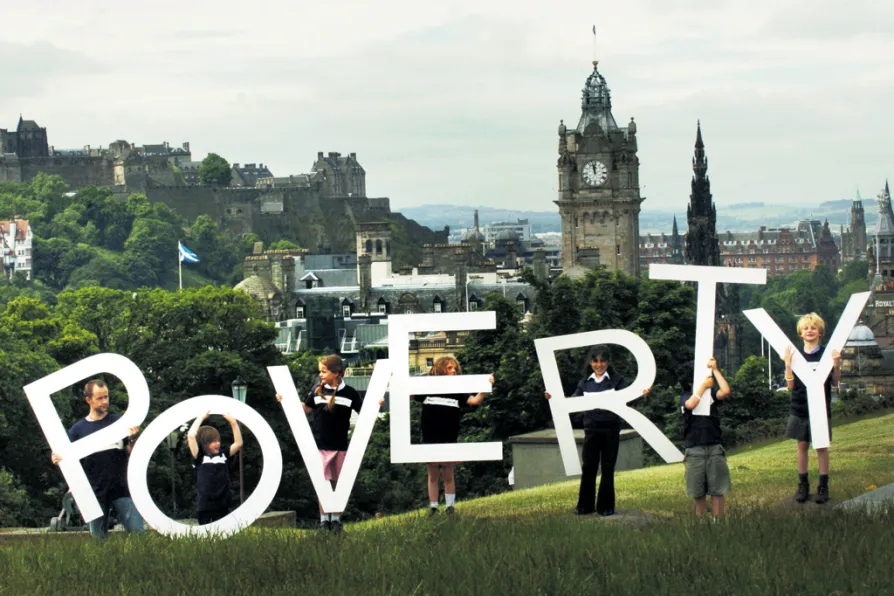 Edinburgh children spell out the result of council cuts
In the wake of Ann Widdecombe’s murder, JOHN GREEN wonders whether the government will really get to grips with the root cause of these attacks on our MPs
The new PM’s opening addresses offered hope, council homes and reform — but little detail on how any of it will be delivered, warns CLAUDIA WEBBE
Despite the screeching from the right-wing media, Burnham’s speech chimed with the public mood - and socialists should take advantage, says Morning Star editor BEN CHACKO
Scotland's Labour leader cannot continue to evade responsibility for the party's decline, argues LAUREN HARPER
Nature as well as society works dialectically, asserts the Marx Memorial Library and Workers’ School


THERESA MAY proclaimed that “austerity is over” and the budget on October 29 will prove or disprove that claim. Even if she proves it, there is no guarantee that it will end in Scotland.
Recent research by the Scottish Parliament revealed that Westminster imposed a budget cut of 1.8 per cent from 2013-17 on the block grant to the Scottish government.
The same research revealed that it in turn has imposed a bigger cut on councils of 7.1 per cent.
However, Audit Scotland in its audit of Scottish councils points out that council budgets have fallen by 9.1 per cent since 2010/11.
A good example of what this means is that the Scottish government received what was in effect a standstill grant last year from Westminster and the Scottish government could have done the same in Scotland.
Instead a choice was made to cut council budgets. A good example of this is the City of Edinburgh council received the lowest budget settlement since devolution this year. Even a standstill budget would have meant cuts but less severe than those already made.
Audit Scotland makes clear how stark the situation is for Scottish Councils when it states: “The reductions in funding from the Scottish government present councils with a major challenge to continue to make savings and deliver services at current levels.”
What does this mean? In one year alone 2016-17 councils in Scotland have 2,200 fewer workers — nearly 1 per cent of the total workforce in Scotland — than they had the year before.
Not only that but it cost £78m to councils to reduce their workforce. Job loss on this scale would see a task force looking at how this could be prevented, but it’s ignored, which is why Unison calls it “the silent slaughter.” Citizens only notice when services are taken away from them and charges are made on services to make up for the funding shortfall.
But it’s worse than that. In 2016-17, 20 Scottish councils drew on usable revenue and capital reserves. Council revenue reserves fell by £32 million in 2016-17 and overall usable reserves (capital and revenue) fell by about £33m. This is why the Chartered Institute of Public Finance and Accountancy uses the term “financial stress” to describe this drastic action action taken by 20 Scottish councils.

Similar stories

Years of underfunding are eroding Scotland’s local services and deepening inequality in communities, says VINCE MILLS

Cuts are sweeping campuses as cash-strapped universities slash staff and politicians fail to act on a growing funding emergency. VINCE MILLS reports

Liverpool Trades Council has unveiled a ‘People’s Budget’ to fight £56m cuts and council tax rises. DEAN YOUNG reports