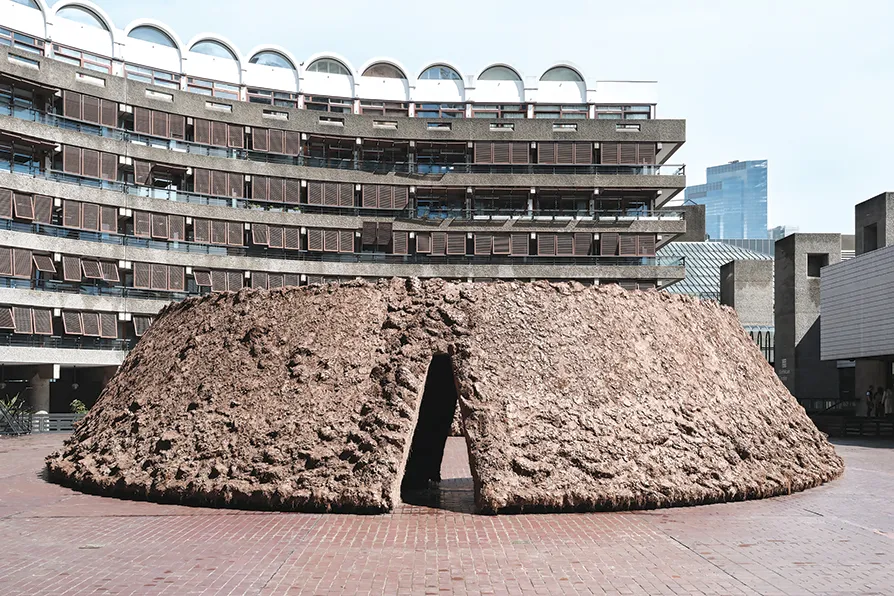
MICHAL BONCZA recommends a minimalist installation that prompts intriguing connotations


 Latest editorial
‘There is no difference between musicians and audience. We resist in our music, you resist in your listening and imagination’
CHRIS SEARLE speaks to Palestinian multi-instrumentalist DIRAR KALASH
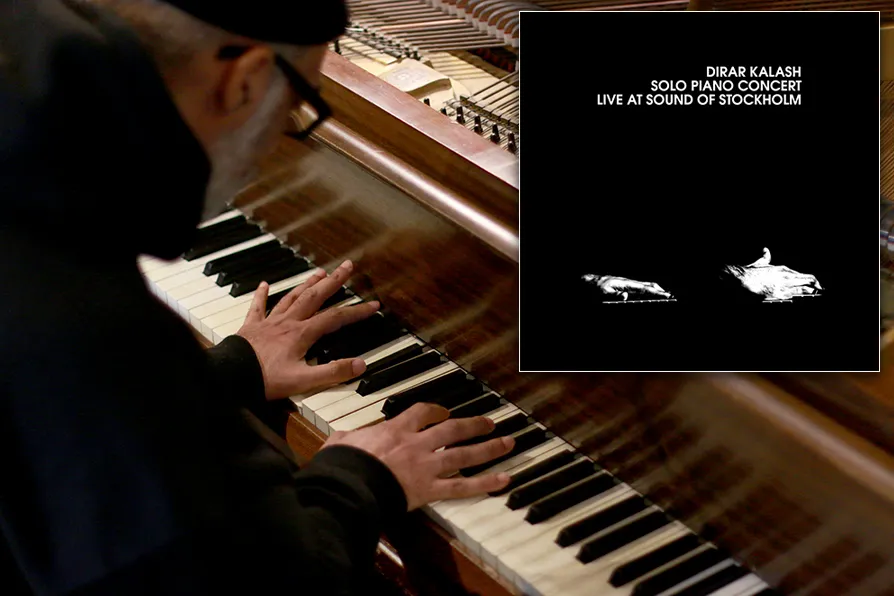 Dirar Kalash [Pic: Izzi Valentine]
FIONA O’CONNOR questions the achievement of this year’s Orwell prize winner for political fiction
LEO BOIX reviews two powerful Latin American novels in which myth and crime fiction expose the deadly consequences of patriarchy, clandestine abortion and state violence
New releases from Laura Veirs, The Waterboys, and Yard Act
Ron's rages are sincere and — according to his wife — healthily cathartic. But can these splenetic outbursts loosen the grip of capitalism at its most monstrous?
ANGUS REID considers the power of the podcast as a vehicle for consensus building in opposition to mainstream media narratives


https://www.youtube.com/watch?v=Wjcx4t6J-bY
OPENING with a flurry of rampaging notes, volley after volley, until you feared that the Cafe Oto grand would implode by the huge sound coming from its innards, Palestinian pianist and saxophonist Dirar Kalash attacked the sweating silence all around him, until a repeated riff brought in the Grenadian scything arco bass of Neil Charles and the scratching, pummelling tambors of Egyptian percussionist Ziad Hisham.
The agility of Hisham’s lightning fingers across the skins of his tambors was powerfully evocative of Arab life-lands and sounded as if he had a whole drumset before him, while Charles’s Caribbean undertow seemed to move under the tunnelled earth below the blitzed buildings of Gaza. Kalash struck his keys with the potency of a Levantine Cecil Taylor as if every phrase of his ferocious rhythmic pianism resounded with “Remember Gaza! Remember the Genocide! Palestine will be free!”
Before the session I asked Kalash, born near Haifa in 1982, about the sources of his music. “I am a Palestinian,” he said. “I play in Palestine and everywhere else I can, for to me it is one struggle everywhere.” He describes his music as a “processing of sounds from Palestine expanded instrumentally and electronically, forging a sonic force that does more than expressing protest. It persists, resists and amplifies in real time. This is not metaphorical. This is sound as a direct act of solidarity, disruption and insistence.”
It is, as he calls it, “the sonic front” and his improvisations have a profound internationalism, invoking the lives and deaths of those murdered by racist police in the US like Eric Garner and George Floyd, to the inspiration of writer/activists like Frantz Fanon and Malcolm X.
Luckily for listeners, a new digital Kalash album called Live at Sound of Stockholm, a recording of a November 2025 Swedish solo piano concert, has just been released as part of a mutual aid fundraising campaign for displaced families in Palestine, Lebanon and Iran. Kalash’s dramatic atonal phrases, repetitive keyboard salvoes and spontaneous melodic passages of immediacy and beauty, are a profound expression of solidarity with the human targets of Trump and Netanyahu’s gangster imperialism. Part elegy, part determined statement of unquenchable resistance, the record is a heroic soundscape of those humans justly holding fast to their ancestral lands and nationhood.
As much concerned about the art of the audience as the art of the performance, at the end of the first set at Cafe Oto Kalash told the engrossed listeners: “There is no difference between musicians and audience. We are together; listening is as important as playing. We resist in our music, you resist in your listening and imagination. We are one.”
It seemed like an astonishing message, but one entirely integrated with the musicians’ boundary-breaking “improvesistance,” a neologism bursting with meaning from every creative note.
Live at Sound of Stockholm can be found on Bandcamp; it is part of a mutual aid fundraising campaign for displaced families in Palestine, Lebanon, and Iran.
