The Tories introduced the 50% strike ballot threshold to make industrial action harder. MATT WRACK argues that a Labour government has no justification for leaving it on the statute book


 Latest editorial
Wrong turns and wrong ’uns: Can Burnham really reverse 40 years of neoliberalism?
A Cabinet clear-out and an apparent rejection of neoliberal orthodoxy have created fresh political momentum, but can entrenched institutional power be overcome by the new PM, wonders ANDREW MURRAY
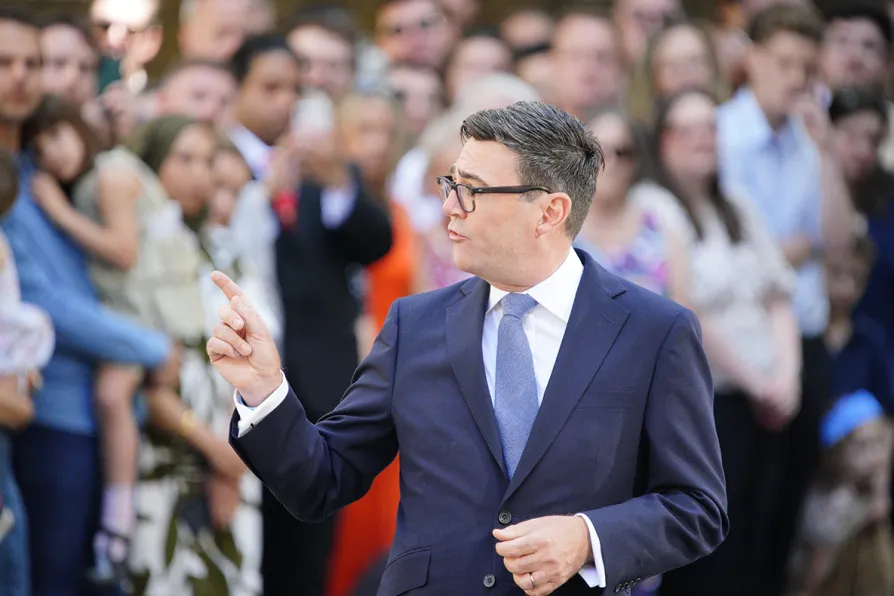
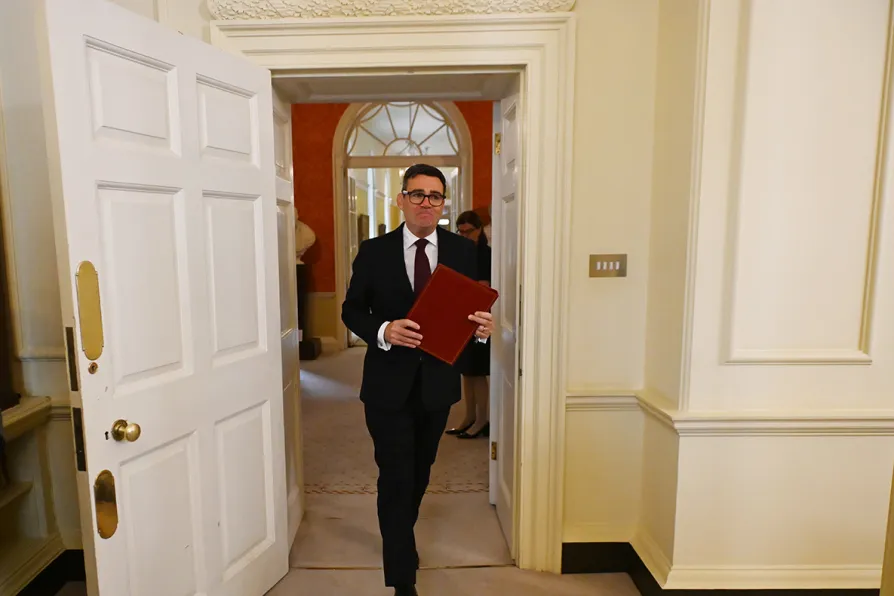 Prime Minister Andy Burnham arrives to host his first Cabinet meeting at 10 Downing Street, London, July 21, 2026
In the wake of Ann Widdecombe’s murder, JOHN GREEN wonders whether the government will really get to grips with the root cause of these attacks on our MPs
The new PM’s opening addresses offered hope, council homes and reform — but little detail on how any of it will be delivered, warns CLAUDIA WEBBE
Despite the screeching from the right-wing media, Burnham’s speech chimed with the public mood - and socialists should take advantage, says Morning Star editor BEN CHACKO
Scotland's Labour leader cannot continue to evade responsibility for the party's decline, argues LAUREN HARPER
Nature as well as society works dialectically, asserts the Marx Memorial Library and Workers’ School


SO — does he mean it? And can he deliver it?
Andy Burnham’s announcement upon election as Labour leader that Britian has persisted in a “wrong turn” taken 40 years ago — it is fair to assume he really means in 1979 — and that he is going to give working people what he claims they want, which is the old Labour Party back, is certainly a political thunderclap.
It is most likely that he does mean what he says in his sketchy analysis of Britain’s crisis. The view that Thatcherism, or neoliberalism, represented a disaster has been widely held among large, mainly working-class, sections of the population from the time the turn was first made.
It destroyed industries, communities, ways of life, organisations, social connections and collective hopes which have been subject to nostalgic recollection ever since.
Still more sections came to the view that Thatcherism was not all that after 2008 when the “wrong turn” ended up driving the country over a cliff.
So it is hardly surprising that such a deeply and widely held view should find political articulation. Jeremy Corbyn’s leadership of Labour was a comprehensive expression of it.
In more cramped form Ed Miliband moved in that direction when Labour leader, albeit always looking nervously over his shoulder at the Blairite irreconcilables.
It could be argued that Theresa May had much the same intuition but, like Miliband, could not impose it on her City-first parliamentary colleagues even before the 2107 election and Brexit did for her.
Whether Burnham’s view is deep-rooted is another matter. He barely articulated it in his previous leadership bids of 2010 and 2015, but then he has since spent a lot of time in Manchester, where the “wrong turn” thesis is widely shared and deeply felt.
In any case, it is what a lot of people want to hear, including some of those presently intending to vote for Reform and nearly all of those supporting the Green Party. So it is essential politics if there is to be any way back for Labour from its presently degraded state.
Likewise, acknowledging that Keir Starmer “got it wrong” over Gaza is necessary if any sort of election-winning coalition can be reassembled under the Labour banner. Burnham will fail if he does not translate that apology into resolute action against Israel.
The dispatch of Reeves, Lammy, Reed, Kendall and the rest from the posts they have held with such little distinction — wrong-turners every one — is admirable, and makes the government appear as a fresh start.
The appointments of John Healey at the Treasury and Wes Streeting at Defence in particular must prejudice that perception without entirely effacing it.
Expediency and conviction seem to converge on the assumption that the new Prime Minister really means to shift Britain away from neoliberal governance norms, while falling well short of a systemic rupture.
But how much can he achieve? Burnham has identified three obnoxious aspects to the Thatcher-Blair consensus — overcentralisation of political power, privatisation of economic power and deindustrialisation.
The first of these is probably the easiest to address but also the least immediately consequential. Devolution in England has often meant better public transport but, unless accompanied by much more cash, it will not be a panacea on other fronts.
For example, how easy will councils find it to start building homes at scale again? The direct labour organisations of the past have long gone, along with the internal expertise. There must be a reconstitution, or the matter is left to private enterprise, but it cannot be overnight.
The others are more challenging. The industries privatised or liquidated from the 1980s on — or, like coal, both — are not easily restored to their previous significance.
Water and energy are easy targets, although it is not clear whether Burnham’s “control” means “ownership” or some form of souped-up regulation.
And why stop there — today’s “commanding heights” would include AI, for example? Left in private hands, it will still be very much commanding. Yet Burnham’s ambitions seem to fall short of strategic public ownership.
Nor is the state going to be so easily switched back to the lightly social democratic norms of the post-war period. Forty years of privatisation and marketisation, with a concomitant fusion of private interests with politicians and senior civil servants will not be readily undone.
Likewise reindustrialisation. The litany of industries invoked by Burnham upon election as Labour leader evoke powerful emotions, but it is scarcely possible that they be once more employers on the scale of the past.
And if reindustrialisation in some form is obviously desirable, is this to be left to the “invisible hand” which directed the ”wrong turn” in the first place or, if it is to be state-led, how will this fit within the fiscal rules to which Burnham has pledged renewed fealty?
Absent answers to this question, we may not be left with much more than the militarised industrialisation promised by Starmer, now in the hands of Healey and Streeting, the core of the new Cabinet’s right-wing bloc.
None of this would have been unfamiliar to the old Labour Burnham invokes as his lodestar. It was never an uncomplicated instrument of social progress. It was a party of class collaboration, of the state and of imperialism as much or more than it was a vehicle for progressive reform.
It was not, however, neoliberal, even if Jim Callaghan took the first steps in the direction of post-Keynesianism. He may not have appreciated how wrong the turn was, but he found it more congenial than socialism, or the prospect of it he discerned behind Tony Benn’s agitation for an alternative, at any rate.
Yet even assuming Burnham’s actual intentions tend towards the modest, he will not find it easy to enact them. Obstacles abound.
One is the Parliamentary Labour Party, largely hand-picked by Starmer and his factional functionary Morgan McSweeney for purposes very different than undoing neoliberalism.
The same formation constituted, recall, the Establishment’s first line of attack against Corbynism.
Burnham may have the advantage here in that regardless of the reason for being preferred as an MP, once on the green benches most have no higher aspiration than remaining in situ.
Labour MPs can read the same polls as everyone else, which told them that Starmer was their sure and certain ticket to redundancy, while Burnham could be their passport to continued incumbency.
Thus it is a pleasing irony that the MPs selected as loyal “Starmtroopers” should be the authors of Starmer’s downfall, this constituting their only useful contribution to political life since their election.
Acquiescence is not reliable support, however, and the malignant forces of Blairism, self-declared heirs to the 1980s “wrong turn” and several subsequent ones come to that, are lying in wait, at least once they emerge from the Kentish Town pub whither they repaired to drown their sorrows.
Burnham’s energetic cull of the Starmeroids from the Cabinet means there will be many wounded and entitled plotters sitting on the back benches with time unexpectedly on their hands.
They will be the guardians of the miserable 2024 Labour manifesto, with provisions on tax which fetter any plan for amelioration. They will wave it like a shroud at any suggestion of radicalism, to contest any deviation from the line of the “turn” in the name of pseudo-democratic legitimacy.
Every step towards a new path will be challenged and opposed — politically, juridically and operationally.
The beneficiaries, inheritors and unrepentant advocates of the “wrong turn” will be mobilised, from the City, the Treasury, the mass media old and new and the imposing apparatus of neoliberal power internationally.
The latter is made lurid flesh in Donald Trump, apparently to be invited to visit Manchester next year, a city where literally no-one wants to see him.
Can that all be faced down? Corbynism’s advance was predicated on the understanding that parliamentary politics must proceed in the service of the mass mobilisation of people in the streets, communities and workplaces if it was to succeed.
There is no sign that a similar insight animates Andy Burnham.
He may be sensible of the power of popular feeling — his epiphany over Hillsborough is one indication of that — but he is not about to base his premiership on mobilising it.
So the frisson of hope most labour movement activists may have allowed themselves on Monday as Burnham succeeded the wretched Starmer must speedily mature into something more — mass action against the “wrong turn” and its manifold poisonous legacies.

Similar stories
The new PM’s opening addresses offered hope, council homes and reform — but little detail on how any of it will be delivered, warns CLAUDIA WEBBE