

 Latest editorial

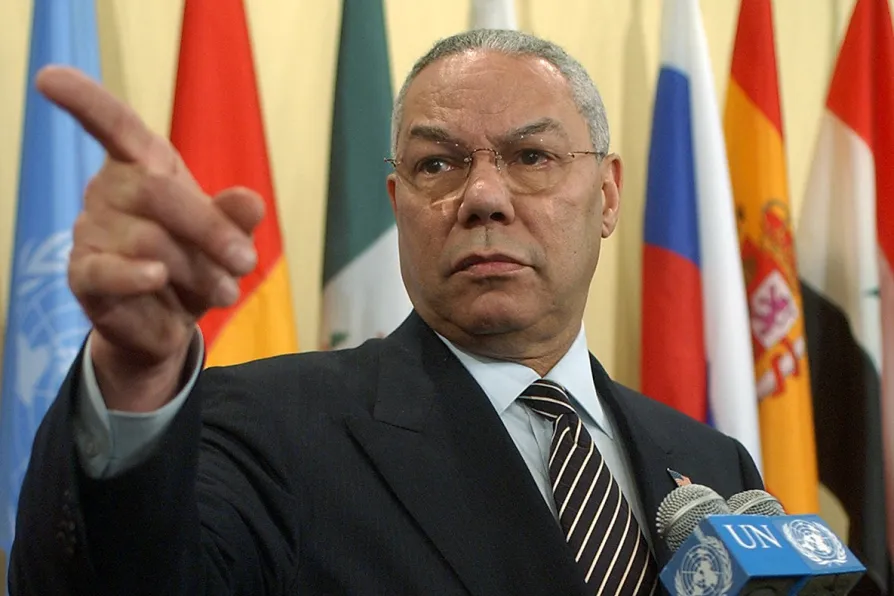 Former US Secretary of State Colin Powell points to a reporter during a news conference outside of the United Nations Security Council Chambers, Friday, March 7, 2003
Waiting for the grander vision to emerge


OF ALL the varied responses to the death of former US secretary of state Colin Powell, the most apt was that of Medea Benjamin of the Code Pink peace campaign: that he “could have changed his legacy by [dedicating] his life to diplomacy, peace and truth. He didn’t.”
This is not because there is anything to celebrate in Powell’s death, but because the torrent of bland tributes to a man whose most consequential act was to peddle lies about Iraqi weapons of mass destruction at the UN are cover for a political class that is continuing to beat the drum for future wars.
Powell acknowledged that his showboating performance at the UN was a “blot” on his career. He had doubts at the time, which he reportedly shared with Britain’s Jack Straw, observing that the flimsy “evidence” being trumpeted as a reason to launch an unprovoked invasion would later blow up in their faces.
Yet this did not stop either man from continuing to shill for the greatest criminal act of the 21st century so far. What was designated at Nuremberg “the supreme international crime,” starting a war of aggression. And a war whose destabilising consequences last to the present day, evident in the continuing violence in Iraq, the huge increase in terrorist attacks since 2003 and the massively extended range and power of extremist jihadist outfits from north Africa to central Asia.
Iraq nowadays has few defenders and Powell was not one of them. He declared himself “mortified” by Iraq’s lack of those mythical weapons of mass destruction.
But such second thoughts count for little unless they lead to a willingness to challenge similar propaganda in future. On this side of the Atlantic we are used to the inquiries and parliamentary hearings that find, with maddening regularity, that the last war we helped start was a disaster.
Sir John Chilcot eviscerated Tony Blair over Iraq; the foreign affairs committee savaged the “calamity” that was David Cameron’s assault on Libya.
These acknowledgements have not notably strengthened parliamentary resistance to militarism. They did not deter MPs from authorising bombing raids on Syria or seeking to endlessly extend the murderous occupation of Afghanistan.
Nor have revelations about the blatant falsehoods told to justify wars led much of the Western media to express scepticism when the next round of panic-mongering and atrocity stories about “enemy” countries makes its appearance.
Our ruling class and its press and broadcasters display a remarkable amnesia about the bogus cases for even the most recent wars, and what we might learn from that about the honesty and credibility of our politicians and intelligence services.
This matters. The new cold war is casting a deeper shadow over international relations by the day.
Russia’s suspension of diplomatic engagement with Nato is a predictable response to the US’s decision to tear up arms limitation treaties, deploy “tactical” nuclear warheads to its submarines and stage massive military exercises along its borders from the Baltic to the Black Sea.
Britain is just as complicit in the reckless baiting of this nuclear power, sailing warships through disputed waters in a deliberate bid to provoke a reaction.
And Chinese-Russian naval patrols of the Pacific are clearly a response to the US’s naval build-up in the Far East and pacts like Aukus and the Quad aimed at intimidating China. Again, Britain is up to its neck in raising tensions, hugely increasing the size of its nuclear arsenal and sending an aircraft carrier group to the China seas.
The arms race is hotting up; the risk of “incidents” with catastrophic consequences rises with each new deployment.
That is why the horrors of wars like Iraq cannot be ignored when we mark the death of a key player like Powell. The lessons have not been learnt: and wars on an even more devastating scale may be on the horizon.

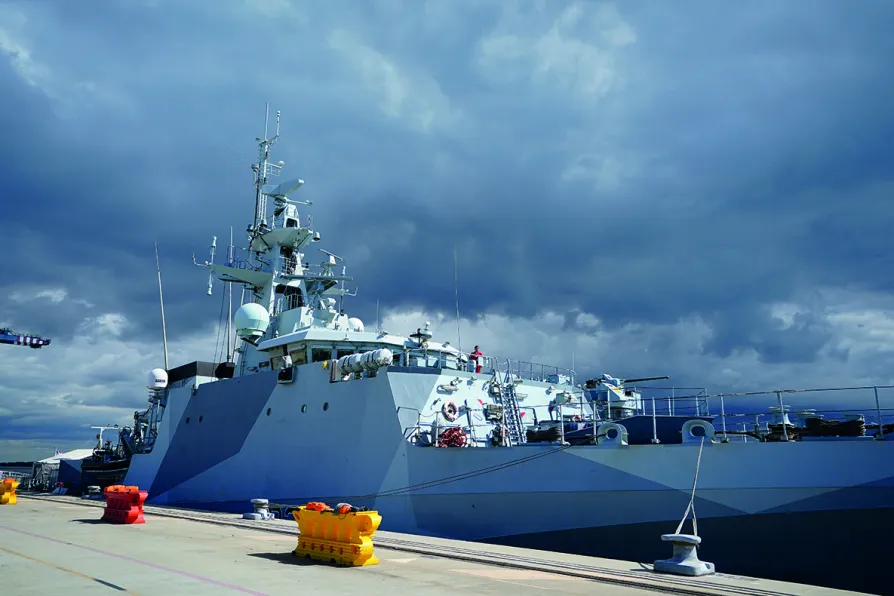
From 35,000 troops in Talisman Sabre war games to HMS Spey provocations in the Taiwan Strait, Labour continues Tory militarisation — all while claiming to uphold ‘one China’ diplomatic agreements from 1972, reports KENNY COYLE
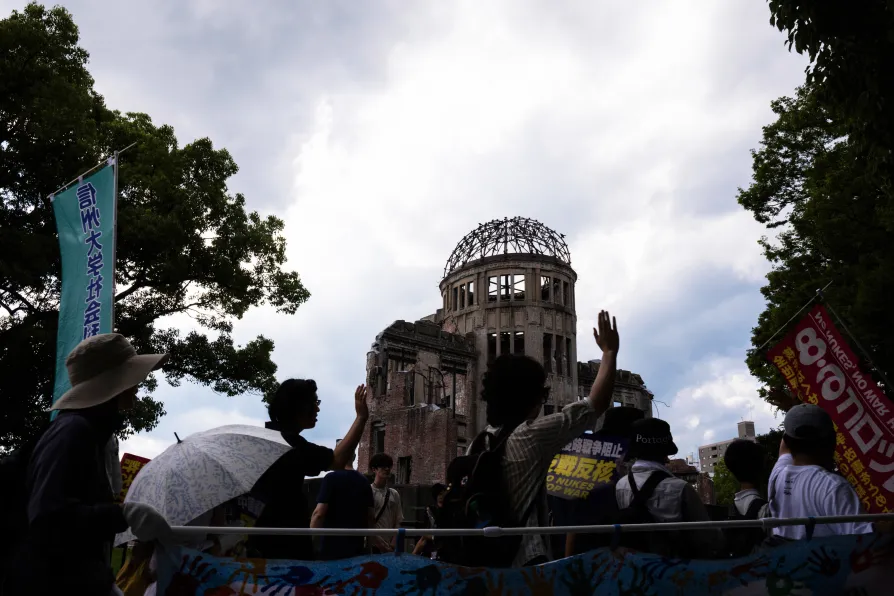
For 80 years, survivors of the Hiroshima and Nagasaki atomic bombings have pleaded “never again,” for anyone. But are we listening, asks Linda Pentz Gunter