Assistant general secretary of the General Federation of Trade Unions HENRY FOWLER reports on day 1 from the GFTU’s residential Summer School at Quorn Grange Hotel


 Latest editorial
Belt and Road Initiative: colonialism with Chinese characteristics?
Far from being ‘debt traps,’ BRI projects are establishing an essential framework for economic development and creating the conditions for formerly colonised countries to break out of dependency, says CARLOS MARTINEZ

Strike Map co-founder HENRY FOWLER discusses the significance of today’s joint union letter to video game giant Rockstar, demanding trade union recognition for its workers. Their conversation highlights how our movement can harness its collective power to rebuild union power across the private sector
The PM leaves office having squandered Labour’s electoral mandate and alienated its grassroots. He will not be missed, writes BRIAN LEISHMAN MP
Durham Miners’ Association chair STEPHEN GUY speaks to Ben Chacko about the Reform threat, what’s needed from Labour and why the Big Meeting will never lose its politics
Poland’s anger over Ukraine’s celebration of the Nazi collaborationist UPA reflects more than historical grievance, says KENNY COYLE
Can Andy Burnham’s programme deliver a productive economy – or merely a softer version of capitalism, asks VINCE MILLS


THE Belt and Road Initiative (BRI) is a global infrastructure development strategy proposed by China in 2013.
Unprecedented in scope, the BRI is modelled on the Silk Road — a vast trading network that arose during the Han dynasty (206BC–220AD) and which connected China with India, central Asia and further afield.
The BRI seeks to promote global economic integration and co-operation via the construction of vast numbers of roads, railways, bridges, factories, ports, airports, energy infrastructure and telecommunications systems, all of which will enable deeper integration of markets and more efficient allocation of resources.

Similar stories

Friedrich Merz’s call for a new Plaza Accord ignores how Washington’s 1985 currency ambush destroyed Japan without fixing US deficits — China, a sovereign socialist state with 1.4 billion consumers, cannot be bullied the same way, writes CARLOS MARTINEZ
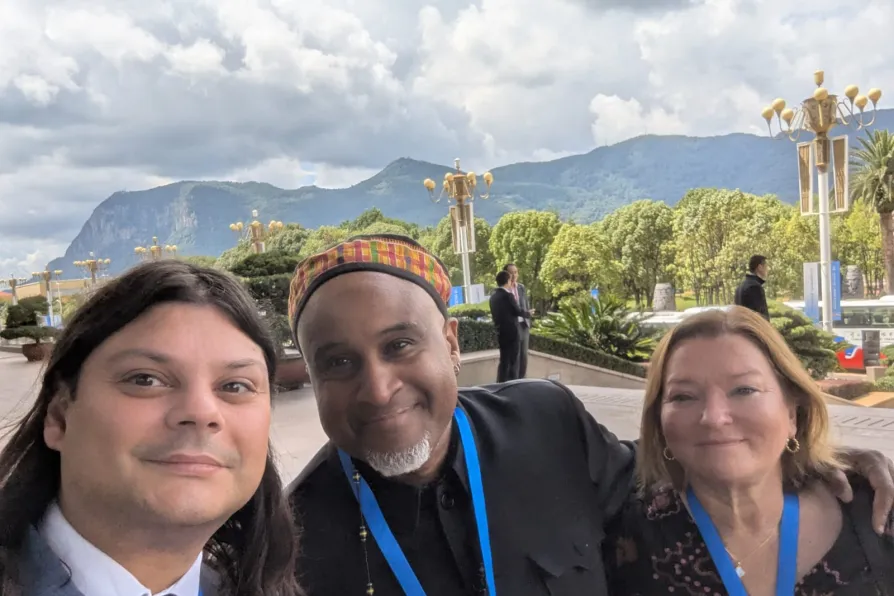
ROGER McKENZIE argues that the BRI represents a choice between treating humans as commodities or as equals — an essential project when, aside from China’s efforts, hundreds of millions worldwide are trapped in poverty

Morning Star editor BEN CHACKO reports from the start of Kunming’s Belt and Road media forum, where 200 journalists from 71 countries celebrated a new openness and optimism, forged by China’s enormous contribution to global development

FRANCISCO DOMINGUEZ says the US’s bullying conduct in what it considers its backyard is a bid to reassert imperial primacy over a rising China — but it faces huge resistance