MARY DAVIS says the centrality of the Jewish community and the Communist Party to anti-fascism in the 1930s is too often overlooked on the left


Acorn UK — taking what’s ours
In just five years Acorn UK has gone from two activists to rallying several thousand members against city councils and even international banks. The sky – or rather the climate – is the limit. The Star's Alexander Norton spoke to Acorn UK's founding organiser NICK BALLARD


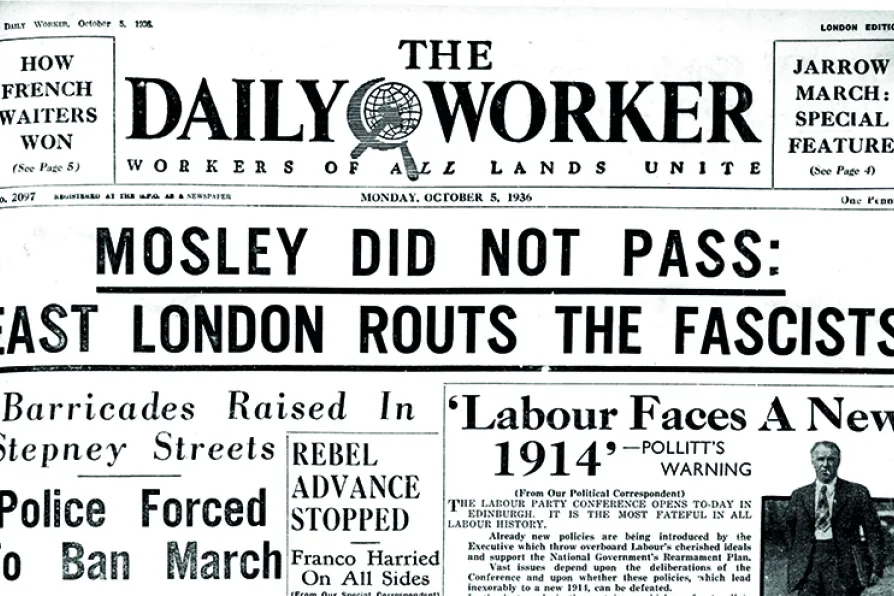
A 1936 confrontation with Mosley’s BUF became part of a wider international struggle, with local activists later joining the fight against fascism in the Spanish civil war. TONY FOX tells the story ahead of a 90th anniversary commemoration event
GEORGE WHITE explains why Unite’s Lancashire area activists committee believes co-ordinated recruitment in an area defined by particular kinds of employment and linked by a major transport artery could provide a model for organising the unorganised
Voters have delivered a stay of execution for Labour and exposed limits to Reform’s advance. But will Burnham offer a political alternative rather than just a different face at the top, asks ANDREW MURRAY
Calls for a Universal Basic Income are a red herring, argues the Full Marx editorial team — socialists should fight for Universal Basic Services
SEVIM DAGDELEN warns that Germany’s military resurgence and revival of old hostilities towards Russia have dangerous implications for Europe and beyond


THERE were just two of us when we began knocking on doors in December 2013 to build what became Acorn UK — “Association of Community Organisations for Reform Now.” That February we were joined by another organiser and one or two founding members. We’ll celebrate our fifth birthday in May, with a membership in the thousands.
The idea was to build a mass membership, dues-paying organisation in the community that would use direct action to actively address the key issues felt locally. We wanted to work directly on bread and butter issues, that required no political education other than the experience of living in austerity Britain. Housing, jobs, transport costs, cuts to services and so on. When we started in Bristol, the quality and cost of private sector rented housing was clearly the number one issue. With that in mind, beyond the creation of the organisation itself, the initial aim was to organise the local community to improve housing standards in inner city Bristol.
We had varying degrees of trade union experience; from members to organising staff. Of our three initial organisers one had previously worked for a major trade union and both myself and our other colleague had been TUC union members. In addition to that, two of us had held elected organising positions in the Industrial Workers of the World (IWW) syndicalist trade union.

Similar stories
![[Pic: Andrew Wiard]](https://morningstaronline.co.uk/sites/default/files/styles/desktop/public/2026-01/19860406_a_wiard_0001.jpg.webp?itok=d2RMNwWw)
LAURA DAVISON traces how Murdoch’s mass sackings, political deals and legal loopholes shattered collective bargaining 40 years ago – and how persistent NUJ organising, landmark court victories and new employment rights legislation are finally challenging that legacy

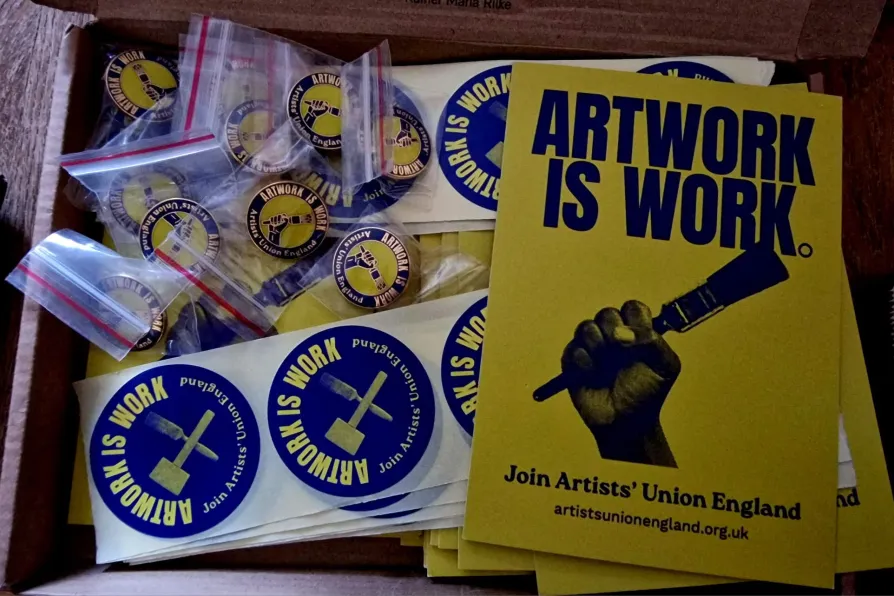
Artists should not be consigned to a life of precarious working – they deserve dignity and proper workers’ rights, argues ZITA HOLBOURNE

Our housing crisis isn’t an accident – it’s class war, trapping millions in poverty while landlords and billionaires profit. To solve it, we need comprehensive transformation, not mere tokenistic reform, writes BECK ROBERTSON