

 Latest editorial
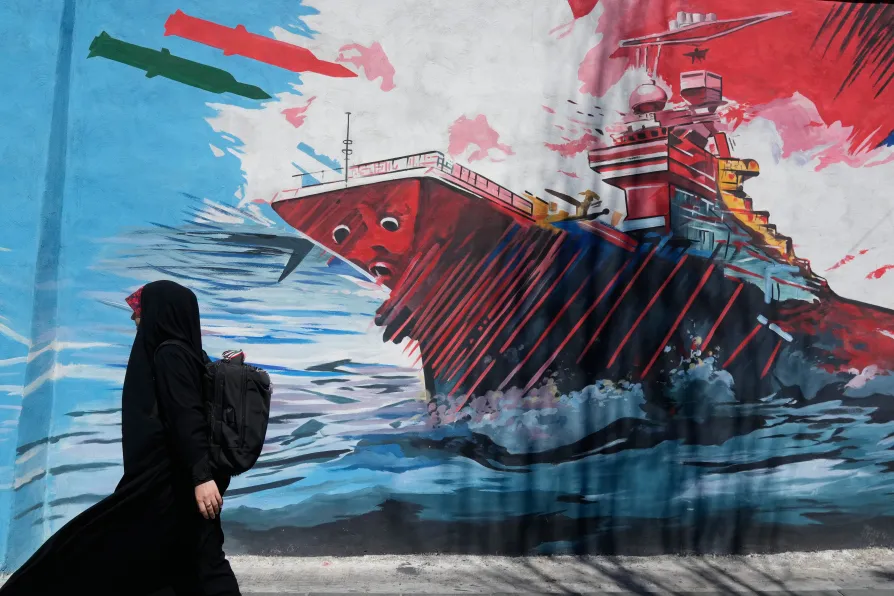 A woman walks past a mural depicting a U.S. aircraft carrier under missile attack in downtown Tehran, Iran, June 8, 2026



THE ceasefire to end the illegal and unprovoked war launched by the United States and Israel against Iran was on the brink today as the two sides exchanged attacks.
The US hit multiple Iranian targets after Washington blamed Tehran for the crash of a US attack helicopter earlier in the day.
US President Donald Trump posted on social media that Iran was taking “too long to negotiate a deal” and that “now they will have to pay the price.”
In the latest strikes, US fighter jets targeted “air defence, ground control stations and surveillance radar sites,” the military’s Central Command said. Iran acknowledged strikes around Bandar Abbas and Qeshm Island, but gave no details on the damage.
“The operation was a proportional response to recent attacks on US forces and international commercial ships transiting regional waters,” Central Command said.
Iran’s top diplomat vowed that there would be a response and Tehran later launched attacks in Kuwait, Bahrain and Jordan.
Jordan said it had shot down five incoming missiles, which Iran said targeted the Muwaffaq Salti Air Base. The base has hosted US F-35 fighter jets and other aircraft.
Bahrain and Kuwait claimed they intercepted incoming fire, without elaborating.
Iranian Foreign Minister Abbas Araghchi condemned the US attacks as a violation of Iranian sovereignty in calls with his counterparts from Turkey and Saudi Arabia “and emphasised the inherent right of self-defence, including reciprocal action.”
Foreign Ministry spokesperson Esmail Baghaei said on Wednesday that in light of the new attacks, Iran would review its stance on negotiations to end the war.
The exchanges of fire came a day after a US army attack helicopter crashed near the Strait of Hormuz after colliding with an Iranian drone, according to a US official.
The exchange of fire was the second time this week that such strikes have tested the ceasefire after Iran and Israel targeted each other on Monday.
Mr Trump has repeatedly vacillated between expressing optimism over the prospects for a peace deal and warning that he was ready to return to all-out war.
Iran, meanwhile, has proved resilient despite having faced weeks of heavy bombing, betting that its ability to effectively close the Strait of Hormuz, a crucial passageway for the world’s oil and natural gas, gives it a strong bargaining chip.
Both countries seem to be looking for a way to end the conflict.
But Israeli Prime Minister Benjamin Netanyahu appears intent on pursuing the war with both Iran and the Hezbollah resistance group in Lebanon.
