

 Latest editorial
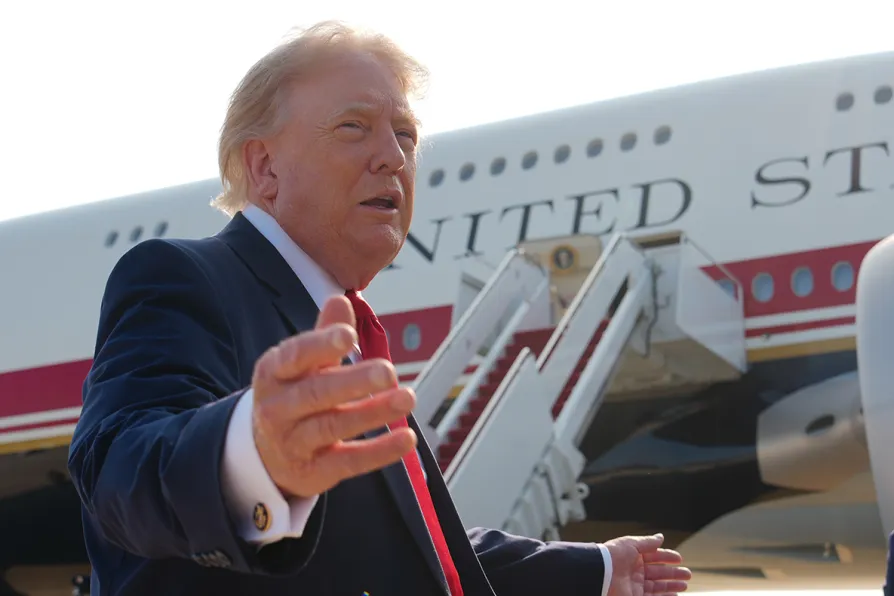 US President Donald Trump speaks to reporters before boarding Air Force One at Joint Base Andrews, Maryland, July 1, 2026



DONALD TRUMP raked in nearly $1.2 billion (£900 million) from his crypto businesses last year, according to a federal filing that sheds new light on how the US president’s personal wealth has ballooned since he returned to the White House in January last year.
Mere start-ups when Mr Trump took office, the new ventures have now eclipsed in revenue much of the vast property portfolio that took him decades to accumulate. Their rise was fuelled not only by billionaire investors but by Mr Trump’s own action to quash a federal crackdown on the industry.
He got more than $500m (£376m) from his World Liberty Financial business selling new crypto products, including “governance tokens,” according to the required annual disclosure report with the Office of Government Ethics.
It also showed another crypto business, CIC Digital LLC, took in more than $600m (£452m) from sales of souvenir-type “meme” coins stamped with his face.
Both the tokens and the coins have plunged in value since the sales.
In another unprecedented move, the president also made millions of dollars last year from selling Trump-branded Bibles, sneakers and other small items.
The 927-page disclosure form paints a stark, if incomplete, picture of the massive growth of the president’s wealth through a web of business interests — many of which have benefited from the policies of his own administration. Mr Trump insists that his sons direct his finances, but the arrangement rejects the conflict-of-interest protections that his recent predecessors in the White House instituted.
“Neither the president nor his family has ever engaged — or will ever engage — in conflicts of interest,” spokeswoman Anna Kelly said.
Forbes estimates his net worth at $6bn (£4.5bn), up from $2.3bn (£1.7bn) in 2024.
The revelation followed a severe setback for Mr Trump on Tuesday, when the Supreme Court rejected his executive order declaring that children born to people who are in the country illegally or temporarily are not US citizens.
By a six-to-three vote, the court struck down the president’s order. Five of the justices, in an opinion written by Chief Justice John Roberts, held that the 14th amendment, adopted after the civil war, makes a citizen of anyone born in the country, with very limited exceptions.
In a 91-page dissent, Justice Clarence Thomas protested that the 14th amendment “was designed and understood to secure equal rights for the freed blacks but has instead been repurposed for political projects that the Reconstruction Congress did not support.”
Mr Trump said the decision was “too bad for our country” and wrongly suggested that Congress could “easily” address it with legislation.
