In the wake of Ann Widdecombe’s murder, JOHN GREEN wonders whether the government will really get to grips with the root cause of these attacks on our MPs


 Latest editorial
Burnham needs to honour Labour’s manifesto commitment to workers’ rights
The Tories introduced the 50% strike ballot threshold to make industrial action harder. MATT WRACK argues that a Labour government has no justification for leaving it on the statute book
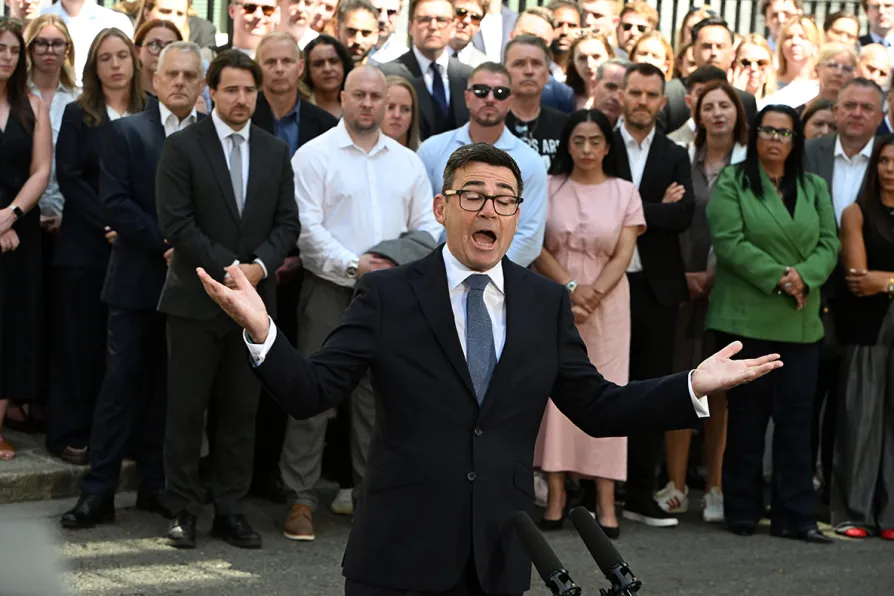 Britain's new Prime Minister Andy Burnham speaks to staff and media at 10 Downing Street in London, July 20, 2026
The new PM’s opening addresses offered hope, council homes and reform — but little detail on how any of it will be delivered, warns CLAUDIA WEBBE
Despite the screeching from the right-wing media, Burnham’s speech chimed with the public mood - and socialists should take advantage, says Morning Star editor BEN CHACKO
Scotland's Labour leader cannot continue to evade responsibility for the party's decline, argues LAUREN HARPER
Nature as well as society works dialectically, asserts the Marx Memorial Library and Workers’ School


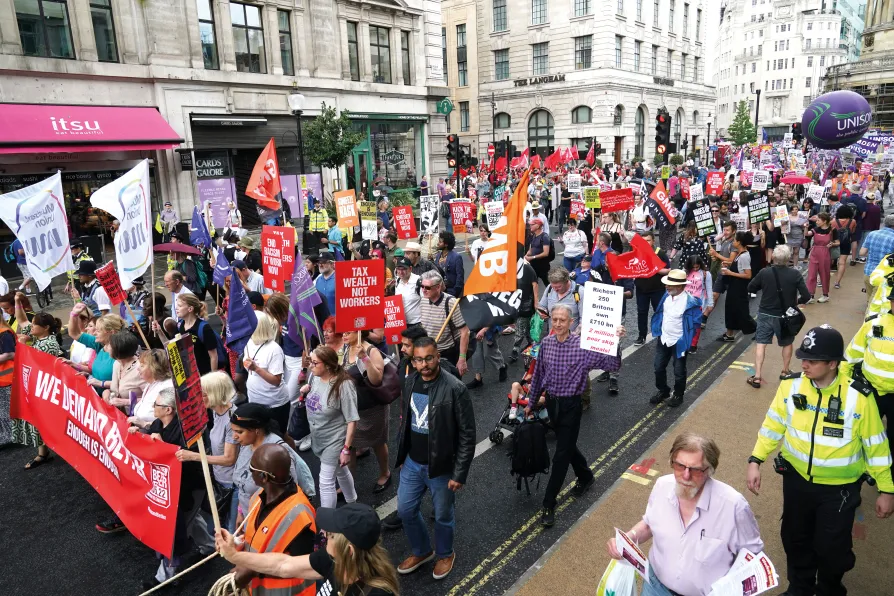
WHEN Labour won the general election with a landslide majority, millions of working people hoped the Tory attacks on trade union and workers’ rights was finally over.
After 14 years of Conservative governments using the law to weaken trade unions, Labour promised a New Deal for Working People, and the repeal of the Trade Union Act 2016, including the 50 per cent turnout threshold for industrial action ballots. For many in the trade union movement, these pledges were one of the strongest arguments for a Labour vote; the opportunity to actually repeal undemocratic and anti-worker laws.
It is shocking, therefore, that the 50 per cent threshold, imposed by the Tories, remains in place. That threshold was meant to be gone within 100 days. Instead, it is still in place and unbelievably the government is now building new obstacles to delay its abolition.
Buried in the Employment Rights Act 2025 and the new voting regulations is a mechanism ministers are presenting as a barrier.
Section 159 of the Act says the Secretary of State must “have regard” to the impact of non‑postal balloting before repealing Section 68.
But crucially the law allows ministers to consider the expected impact — meaning they are not required to wait for a full review, a pilot scheme, or any completed data set.
They could act now but crucially they are choosing not to and it is workers who will pay the price.
We all know that wider options for balloting union members will improve turnout. But there was no need whatsoever to link the issue of turnout thresholds with wider options for balloting; they are two separate issues.
The 50 per cent threshold has always been a tool of union‑busting. No other democratic process in Britain is subject to such a rule. MPs are not elected on a 50 per cent turnout threshold. Councillors are not. The prime minister is not. If Westminster elections were held to the same standard imposed on workers, half the Cabinet would not be in office today and Labour would have far fewer MPs overall.
Yet the government is now defending a threshold that the labour movement, international bodies, and human rights institutions have condemned for years. It is extraordinary that a Labour government elected on a mandate to strengthen rights at work, is now presiding over potential non‑compliance with ILO Convention 87 and the European Convention on Human Rights.
The International Labour Organisation’s freedom of association committee has been clear that requiring over half of all eligible workers to vote before a strike can be declared is “excessive” and designed to hinder the right to strike, especially in large workplaces.
The consequences are felt most sharply in sectors like education, where the workforce is overwhelmingly female. The threshold suppresses the collective voice of women who are already fighting for fair pay, safe conditions and dignity at work. It is a structural barrier that entrenches inequality and is highly discriminatory.
Labour want to keep in place a law designed to weaken unions at the very moment when workers need stronger protections.
By leaving the threshold in place it risks signalling that the government is comfortable with Tory ideas of restricting the rights of working people.
Electronic and workplace voting are welcome and long overdue. But they cannot become a smokescreen for political hesitation. We do not need a pilot scheme or a parliamentary review to know that the 50 per cent threshold is wrong. We knew it in 2016 and we know it now.
Workers did not vote for delay. They voted for real change, rooted in the collective power of workers and of democratic rights. The trade union movement that helped deliver this government its majority in Parliament expects its promises to be honoured and not diluted or deferred.
The 50 per cent strike ballot threshold must be repealed immediately with no caveats or conditions.
There must be no more prevarication or excuses. The manifesto pledge must be delivered in full and immediately.
Matt Wrack is general secretary of the NASUWT.

Similar stories
The unions are unhappy with the Employment Rights Act 2025 and with good reason. KEITH EWING and Lord JOHN HENDY KC take a close look at why the Bill promised more than it delivered
Labour must not allow unelected members of the upper house to erode a single provision of the Employment Rights Bill, argues ANDY MCDONALD MP

MATT WRACK issues a clarion call for a rejuvenation of public services for the sake of our communities and our young people