The greatest threat to democracy may no longer come from political parties but from unelected tech oligarchs like Peter Thiel and his powerful Silicon Valley network, argues JOHN GREEN


 Latest editorial
Is Latin America in the grip of the far right?
Latin America is being swept by a series of right-wing electoral victories. But behind that shift to the right lies less of an ideological conversion than anger, fear, insecurity, and a deep crisis of democracy, asserts MARC VANDEPITTE
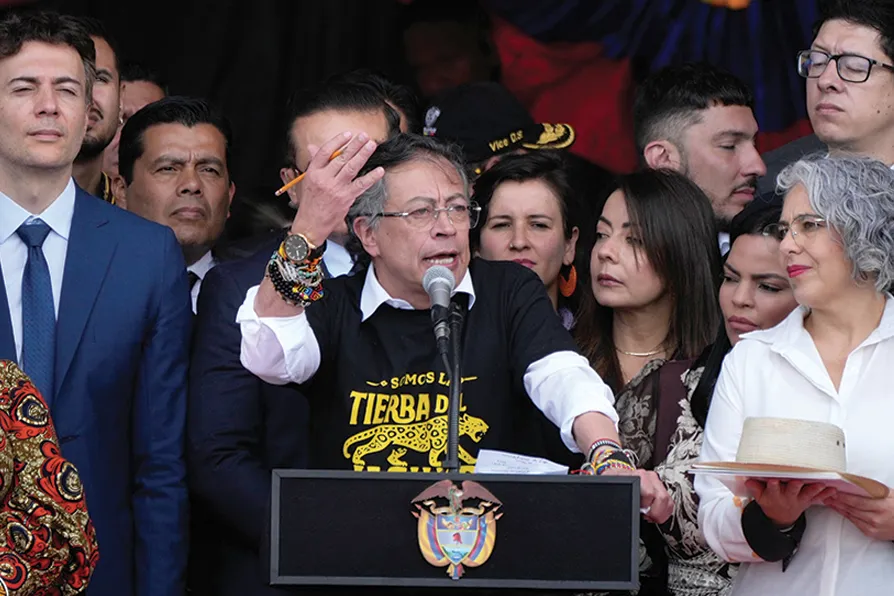 FINE MARGINS: President Gustavo Petro speaks after a military parade marking Independence Day in Bogota, Colombia on Monday

Today’s interconnected conflicts are enriching the arms industry while pushing the entire world towards permanent militarisation, argues ROGER McKENZIE
by Nana Backland, Merseyside Morning Star Readers & Supporters Group
The government’s Pip review looks like a carefully managed exercise in legitimising future cuts to disability support, argues Dr DYLAN MURPHY
The Tories introduced the 50% strike ballot threshold to make industrial action harder. MATT WRACK argues that a Labour government has no justification for leaving it on the statute book


OF THE last 15 presidential elections in Latin America, 12 were won by candidates from the right or far right. Recent victories in Peru, Colombia, Chile, Honduras and Bolivia confirm the image of a continent shifting politically to the right.
Candidates such as Abelardo de la Espriella in Colombia model themselves on eccentric and far-right figures like Nayib Bukele in El Salvador and Javier Milei in Argentina. They promise mega-prisons for drug traffickers, a minimal state and an extremely tough approach (mano dura/iron fist) to crime.
That language resonates in a region where insecurity has become a daily reality.
Latin America and the Caribbean have for years ranked among the most violent regions in the world. According to the UN, the homicide rate in the region is about three times higher than the global average, with organised crime as a major driver of that violence.
In recent years, organised crime has also penetrated countries that used to be relatively safe, such as Chile and Uruguay.
Criminal networks are no longer limited to the cocaine and fentanyl trade. They also profit from illegal gold mining, human trafficking, and extortion. According to recent opinion polls, Latin Americans today are more concerned about crime than about poverty or unemployment.
That is difficult terrain for the left. Those who live in fear are less receptive to long-term narratives about social justice. Authoritarian populists offer a simpler story: immediate order, a visible enemy, a large prison, a closed border and a wounded homeland.
Fear, anger and a weary left
The shift to the right has many causes. It stems from ignorance, failing education, fear of crime, fatigue with corruption and a sense that no-one listens to ordinary people.
Many citizens do not necessarily vote out of love for the iron fist. They vote because they have felt ignored for decades. The authoritarian option steps precisely into that vacuum and promises what traditional parties no longer seem able to offer: control, clarity and order.
On top of that comes the growing influence of evangelical churches, which reinforce conservative values.
The media and social media play a major role. In many Latin American countries, the media landscape is highly concentrated in the hands of wealthy families, economic groups and political elites. As a result, conservative, pro-market and anti-left voices often carry more weight in public debate.
According to The Economist, the right in Latin America is building its own powerful network as a counterweight to the left-wing Sao Paulo Forum. Influencers spread right-wing ideas online and see culture as a precondition for political change. Social media is decisive in this respect: for 40 per cent of Latin Americans, it is the main source of news.
Campaigns revolve around humour, speed and digital visibility. With large amounts of money and support from Donald Trump’s campaign network, strategists and lobbyists are spreading those techniques across the continent. They played an important role in the electoral victories of right-wing presidents in Argentina, Honduras and Bolivia.
The economic context has also made things more difficult for the left in recent years.
After the crisis of 2007 and 2008, progressive governments had far less room to expand social investment than in the years before. With limited reform programmes, it became more difficult to build broad popular support.
Some sections of the working class and the peasant population therefore sought refuge in neofascist movements. Not because those movements defend their socioeconomic interests, but because they appear to offer an answer to immediate insecurity, fear and humiliation.
Finally, there is also US interference and pressure. Before and after Venezuela’s 2024 presidential election, the US pulled out all the stops to get the far-right candidate Machado elected.
The current president, Trump, uses his full political weight to openly support right-wing and far-right presidential candidates in Latin America or, conversely, to threaten sanctions if a left-wing candidate were to be elected.
Trump’s attempts to promote the far right in Europe have had little or no success; in Latin America, by contrast, they do appear to be working. Since he took office in January 2025, the right has won all seven presidential elections held in the region.
The paradox of progressive success
The figures from Colombia reveal a striking paradox. Under Gustavo Petro’s progressive government, poverty fell in 2025 to its lowest level ever. Nearly 1.8 million Colombians escaped poverty. Extreme poverty and inequality also declined.
Yet in the presidential elections, Colombians chose the right-wing lawyer and businessman Abelardo de la Espriella. His nationalist programme, focused on a tough fight against crime, stood in direct opposition to the policies of the previous government.
This shows that social progress does not automatically lead to electoral loyalty. As soon as people rise out of poverty and enter the middle class, their priorities change. Above all, they want to protect their newly acquired status.
As a result, they are often less open to progressive policies that seek to extend the same benefits to groups that are still lagging behind. The success of progressive politics therefore changes the expectations and interests of its own support base.
That phenomenon is not limited to Colombia. In Argentina, Chile and Ecuador, too, periods of progressive government were followed by conservative leaders with completely different priorities. The left therefore cannot content itself with pointing to the social progress it has achieved.
Mexico is an important exception to this. After the presidency of Andres Manuel Lopez Obrador, Claudia Sheinbaum was elected from the same political movement. There, the progressive project did retain broad popular support.
That support was not only the result of effective governance. The Mexican project also built a shared sense of identity and purpose. It spoke of “Mexican humanism” and thereby partly transcended the traditional labels of left and right.
Democracy as a coin toss
The results in Latin America do not show a stable right-wing majority, but extreme polarisation. In Colombia, De la Espriella won by less than one percentage point. Such tiny margins do not point to a strong mandate, but to a deeply divided society.
In several countries, society is split almost exactly in two. Elections are won by minimal margins, while institutions weaken and anger builds up.
Democracy continues to function on the surface, but underneath it is bursting apart.
Elections increasingly resemble a coin toss over a country that is on fire. One half wins narrowly, while the other half is left with resentment and feels excluded.
Colombia reveals a deep divide between security and social reform. Peru lives in an almost permanent institutional crisis. Bolivia is struggling with blockades, divisions among Indigenous communities, and conflicts over natural resources. Chile swings between promises of order and fear of change.
According to the Financial Times, the right-wing wave is therefore less a lasting ideological shift than an expression of frustration over crime. The right’s economic agenda has little broad support. What remains is division, stagnation and political deadlock.
Crossroads
The challenges facing Latin America are nevertheless enormous. Economically, the continent has lost ground over the past decades. In 1980, Latin America still accounted for 9 per cent of global GDP. By 2019, that had fallen to 7 per cent.
Meanwhile, emerging Asian economies grew much faster and took up an increasingly large place in the world economy.
Productivity, investment, the share of world trade, science and technology also show a similar trend. Latin America risks becoming trapped once again in an old role: supplier of raw materials, without sufficient industry, science or decent wages.
Looking towards 2030 and 2035, South America faces a stark choice. Will the continent become a sovereign power in food, water, energy, critical minerals and biodiversity? Or will it remain a strategic warehouse, managed by domestic elites and foreign interests?
The continent needs a strong left-wing alternative, which must come from below. Political power must not be measured solely by election results. Governments come and go. Lasting power is built by organisations that survive elections: trade unions, Indigenous communities, neighbourhood committees and social movements.
That is where the real counterpower lies. Not in a leader who wins once, as was the case with Rafael Correa in Ecuador, but in years of local organisation and daily presence.
This explains, for example, why Venezuelan society did not collapse after the kidnapping of President Nicolas Maduro, but is holding firm thanks to the strength of the organised grassroots and deeply rooted social networks.
Above all, it needs a “real” democracy that not only counts votes, but also gives the majority of the population opportunities and a future. That democracy too will have to be won from the grassroots up.
Without such a democracy, 2030 or 2035 may find a continent that is more heavily armed, more divided, more dependent and more deeply disillusioned than it is today.

Similar stories
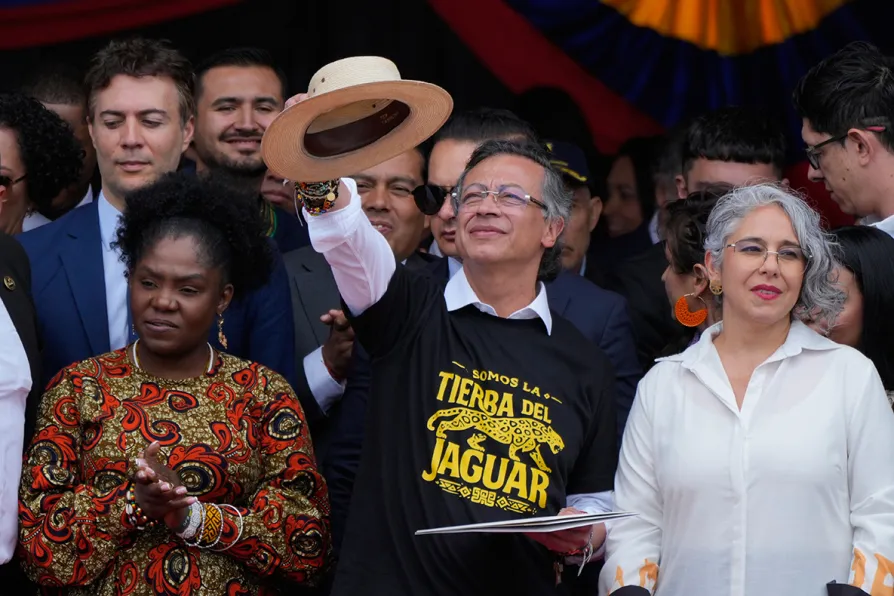
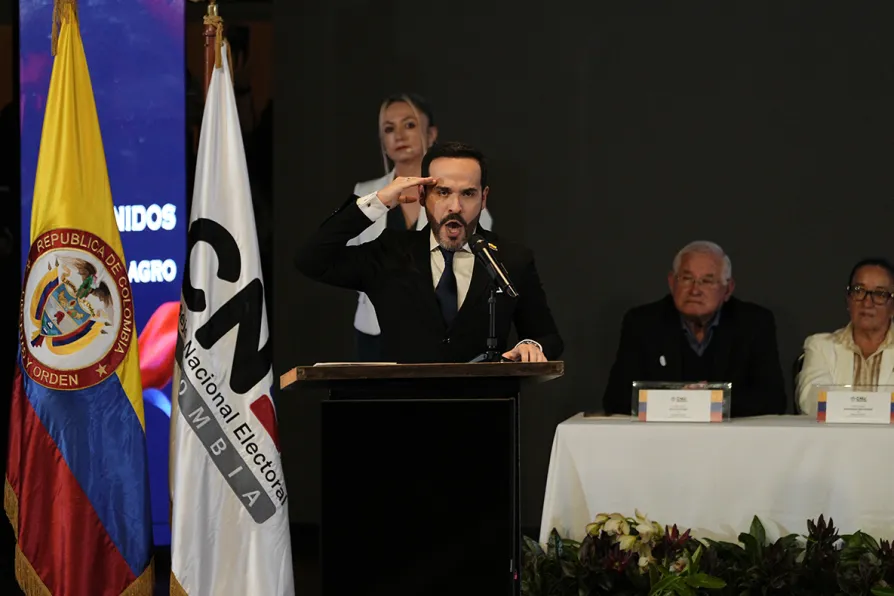
ENRIQUE SANTIAGO ROMERO says the Colombian far-right’s election victory is deeply suspect — and the United States has its fingerprints all over it
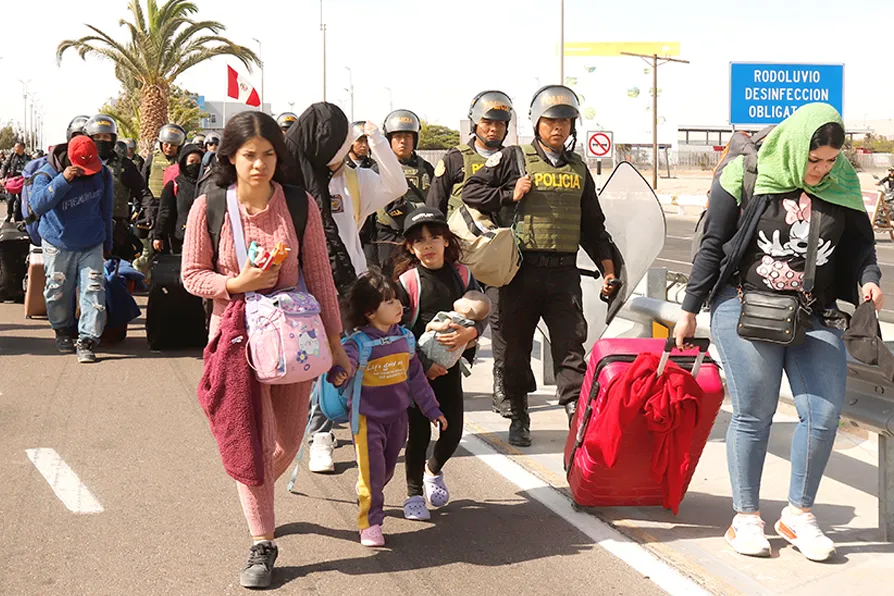
Far-right forces are rising across Latin America and the Caribbean, armed with a common agenda of anti-communism, the culture war, and neoliberal economics, writes VIJAY PRASHAD
The US is desperate to stop Honduras’s process of social and democratic change, writes TIM YOUNG