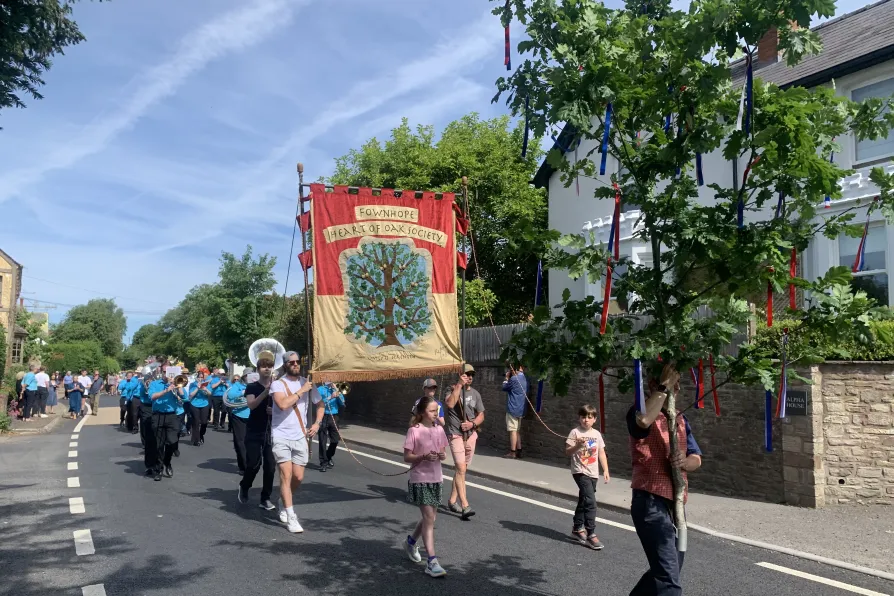
Fownhope’s Heart of Oak Society traces its roots to the age of friendly societies, when communities provided their own safety net. Its anniversary celebrations reveal a tradition still very much alive, says MARK SEDDON


 Latest editorial
The Labour Movement has got its Party Back
Unlike some past Labour leaders, Corbyn and McDonnell understand that trade unions are part of the party’s DNA, writes EMILY MAIDEN
ANGUS REID explains the significance of Cuba’s egalitarian in letter and spirit Family Code and the pertinent lessons it holds for democracies anywhere in the world
Special report by PEOPLE’S WORLD
NICK WRIGHT considers how the isolation of Israel and a new film on the controversial Italian communist leader are creating new reference points for Italy’s left
CARLOS MARTINEZ says Cuba’s achievements in the face of a criminal blockade are startling, but the island’s future if the United States succeeds in crushing it looks bleak
AMNON BROWNFIELD STEIN reports that far-right MPs who mobbed the event organised by Hadash may have helped raise awareness of the brutality of the Israeli right


A PHOTOGRAPH edged in red depicts an urban winter scene — a blanket of snow two inches deep covering a brace of bicycles chained up beside an iconic red telephone box.
Who would have thought 12 months ago, when Ed Miliband revealed a Christmas card showing his family playing with glitter glue and felt-tips, that a year later we’d have a truly socialist leader of the Labour Party unveiling an understated card with a bike on it. If a week is a long time in politics, then this year has lasted decades.
Since the general election we have had a whirlwind summer witnessing the birth of a movement that rejects the old-style politics of privilege and peerage and instead looks forward to a society that values co-operation, equality and fairness — all qualities which Jeremy Corbyn has embodied since he entered Parliament in 1983.
As it became ever-clearer that Corbyn would emerge as the newly elected leader of the Labour Party, those hoping for that outcome started preparing for a vicious media-led backlash, as journalists birthed in the right-wing stable of the Mail-Express-Telegraph ilk began raking through Corbyn’s past in the hope of uncovering a scandal, preferably including terrorist BFFs or Soviet gold.
When it became apparent that Corbyn-based scandals were going to be hard to come by, they just started making it up — remember the furore over To Bow or Not To Bow?
Unperturbed by video evidence to the contrary, the Sun unashamedly ran a front-page headline claiming that Corbyn had refused to bow at a Remembrance service at the Cenotaph — a headline which was patently untrue.
Labour’s leader can’t even sneeze without the press hounds and Twitter brigade seizing upon it as evidence of his “hard-left” agenda.
Media hacks were quick to point out the abundance of red on Corbyn’s Christmas card, momentarily forgetting that the colour is not only symbolic of socialism but of the festive season, and the words “Merry Christmas” aren’t actually a radical break with tradition as some claimed, but a common phrase used in December for generations. Who knew?
So here we are, December 2015, with a Labour leader’s Christmas card that doesn’t include a scary photograph of Tony and Cherie, or Ed Miliband and kids looking far too clean when engaging in an afternoon of arts and crafts. It’s a Christmas miracle!
At times the changes within the party in recent months have bordered upon the miraculous, especially for those who drifted away from the party with a heavy heart after the clause four debacle and the increasingly rightward trajectory of policy and key figures.
Some thought that the Labour Party they knew and loved had disappeared forever, with unions disaffiliating and membership leaking to other parties with a more socialist agenda, such as the Greens.
The overhaul of a party which was the offspring of trade unionism seemed so complete after Blair left to bring about “world peace” that any thoughts of “reclaiming” Labour by wresting it from the hands of the Blairites seemed a noble aim with no chance of coming true — a myth, an urban legend.
Like being 10 years old and knowing deep down that Father Christmas couldn’t possibly exist, and wouldn’t fit down the chimney with the BMX you asked for if he did. Nice idea, no hope of execution.
Yet over the course of four months in the summer, things began to change, culminating in Corbyn’s election as leader of the Labour Party on September 12 2015.
The magic didn’t stop there. In the short time that Corbyn has been leader, membership of the Labour Party has surged. A month after his electoral success, membership had almost doubled in the six months since the general election — a feat all the more remarkable in an era of declining political party membership throughout Europe.
The trade union movement has been reinvigorated, with the Fire Brigades Union reaffiliating to the Labour Party after a historic vote at a special conference in November.
The FBU had disaffiliated in 2004 after a dispute over pay and conditions with the Blair government, yet 11 years later the union was proud to once again be affiliated to a party that actually stood for something.
FBU general secretary Matt Wrack explained that the reaffiliation was a direct result of Jeremy Corbyn’s election, stating that “firefighters recognise that the Labour Party has changed for the better.”
In the face of the draconian Trade Union Bill, trade unionists are emboldened by this positive change, and the influence of Corbyn and his staunchly pro-union shadow chancellor John McDonnell.
The effect that Corbyn’s election had upon the wider trade union movement was evident immediately.
This year the TUC conference met 24 hours after Jeremy’s election as Labour leader, which cast the event in a different light.
Public and Commercial Services Union leader Mark Serwotka explained: “You’ll see lots of smiling faces at this conference, unlike normally when we come and people look a bit miserable.”
People looked a bit miserable after years of declining membership, coupled with a steady erosion of workers’ rights and the ability of unions to fight that erosion due to oppressive legislation and a decline in union influence in a digital age. The smiles on display at the TUC Congress were all due to the Corbyn effect.
Trade unionists knew from Jeremy’s inaugural speech as Labour leader that at last someone in a key position would offer public and practical support, as he spoke of the “importance of unions defending people’s rights” and stressed the link between trade unions and the Labour Party, stating that the two are “organically linked together.”
Previous Labour leaders and senior figures have been frantically attempting to untie the knots binding the Labour Party and trade unions for over a decade.
Jeremy and friends have just spent six months re-tying those same knots like a keen band of Scouts.
Past leaders and key figures appeared embarrassed by the trade union link, with Corbyn’s fellow leadership candidate Andy Burnham making a play of turning down any financial assistance to his campaign that might come from the trade unions, despite calling it the “cleanest money in politics.”
Ed Miliband was accused of being “in the pocket” of the unions as their preferred leadership candidate in the 2010 contest.
Rather than embracing the opportunity to explain the vital function of trade unions in both everyday life and the political sphere, Miliband changed the voting system for leadership elections in an attempt to weaken union votes.
Jeremy’s election as leader of the Labour Party has already done much to repair years of damage to the relationship between the party and the trade unions.
Unashamed that he was once a full-time officer for public-sector union NUPE — now part of Unison — and vowing to take the Tories to task over the appalling Trade Union Bill, trade union members finally have a Labour leader they can believe in.
Corbyn’s history as a man of principle proves that trade unionists can be assured that this leader is firmly on their side, not to be swayed by whatever happens to be fashionable in politics at any given time.
In return, the Labour leadership is aware that the trade union movement will support, assist and encourage wherever possible.
The “organic link” has been restored and a fruitful symbiotic relationship is being firmly re-established.
The Labour Party has rediscovered its raison d’etre, with a massively increased membership, union reaffiliations and a hopeful trade union movement keen to work towards even greater successes as we head into 2016 and beyond.
Some thought that reclaiming the Labour Party for the left could not be done, yet here we are, witnessing an almost miraculous reversal of fortunes.
It might even be a Christmas miracle. The next thing you’ll be telling me is that Father Christmas is real, and that he’s got white hair and a beard rides a bike and lives in Islington … no, wait. That’s someone else…
- Emily Maiden is a Unison activist.

Similar stories
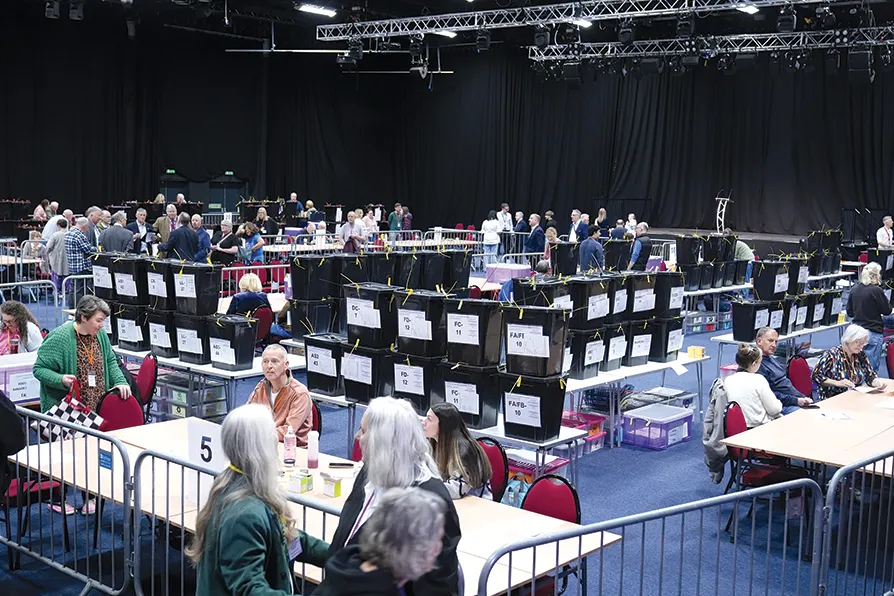
With a political crisis engulfing the Labour Party, the case for PR is back on the agenda. TONY BURKE argues trade unions must now engage on changes to our voting system

With ‘Your Party’ holding its founding conference in Liverpool this weekend, JEREMY CORBYN speaks to Morning Star editor Ben Chacko about its potential, its priorities — and a few of its controversies too
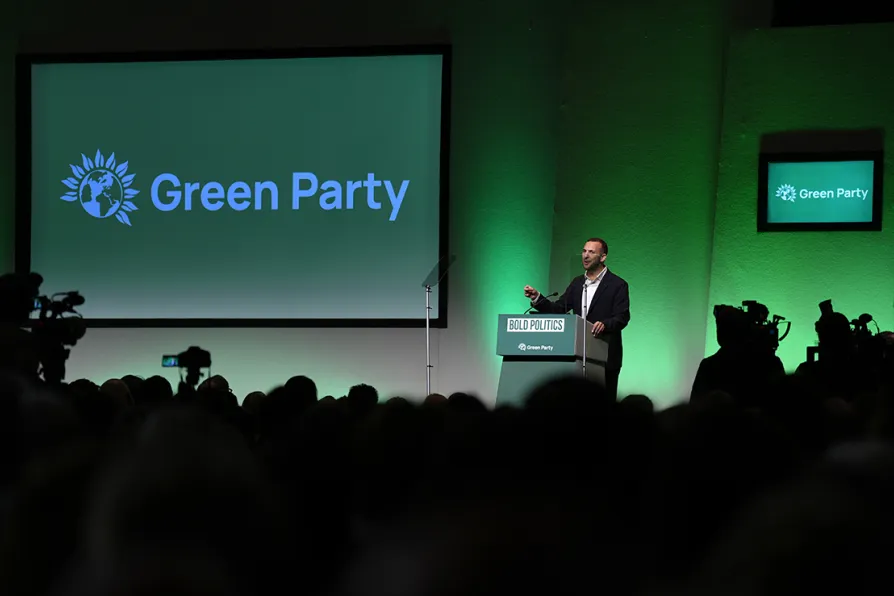
Now at 115,000 members and in some polls level with Labour in terms of public support, CHRIS JARVIS looks at the factors behind the rapid rise of the Greens, internal and external