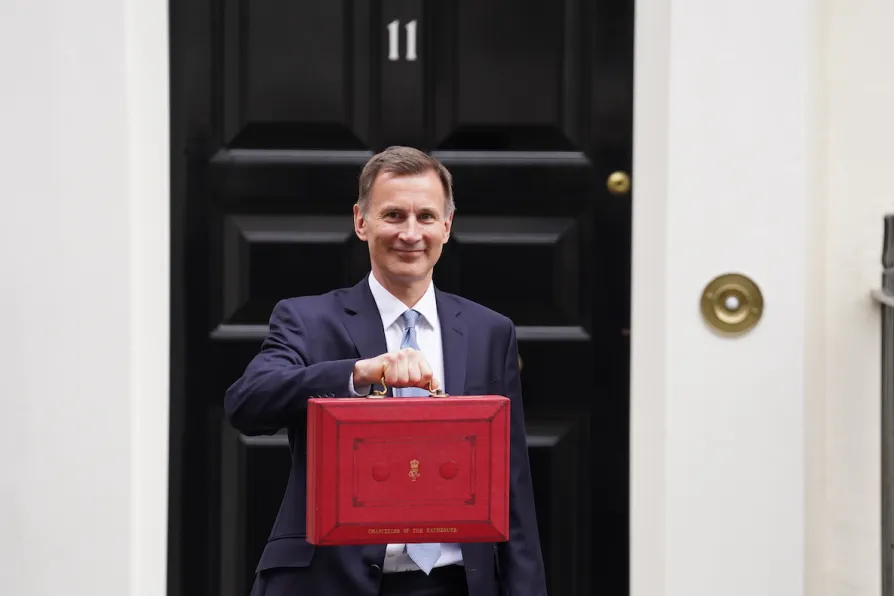
 Chancellor of the Exchequer Jeremy Hunt leaves 11 Downing Street, London, with his ministerial box, before delivering his Budget at the Houses of Parliament. Picture date: Wednesday March 15, 2023.


BRITAIN’S biggest strike surge in decades was the elephant in the room, almost ignored in the Chancellor’s Budget speech.
The huge strike march winding through Whitehall wasn’t referenced by either front bench. Yet the demands for proper pay rises and investment in public services it championed speak more directly to people’s concerns than any of Jeremy Hunt’s headline announcements.
Hunt referred vaguely to inflation as the cause of industrial disputes — before dishonestly citing it as the reason the government is denying workers the pay rises they need and deserve.
His dishonesty didn’t end there. The government is doing everything it can to resolve the disputes, the Chancellor claimed.
News to teachers whose offer of Acas conciliation was rejected out of hand by the Education Secretary. To health workers who have had to stage multiple strikes just to get the government in the room on pay talks. To transport workers who have repeatedly found their employers’ hands tied by ministers who insist unions must accept attacks on terms and conditions and massive staffing cuts as part of any settlement.
Hunt made no attempt to address the causes of inflation in price-gouging by profiteers — instead handing another £9 billion in tax deductions to business at a time when corporate profits are through the roof.
There were extra billions for armaments, but the NHS and schools were out in the cold. It was left to Labour to point to the seven-million NHS waiting list, the collapsing state of public services.
Where workforce retention issues get a look-in, Hunt either believes or pretends that staffing shortages are due to better-off doctors and head teachers retiring early rather than look at an exodus from the nursing and teaching professions inseparable from the systematic devaluing of their pay.
That great wage squeeze has gone on too long. We have, as Keir Starmer reminded Hunt, had 13 years without wage growth. In most occupations the real value of take-home pay has plummeted: by 20 per cent for experienced nurses or 23 per cent for teachers.
Hunt’s carrots are all for the well off — the rest of us get the stick. A plan that doesn’t even bother to mention public-sector pay amid this cost-of-living crisis styles itself a “back to work Budget” through imposing yet harsher sanctions on the unemployed.
The lesson for a trade union movement on the march is that pressure on this government cannot relent.
Strikes and the threat of them have delivered proper pay rises in hundreds of workplaces up and down the country. They have led to hugely improved offers from government such as that recently accepted by firefighters. They have brought ministers to the table over NHS pay, in that case overcoming an initial attempt at divide and rule through talks with the Royal College of Nursing only.
But the overall strategy of government is unchanged. It is to shore up profit margins — which have risen rapidly over the past four years — through holding pay down.
It is to ignore the desperate need for investment in health and education while ramping up military spending to fight a US-Russia proxy war in Ukraine and engage in provocative showboating to irritate China in the Far East.
Unions demanding more money must become as “persuasive” as Hunt describes the Defence Secretary — with collective action forcing policy change.
That must apply to Labour too — while Starmer, unlike Hunt, acknowledges the crisis in public services and the impact of low pay, his party is not committed to real-terms raises, let alone challenging the privatised energy and utilities cartels who are ripping us off by insisting on renationalisation.
The Westminster bubble was in evidence today. The Commons carried on as if the giant union demonstrations in London and other cities did not exist.
It’s high time that bubble was burst.


Austerity in a red tie is still austerity, warns RAMONA McCARTNEY of the People’s Assembly – rally with us to demand different choices
MATT WRACK issues a clarion call for a rejuvenation of public services for the sake of our communities and our young people
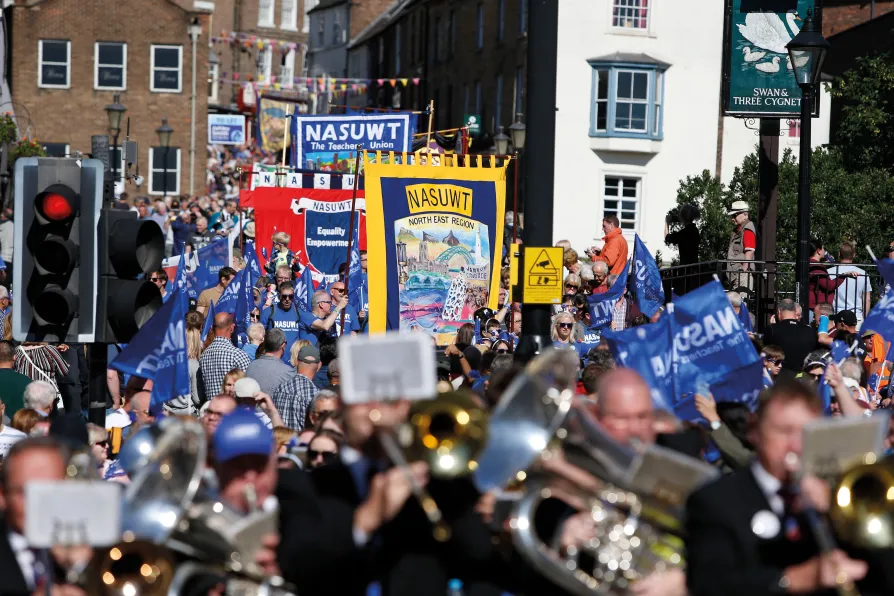
With 170,000 children living in poverty in north-east England and teachers leaving in droves over 20 per cent real-terms pay cuts since 2010, all while private companies siphon off billions, it is time to unite and fight for education, writes MATT WRACK