Fownhope’s Heart of Oak Society traces its roots to the age of friendly societies, when communities provided their own safety net. Its anniversary celebrations reveal a tradition still very much alive, says MARK SEDDON


 Latest editorial
‘Accepting that history is a history of class struggle’
JAMES CROSSLEY explains to Paul Simon why the rediscovery of English rural radical individuals and movements is a vital element in rebuilding class consciousness in the country
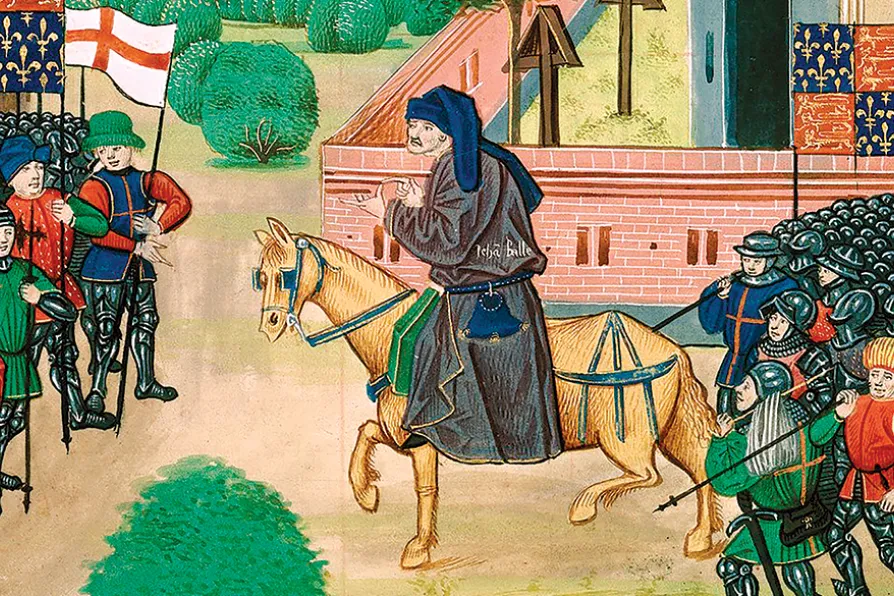 PROPAGATING REBELLION: John Ball, on a horse, encourages Wat Tyler's rebels, 1381, from a manuscript of Jean Froissart's Chronicles in the British Library, c1470
ANGUS REID explains the significance of Cuba’s egalitarian in letter and spirit Family Code and the pertinent lessons it holds for democracies anywhere in the world
Special report by PEOPLE’S WORLD
NICK WRIGHT considers how the isolation of Israel and a new film on the controversial Italian communist leader are creating new reference points for Italy’s left
CARLOS MARTINEZ says Cuba’s achievements in the face of a criminal blockade are startling, but the island’s future if the United States succeeds in crushing it looks bleak
AMNON BROWNFIELD STEIN reports that far-right MPs who mobbed the event organised by Hadash may have helped raise awareness of the brutality of the Israeli right


NEXT weekend sees a welcome return, after three years, of one of the highlights of the East Anglian left-wing calendar: the Burston Strike School Rally.
It is to be joined by a totally new event the day before, the first and virtual Paxton Chadwick Memorial Lecture.
Is the juxtaposition of these quite different events — one celebrating the longest industrial action in British history in support of socialist teachers Kitty and Tom Higden and the other commemorating the life and influence of an artist and Communist Party activist (possibly the only one to still have a road named after him) — coincidental or representative of a wider English radical rural tradition?
James Crossley thinks it is the latter. The author of the much-acclaimed Spectres of John Ball, described by the Morning Star “as an immensely, impressively propulsive read,” is the guest speaker at the Paxton Chadwick event.
“In many respects, they all tie in together. My focus will be on Chadwick, his art and associated ideas of Englishness, socialism and communism, so there’s a pretty clear connection thematically.
“He lived during a time when the English radical tradition was being romanticised and I don’t mean that term as a negative. His art is part of that whole context where these ideas were at the forefront of socialist thinking, which I don’t think they are today.”
After teaching at AS Neill’s Summerhill School, Chadwick settled along the Suffolk coast in Leiston in 1935 and over the next four decades established a strong Communist Party presence in what became known the county’s “Little Moscow.”
In that time, he established a fruitful activist relationship with AL Morton, author of A People’s history of England and another Communist Party member.
Crossley thinks that more time is needed to reassert the English radical tradition at the forefront of the class struggle.
“There’s clearly growing interest in the English Revolution, which pleasantly surprises me, although, for whatever reason, interest in the Peasants’ Revolt has died out over the last 40 years since its 600th anniversary.
“Yet I’ve given talks on the topic — at one time there were 100 people physically there, which was very encouraging and plenty of really engaged reactions.”
The author, who is also director at the Centre for the Critical Study of Apocalyptic and Millenarian Movements, believes that this rediscovery is a vital part of the left’s recovery in England.
“The accusation that you don’t love your country is clearly something that the left has had to deal with.
“There were people around Corbyn who were trying to push this English radical legacy and I believe they were right to do so, but overly optimistic to think would have any serious impact in the short term. But I hope this is part of a wider momentum that is growing to understand these kind of traditions and the place of radical thinking in England.”
Crossley sees the efforts by some socialists to support Brexit as another source of optimism.
“I think there's a popular view seen as if you’re on the left you’re automatically seen as a Remainer but I think we should revise that to liberal left. There is a long socialist tradition in England which has been opposed to the European Union for what it is — a neoliberal trading block with its own brutal borders.
“Making the country and the environment a better place is something that should be integral to English socialism.”
Essex, Norfolk and Suffolk, now seemingly solidly bourgeois counties, mask an impressively radical history.
“The term ‘Peasants’ Revolt’ arose to prominence against the backdrop of the formation of the National Agricultural Labourers’ Union, in the latter part of 19th century — that’s when the label really began to stick and it was to do with the unionisation of the rural proletariat.
“We could add Thaxted where was a real embrace of rebellion made up predominantly — whether this was strictly accurate doesn’t matter — of agricultural workers. This tradition continued with Father Jack Putterill, into the 20th century.
And of course, John Ball himself. “There is a debate in Colchester as to whether he was actually born there, which is interesting but ultimately not that convincing. But we knew he came to live there. There’s now a campaign for a statue, which I generally support.”
But isn’t there a risk in this reawakening of the English rural radical tradition, that it will be quickly owned and sanitised by various tourist agencies?
Crossly believes not — as long as the socialist left stays ahead of the game.
“John Ball and the Peasants’ Revolt has certainly in the last four decades been interpreted in a very sentimentalised way across the left. There is a fear about us not wanting to go too far, to reassure others that we’re not too much of a threat.
“If you look at accounts of the Peasants’ Revolt, it was incredibly violent. They were not seeking changes through peaceful means or via sit-down protests — they were burning and demolishing palaces. But the important thing to remember is that it was quite disciplined violence — violence to make a point, to change England for the better.
“I think only the left can embrace the truth. I’m not saying that we go around beheading archbishops or similar! But if we want to understand things in context, we have to understand the material reasons why these things happened and why the peasants made the demands they did.”
James Crossley is convinced of the central role that the revived Communist Party has in this analytical process. He believes that a historical materialist understanding of the past and the development and progression of history is key to using the past to explain present and future issues.
“In short, you don’t have to agree with any of the rebellions of the past that mark English history, but you can understand them in their historical context and that means accepting that history is a history of class struggle.”

Similar stories
The selection, analysis and interpretation of historical ‘facts’ always takes place within a paradigm, a model of how the world works. That’s why history is always a battleground, declares the Marx Memorial Library

With ‘Your Party’ holding its founding conference in Liverpool this weekend, JEREMY CORBYN speaks to Morning Star editor Ben Chacko about its potential, its priorities — and a few of its controversies too

NICK MATTHEWS recalls how the ideals of socialism and the holding of goods in common have an older provenance than you might think
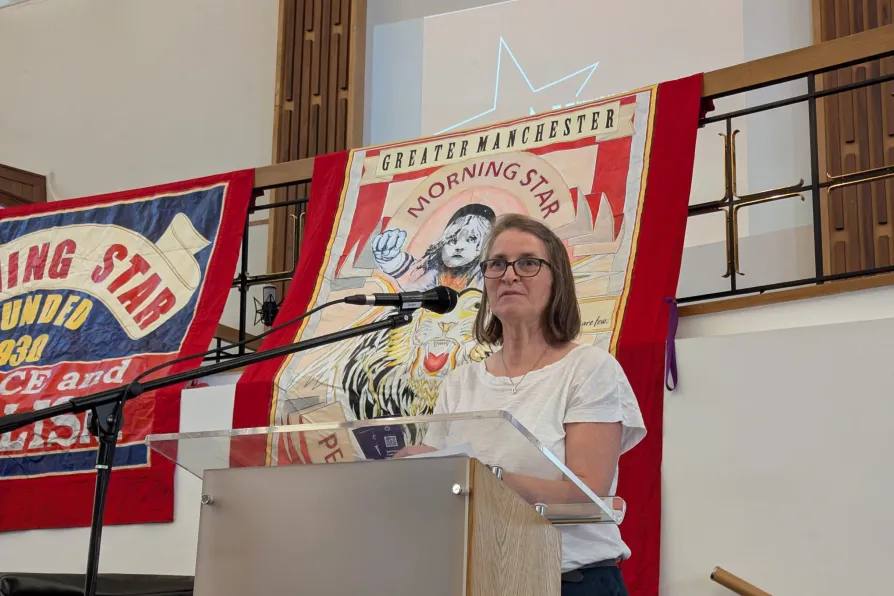
ROS SITWELL reports from the Morning Star conference on ‘Race, Sex and Class Liberation’ last weekend