

 Latest editorial

![A banner hung from Brighton pier by climate activists, June 25, 2026 [Pic: Immo Klink]](https://morningstaronline.co.uk/sites/default/files/styles/desktop/public/2026-06/Heat-Strike_BrightonPier_240626_credit_Immo_Klink_01.jpg.webp?itok=0xKwC4ap)


LABOUR faced calls to focus its efforts on peace-building today after it emerged Britain is set to ramp up weapons production.
British war profiteer BAE Systems is erecting shipping container units across the country to produce RDX explosives, used in 155mm artillery rounds.
The rounds are among the ammunition that Britain has supplied to Ukraine.
Each shipping container will produce up to 100 tonnes each year, according to a Times report.
BAE Systems’ Maritime and Land Defence Solutions business development director Steve Cardew told the paper: “The whole challenge for our industry is around production scale-up and creating enough industrial capacity to effectively match Russia and other hostile nations.”
According to the report, BAE’s production of 155mm rounds will have increased 16-fold over the last two years once its explosives filling facility at Glascoed becomes operational this summer.
The firm is also looking to build three new sites to add “resilience” to the project.
Defence Secretary John Healey said: “Strengthening home-grown artillery production is an important step in learning the lessons from Ukraine, boosting our industrial resilience and making defence an engine for growth.”
Action on Armed Violence executive director Dr Iain Overton said: “The UK’s decision to ramp up domestic explosive production reflects a worrying trend — where lessons from Ukraine are being used to justify an ever-expanding military-industrial complex.
“While resilience in supply chains is important, we must question whether fuelling the global arms trade with more munitions truly makes the world safer.
“It certainly makes arms executives richer, with the head of BAE systems recently buying a multimillion-pound property, benefiting from the sharp spike in his company’s share price after October 7.
“For Labour, investing in diplomacy and peace building would be a far wiser approach.”
Research by Dr Overton revealed that BAE’s CEO Charles Woodburn sold more than £4 million worth of shares last March — their value rising by nearly £1m compared to before the Hamas attacks on October 7.
In February, BAE announced that its profits before interest and tax surpassed £3 billion for the first time in 2024.
The company expects to benefit even further from global conflict, forecasting sales exceeding £30bn this year.

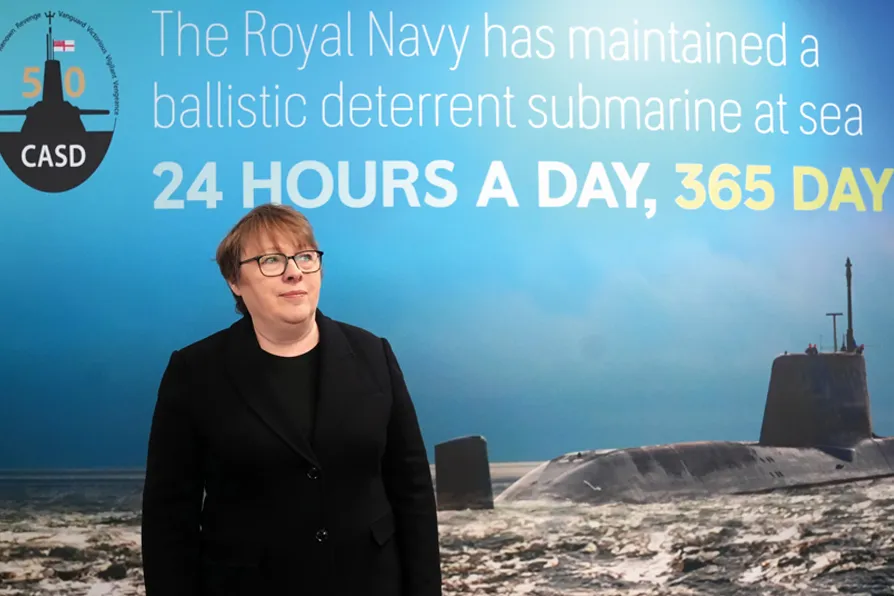
Expanding Britain’s nuclear capability increases the risk of nuclear confrontation. It does not keep us safe – it makes us a target, argues CAROL TURNER
The defence secretary’s resignation reveals not a split over principle but a dispute over pace of military spending, as Britain’s political Establishment unites behind deeper Nato commitments, argues NICK WRIGHT

British military spending is among the highest in the world, diverts scarce resources from far better causes and fuels international conflict. It’s time we made different choices, argues LIZ PAYNE

From 35,000 troops in Talisman Sabre war games to HMS Spey provocations in the Taiwan Strait, Labour continues Tory militarisation — all while claiming to uphold ‘one China’ diplomatic agreements from 1972, reports KENNY COYLE