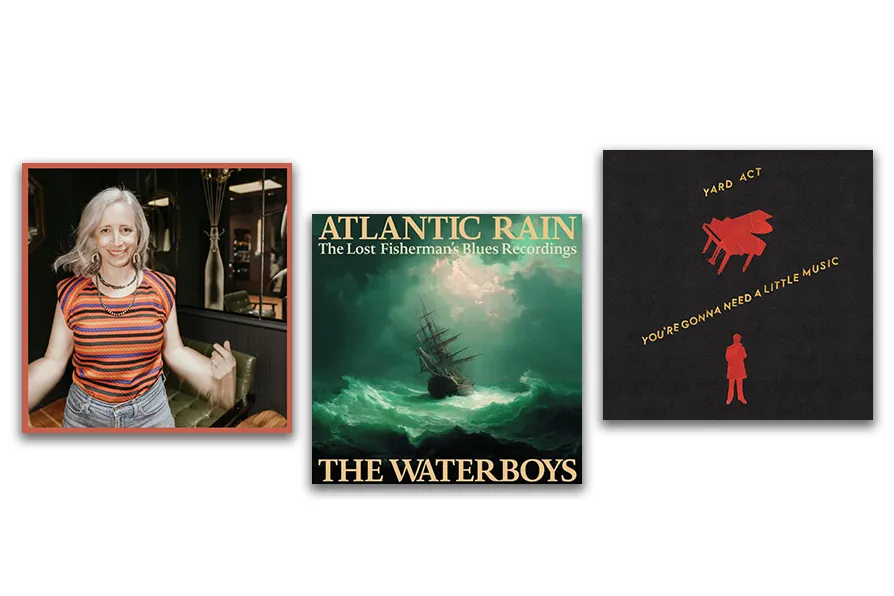
New releases from Laura Veirs, The Waterboys, and Yard Act


 Latest editorial
Letters from Latin America with Leo Boix: June 22, 2026
From post-human revolution in Puerto Rico to trans poetics and queer mythmaking, these three books that imagine new ways of being together
Ron's rages are sincere and — according to his wife — healthily cathartic. But can these splenetic outbursts loosen the grip of capitalism at its most monstrous?
ANGUS REID considers the power of the podcast as a vehicle for consensus building in opposition to mainstream media narratives
GLENN FOSBRAEY recommends a biography worth reading for both existing George Michael fans and those yet to be converted
FRANCIS DEVINE introduces a new collection of essays that draws on Pease McKenna’s example to indicate future paths for the movement
KEVIN DONNELLY and MARIA DUARTE review Shoot the People, The Last One For The Road, Rosebush Pruning, and Moana
JAMES WALSH recommends an exceptional documentary about the experience of Western doctors in Gaza


AT A moment when artificial intelligence, ecological collapse and resurgent authoritarianism are forcing us to rethink what it means to be human, three remarkable new books imagine alternative ways of living together.
Though radically different in form — a Caribbean science-fiction epic, an international anthology of trans poetry, and a queer rewriting of Greek myth — all three challenge the isolated, competitive individual at the heart of capitalist modernity. Instead, they propose collective consciousness, chosen kinship and radical interdependence.
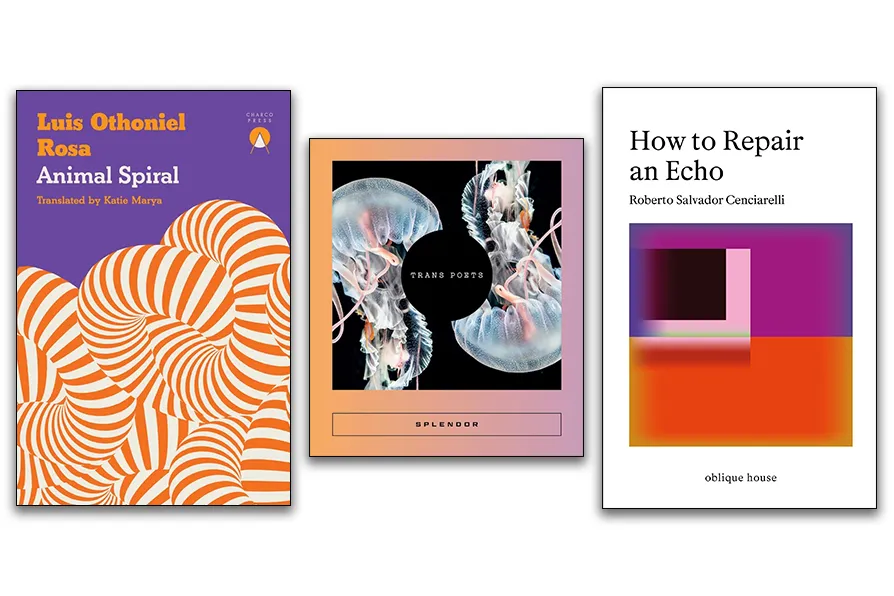
Luis Othoniel Rosa’s Animal Spiral (Charco Press, translated by Katie Marya, £12.99) is a novel that arrives from somewhere beyond the boundaries of contemporary fiction. “Madness is right, that’s what I mean to say,” it begins, before introducing Unraa, a figure whose very presence causes cameras to tremble. From there, the novel unfolds into an astonishing four-century spiral through Puerto Rican, Caribbean and post-human history.
At its centre is the Animal, a collective consciousness born when two middle-aged streamers in Bayamon become the first human beings to connect their minds through translucent cables. What follows is a dazzling procession of revolutions, floating libraries, hybrid species, artificial intelligences and planetary transformations. Rosa imagines consciousness itself as a commons, shared across bodies and generations rather than confined to private property.
The novel’s brilliance lies in its political imagination. Beneath the surrealism and technological delirium runs a sustained critique of colonialism and capitalism. Puerto Rico’s history of exploitation becomes the backdrop for a meditation on collective liberation. The result is funny, terrifying, ironic and utterly original — a novel that makes most contemporary science fiction seem timid by comparison.
Questions of transformation and survival animate Splendor: Trans Poets (Calico, £15), a superb anthology gathering poets from Argentina, Denmark, South Korea, Norway and Canada. In a political climate where trans lives are relentlessly scrutinised and legislated against, these poems insist upon existence itself as a form of resistance.
Among the collection’s highlights are the poems of Argentine Camila Sosa Villada, translated by Kit Maude. “This is an ode to my ugliness,” one poem begins, celebrating a body that history has taught itself to despise. Elsewhere, in the magnificent Travesti Witchcraft, the poet arms herself “against death, horror, and poverty,” transforming vulnerability into collective strength. These are not poems of victimhood but of enchantment and endurance.
As Rickey Laurentiis writes in his luminous introduction, the anthology participates in a shift of light. Across its pages, identity appears not as something fixed but as something continually becoming. The poems reject the violent demand to justify existence. Instead, they insist that trans people have always been here, carrying languages, memories and futures that the dominant culture struggles to comprehend.
A similar act of reclamation animates Chilean-Italian Roberto Salvador Cenciarelli’s exquisite How to Repair an Echo (Oblique House, £6). Reimagining the myth of Theseus and the Minotaur as a queer love story, Cenciarelli transforms the labyrinth from a site of punishment into a domestic landscape of care, desire and waiting.
His Minotaur is not a monster but a lover making lentil soup, baking pumpkin pie and laying the table for someone who may never arrive. “At night, I wait for you at home, pour you soup in a bowl with my favourite ladle,” he writes. The line captures the collection’s peculiar magic: myth collapses into intimacy. Heroism gives way to tenderness. Violence lingers, but as memory rather than destiny.
The poems understand that queering a myth is not simply changing its ending; it is changing the terms by which we understand power, desire and belonging. The monster, after all, was never the monster.
Taken together, these three books feel like interventions into our present political moment. Rosa imagines minds linked beyond ownership and nation. The poets of Splendor reclaim bodies and identities from systems determined to regulate them. Cenciarelli rebuilds one of Western culture’s foundational myths around care rather than domination. In an era organised around competition, extraction and fear, these books remind us that another world begins with connection.
Whether through shared consciousness, chosen identity or queer intimacy, they insist that freedom is never something we achieve alone.

Similar stories
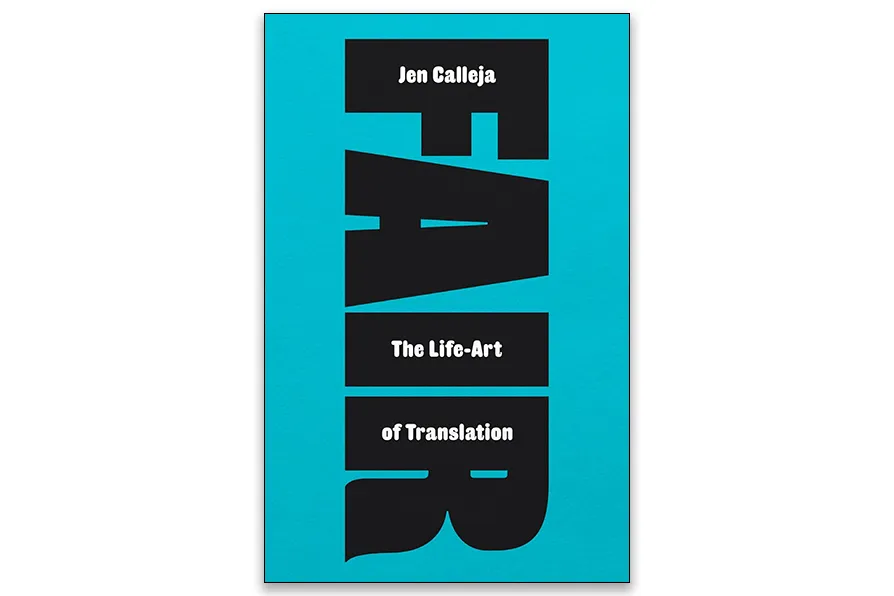
KEN COCKBURN relishes the memoir of a translator, but wonders whether the autobiography underlying the impulse would make a better book

To defend Puerto Rico’s right to peace is to defend Venezuela’s right to exist, argues MICHELLE ELLNER

A ghost story by Mexican Ave Barrera, a Surrealist poetry collection by Peruvian Cesar Moro, and a manifesto-poem on women’s labour and capitalist havoc by Peruvian Valeria Roman Marroquin
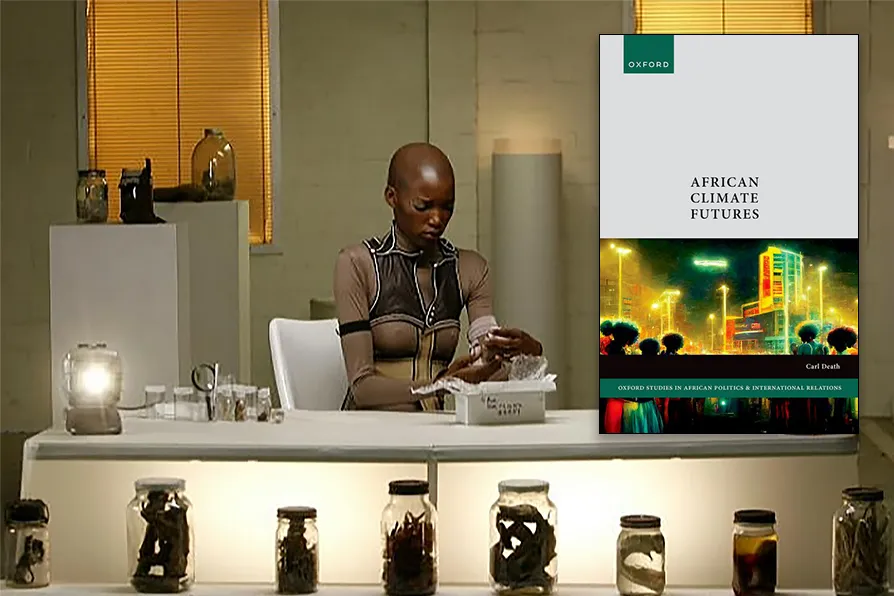
CARL DEATH introduces a new book which explores how African science fiction is addressing climate change