The National Emergency Briefing outlines the need for urgent action to address environmental crisis, says PAUL DONOVAN, warning that there’s no time to indulge the arguments of the fossil-fuel-funded climate-change deniers


 Latest editorial
Sugar rush: the sweet science of human genetic adaptation
ROX MIDDLETON, LIAM SHAW and MIRIAM GAUNTLETT examine how new genetic research reveals the rapid pace of human evolution in response to agricultural development, offering insights Marx would have found fascinating
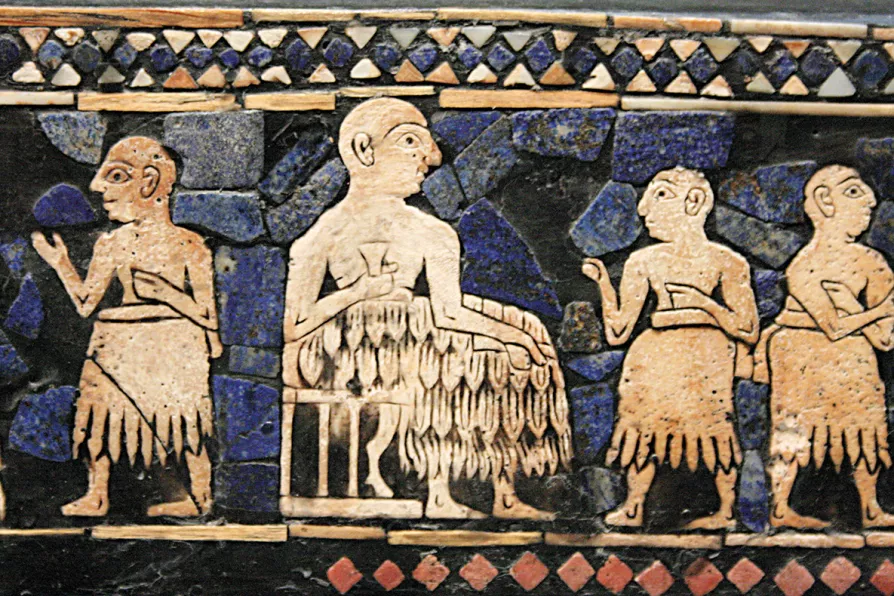 A 2600BC depiction of a king in Sumer, an early human civilisation in the fertile crescent where humans had adapted to eat starchy foods through farming
[Michel Wal/Creative Commons]
A 2600BC depiction of a king in Sumer, an early human civilisation in the fertile crescent where humans had adapted to eat starchy foods through farming
[Michel Wal/Creative Commons]

Campaigners say criticism of Labour MP Stephen Morgan’s position on Gaza has been met with police intervention and cancelled opportunities for debate. HESTER WOLFE reports
The Committee for the Defence of Iranian People’s Rights warns of escalation danger in Iran war
Claudia Webbe pays tribute tribute to KANYA KING CBE, February 12 1964 to June 3 2026
The Milburn review presents itself as a plan to help young people into work, but Dr DYLAN MURPHY argues it is laying the groundwork for a harsher benefits regime
Campaigners from across the continent will gather in Brussels on June 14 to oppose Europe’s accelerating militarisation and cuts to public services, write MAGGIE SIMPSON and BOB ORAM of No Cold War Britain


THE taste of food is something that seems fundamental. In Marx’s view, expressed in A Contribution to the Critique of Political Economy (1859), a physical property like taste provides a measure of the use-value of a commodity as distinct from its exchange-value: “From the taste of wheat, it is not possible to tell who produced it, a Russian serf, a French peasant or an English capitalist.”
Today, humanity consumes nearly 800 million metric tons of wheat a year. Other foods such as potatoes, rice, and different cereal crops are essential to diets around the world.
All of these contain large amounts of carbohydrates in the form of starch molecules. These molecules were made by the plants as an energy store. When plants photosynthesise, they use sunlight to convert water and carbon dioxide into glucose molecules.

Similar stories

RICHARD SHILLCOCK examines an enjoyable, but philosophically conventional book, and urges Marxists to employ their capacity to embrace the totality in any explanation
New research into mutations in sperm helps us better understand why they occur, while debunking a few myths in the process, write ROX MIDDLETON, LIAM SHAW and MIRIAM GAUNTLETT
GORDON PARSONS is enthralled by an erudite and entertaining account of where the language we speak came from

Olive oil remains a vital foundation of food, agriculture and society, storing power in the bonds of solidarity. Though Palestinians are under attack, they continue to press forward write ROX MIDDLETON, LIAM SHAW and MIRIAM GAUNTLETT