Andy Burnham’s growing stature has fuelled hopes of a Labour revival – but ALAN SIMPSON warns that Britain’s crisis runs far deeper than just its leadership and traces its roots to decades of financialised capitalism


 Latest editorial
Strike Map: three years of furious class struggle
Strike Map Co-founders ROBERT POOLE and HENRY FOWLER celebrate the project's third birthday and reflect on 2023 — a year of attacks and a year of victories for working-class organisation
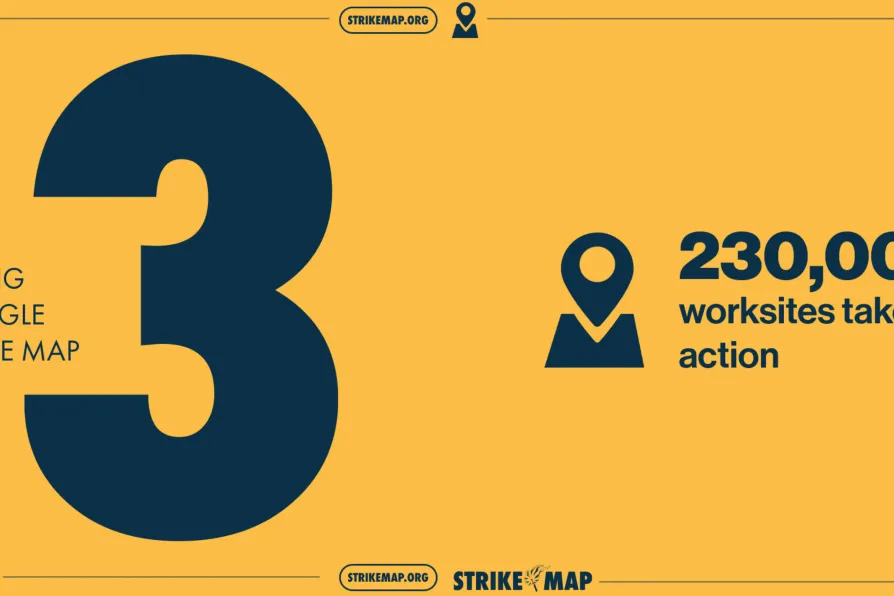 Strike Map never stands still. This year we have seen a number of exciting upgrades to our website — one of which is the new ability to add campaigns as well as strikes. This has meant we can show other forms of struggle from rallies to workplace actions.

Editor BEN CHACKO looks at the invaluable contribution the paper makes, and the headwinds it has to struggle against to get by, following the Morning Star’s 80th AGM this month
Recent violence in Belfast was not spontaneous — it was built on years of failure and political neglect, argues STIOFAN O NUALLAIN
The nationalisation move to Great British Railways (GBR) must be about more than just changing the livery, writes MARYAM ESLAMDOUST
Activists will urge MPs to protect the five-year settlement route and cut visa costs, warning reforms risk deepening inequality and labour shortages, says HARSEV BAINS
ANSELM ELDERGILL examines the issues of liberty, safety and risk in relation to people receiving psychiatric treatment


IN August it was reported that 3.9 million working days had been lost to industrial action in the past year, more than at any point since the 1980s. There are now 230,000 strikes in our database with the highest number coming from the National Education Union (NEU) which saw thousands of workplaces closed due to educators taking action.
We’ve had over 2 million views on our website, and over 4,000 people have pledged to “visit a picket.” We supported two mega strikes, the first on February 1 which saw half a million workers on strike from across five unions — NEU, PCS, UCU, Aslef and RMT plus other unions in local disputes. The second was on Budget Day Wednesday March 15 with London Tube drivers, teachers, doctors, civil servants, Amazon workers and many more downing tools.
We have seen several national victories across the movement. These include teachers who won a 6.5 per cent pay rise and other concessions after nine days of strike action by the National Education Union.
Members of the RMT union voted to accept a pay offer which included a backdated pay rise of 5 per cent for 2022-23 as well as job security guarantees after 18 months of action and CWU members voted overwhelmingly to accept a 10 per cent pay rise on a three-year deal with Royal Mail.
We also saw several local Unite disputes end in wins for example Wirral bin strikes ended with a 15 per cent pay rise. Unison won a massive 25 per cent rise for workers at Ash Field Academy in Leicester — backdated to 2022 alongside a £2,000 one-off payment — after 43 days of action.
At the same time though 200,000 people left trade unions. Trade union density is falling in traditionally strong areas. Collective bargaining coverage, once at around 80 per cent, is now down to almost 20 per cent.
Density in the public sector? Now below 50 per cent for the first time. The picture in the private sector? Just 12 per cent. Worryingly this is at a time of intensive strike action where we would expect to see numbers rising and our movement strengthening.
Despite our declining movement, public perception of trade unions is highly positive. Unions have become the clear vehicles safeguarding working-class life people, and promoting their interests, in a vacuum left by his majesty’s opposition.

Similar stories
Midlands trade unionists are turning challenge into opportunity through collective power and renewed confidence, says STUART RICHARDS
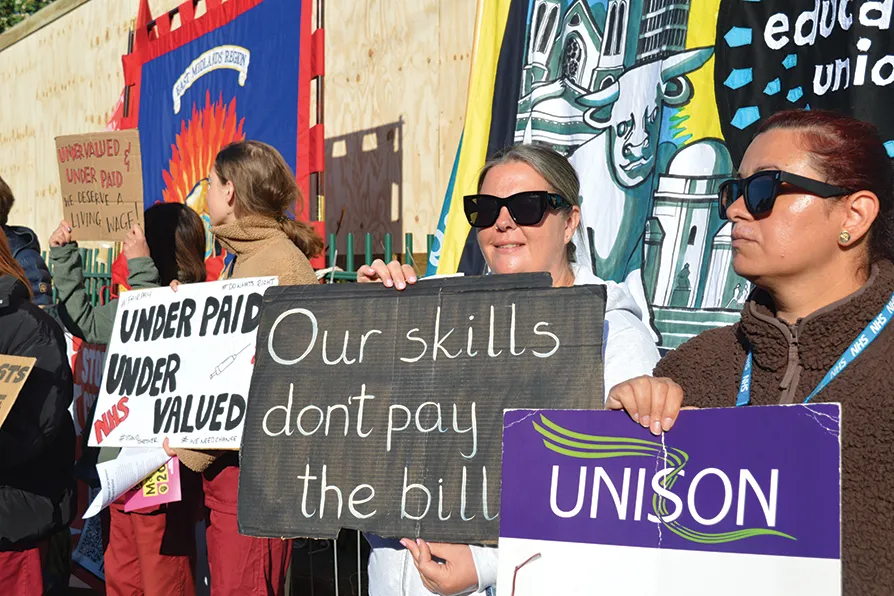
Solidarity is needed for the longest strike in NHS history, argues HENRY FOWLER of Strike Map
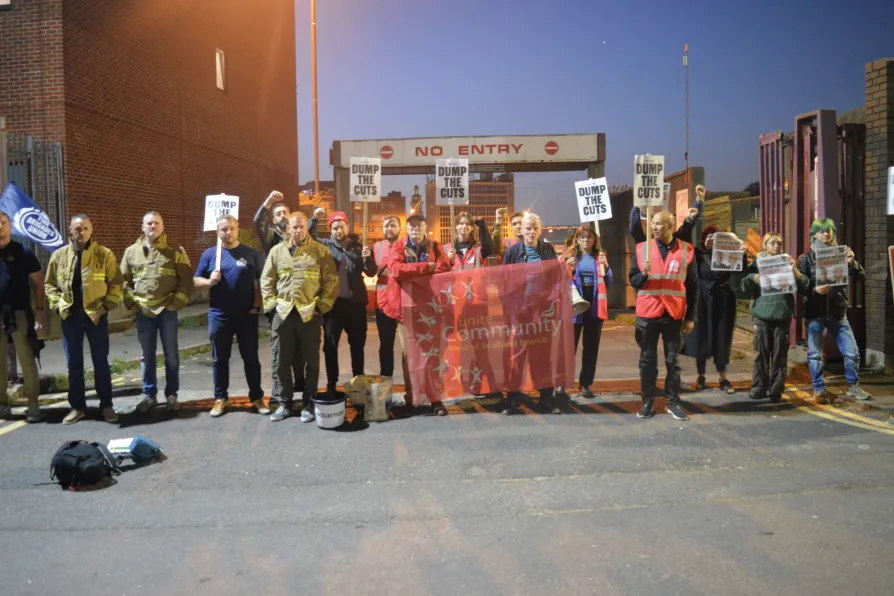
Since 2023, Strike Map has evolved from digital mapping at a national level to organising ‘mega pickets’ — we believe that mass solidarity with localised disputes prepares the ground for future national action, writes HENRY FOWLER
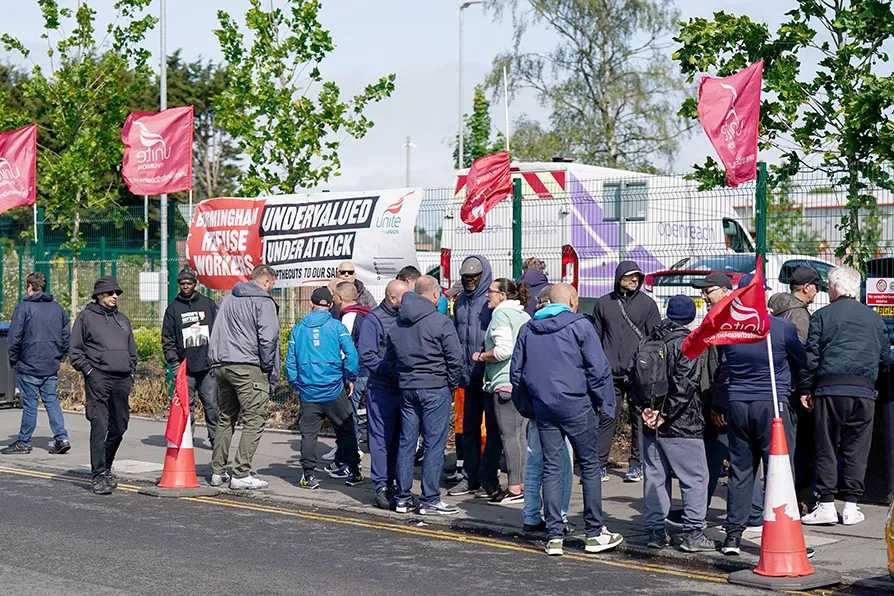
This ‘Big Meet’ our focus is building the next ‘Megapicket,’ say HENRY FOWLER and GAWAIN LITTLE of the General Federation of Trade Unions