Andy Burnham’s growing stature has fuelled hopes of a Labour revival – but ALAN SIMPSON warns that Britain’s crisis runs far deeper than just its leadership and traces its roots to decades of financialised capitalism


 Latest editorial
Sea of change
ANDREW LININGTON introduces the battling history of the maritime trade union Nautilus
 (L to R) M N petition; first inhabitants of an MMSA home for aged and infirm mariners
[Author supplied]
(L to R) M N petition; first inhabitants of an MMSA home for aged and infirm mariners
[Author supplied]

Editor BEN CHACKO looks at the invaluable contribution the paper makes, and the headwinds it has to struggle against to get by, following the Morning Star’s 80th AGM this month
Recent violence in Belfast was not spontaneous — it was built on years of failure and political neglect, argues STIOFAN O NUALLAIN
The nationalisation move to Great British Railways (GBR) must be about more than just changing the livery, writes MARYAM ESLAMDOUST
Activists will urge MPs to protect the five-year settlement route and cut visa costs, warning reforms risk deepening inequality and labour shortages, says HARSEV BAINS
ANSELM ELDERGILL examines the issues of liberty, safety and risk in relation to people receiving psychiatric treatment


SEAFARING has always been a tough, dangerous and precarious profession and — in one of the most globalised and fiercely competitive of all industries — it’s been a constant struggle to defend, let alone improve, working conditions.
And as the 166-year history of the maritime professionals’ union Nautilus International demonstrates, it has demanded innovative and imaginative methods of organising, servicing and campaigning on behalf of a frequently fragmented and worldwide workforce.
In setting out to write that history, I was very aware that shipmasters and officers may not spring to mind as workers in the vanguard of labour struggle. But the evolution of a specialist trade union to protect them in a cut-throat and transboundary workplace serves up many surprises — and offers important lessons for everyone in an era when multinational employers are increasingly dominant.

Similar stories
In the final part of a serialisation of his new book, JOHN McINALLY explains how in 2018, after years spent rebuilding the PCS into a leading force against austerity, a damaging rupture emerged from within the union’s own left wing
![BY ANY MEANS POSSIBLE: Yanaocha mine in Cajamarca, Peru is the largest gold mine in South America operated by Newmont Corporation. It is considered the most profitable in the world [Pic: Elbuenminero/CC]](https://morningstaronline.co.uk/sites/default/files/styles/desktop/public/2025-09/extractive%20caoitakism%20webpic.jpg.webp?itok=lkf5b6oi)
JOE GILL appreciates a lucid demonstration of how capital today is an outgrowth of the colonial economy
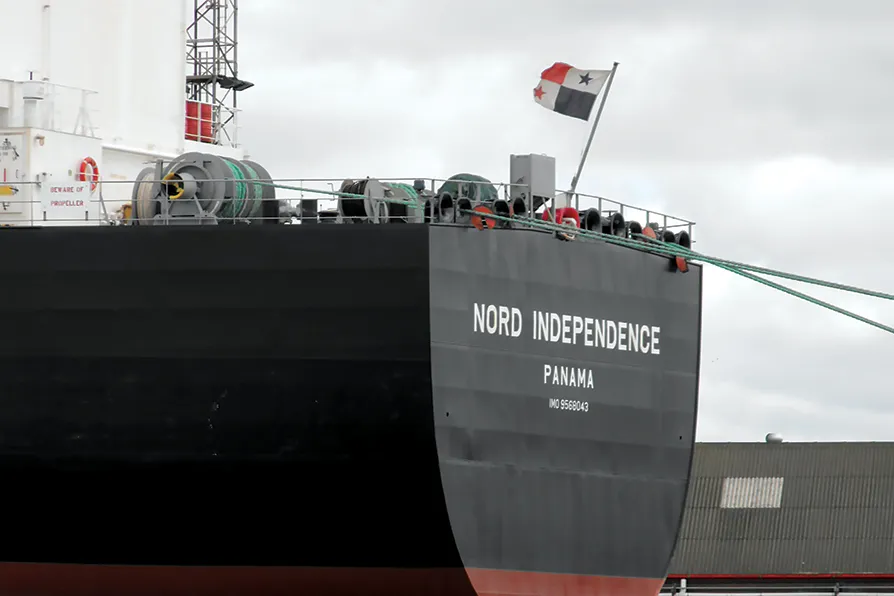
MARTYN GRAY asks TUC congress to endorse measures that would help stop the present exploitation of seafarers

It is only trade union power at work that will materially improve the lot of working people as a class but without sector-wide collective bargaining and a right to take sympathetic strike action, we are hamstrung in the fight to tilt back the balance of power, argues ADRIAN WEIR