CJ ATKINS takes a closer look at Trump’s recent spate of red-baiting speeches and asks why the authoritarian president is running scared


 Latest editorial
Anti-immigration sentiment becoming dominant in the Netherlands
In a pattern repeated across Europe, the small lowland country has shifted dramatically from being a proudly 'welcoming' country for migrants and refugees to one that now feels overrun, writes MIKE CORDER
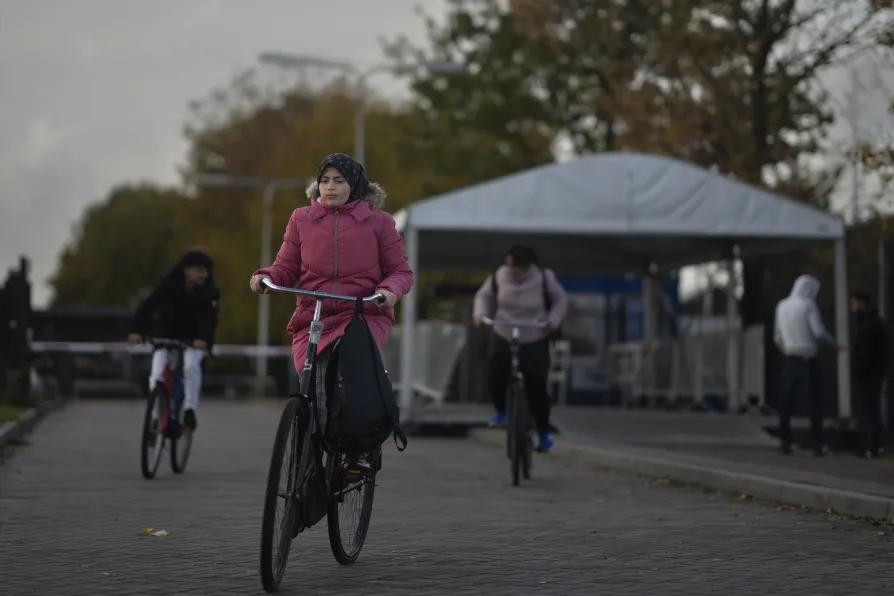 Asylum-seekers leave the reception centre in Ter Apel, Netherlands, Thursday, November 2023

JOHN McINALLY sees little chance of change at Westminster, and calls on the left to get serious about building a real alternative
With the centenary of the UN Slavery Convention upon us, ROGER McKENZIE argues much needs to be done to rid us of all its contemporary manifestations
SEVIM DAGDELEN says European Nato states are escalating ever closer to direct conflict with a nuclear power, and sacrificing welfare states built up over a century to finance it
CLAUDIA WEBBE says the horrific price British patients will pay for this NHS deal is now clear — and there’s time to get out of it, if MPs will only force the issue
KENNY MacASKILL says the lines between party, government and Civil Service in Scotland have been blurred and we need a thorough investigation into how


IT is a familiar sight in this remote rural town: a migrant in a headscarf and thick winter coat carrying her belongings to the overcrowded reception centre as a storm brews over the flat landscape.
For many here and across this nation once known as a beacon of tolerance, it is too familiar.
“Immigration is spiralling out of control,” Henk Tapper said while visiting his daughter in Ter Apel two weeks before the Netherlands votes in parliamentary elections on November 22.
Candidates across the political spectrum are campaigning on pledges to tackle migration problems that are crystallised in Ter Apel, just over 120 miles north-east of Amsterdam. Once mostly known for its monastery, the town has now become synonymous with Dutch struggles to accommodate large numbers of asylum-seekers.
In the summer of 2022, hundreds of migrants were forced to sleep outside because the reception centre was full. The Dutch branch of Doctors Without Borders sent a team to help the migrants, the first time it was forced to deploy within the Netherlands.
The centre still is overcrowded and locals complain of crime and public order problems blamed on migrants who wander in small groups through the village.
It is not only asylum-seekers, though. Political parties also are pledging to crack down on labour migrants and foreign students, who now make up some 40 per cent of university enrollments.
Tapper said he plans to vote for anti-Islam lawmaker Geert Wilders’s Freedom Party which advocates a halt in asylum-seekers and opting out of EU and UN agreements and treaties on refugees and asylum.
The migration debate in the Netherlands echoes across Europe, where governments and the European Union are seeking ways to rein in migration. Italy recently announced plans to house asylum seekers in Albania.
In Germany, the centre-left government and 16 state governors have agreed on a raft of measures to curb the high number of migrants flowing into the country. They include speeding up asylum procedures and restricting benefits for asylum-seekers.
Outgoing Prime Minister Mark Rutte was part of an EU delegation visiting Tunisia over the summer to hammer out a deal with the North African nation intended to combat the often lethal smuggling of migrants across the Mediterranean Sea.
Meanwhile, many Dutch voters are calling for tougher domestic policies in this country once famed for its open-arms approach to refugees dating all the way back to the Pilgrim Fathers who lived in Leiden after fleeing religious persecution in England and before setting sail for what is now the US.
One of the leading candidates to succeed Rutte is herself a former refugee. Now, Dilan Yesilgoz, leader of the centre-right People’s Party for Freedom and Democracy (VVD) advocates making her adopted country less welcoming.
“Our laws, our regulations are... way more attractive than the laws and regulations of the countries around us, which makes us more attractive for people to come here,” she told the Associated Press.
Yesilgoz is the daughter of Turkish human rights activists who fled to the Netherlands when she was a child.
“Being a refugee myself, I think it’s very important that... we take the decisions to make sure that true refugees have a safe place,” she said. “And politicians who refuse to take those difficult decisions they are saying to the true refugees, but also to the Dutch public: ‘You’re on your own.’”
The vote is shaping up to be very close, with the VVD and the recently formed conservative populist party New Social Contract leading in polls against a centre-left bloc of Labour and Green Left.
According to the official Dutch statistics agency, just over 400,000 migrants arrived in the Netherlands last year — that includes asylum-seekers, foreigners coming to work in the Netherlands and overseas students. The number was pushed higher by thousands of Ukrainians fleeing the war sparked by Russia’s invasion.
Ekram Jalboutt, born to Palestinian parents in a Syrian camp, has been granted asylum in the Netherlands and doesn’t like what she sees in the debate about migration. “I hate the idea of playing with this card of migration in this political game,” she said at the headquarters of the Dutch Refugee Council, where she now works.
The recently formed New Social Contract party wants to set a “guideline” ceiling of 50,000 migrants a year allowed into the Netherlands — including asylum-seekers, labour migrants and students.
Along with the VVD, it wants to introduce an asylum system that differentiates between people fleeing persecution and those fleeing war. The latter group would have fewer rights, including the right to family reunifications. Acrimonious discussions on such moves brought down the last ruling Dutch coalition in July.
The number of new arrivals blends into another major problem Tapper highlighted — a chronic shortage of housing in this crowded nation of about 18 million people.
“There are houses for foreigners, and Dutch people can hardly get a house... that is a bit strange here in the Netherlands,” he said.
Advocates for cracking down on migration argue that people granted refugee status are also fast-tracked into scarce social housing and can leapfrog Dutch people who can languish for years on waiting lists.
The Dutch Refugee Council argues that refugees make up only a small proportion of people whose applications for social housing are fast-tracked.
“The political debate about asylum and migration is very polarised,” said Anna Strolenberg, a spokesperson for the council. “We see most political parties proposing solutions that are too simplistic, that are not realistic, and they’re actually capitalising on the gut feelings of people.”

Similar stories

A society that grows accustomed to ‘undesirable’ people also grows accustomed to undesirable deaths. Minneapolis serves as a wake-up call, including for our own refugee policies, writes MARC VANDEPITTE
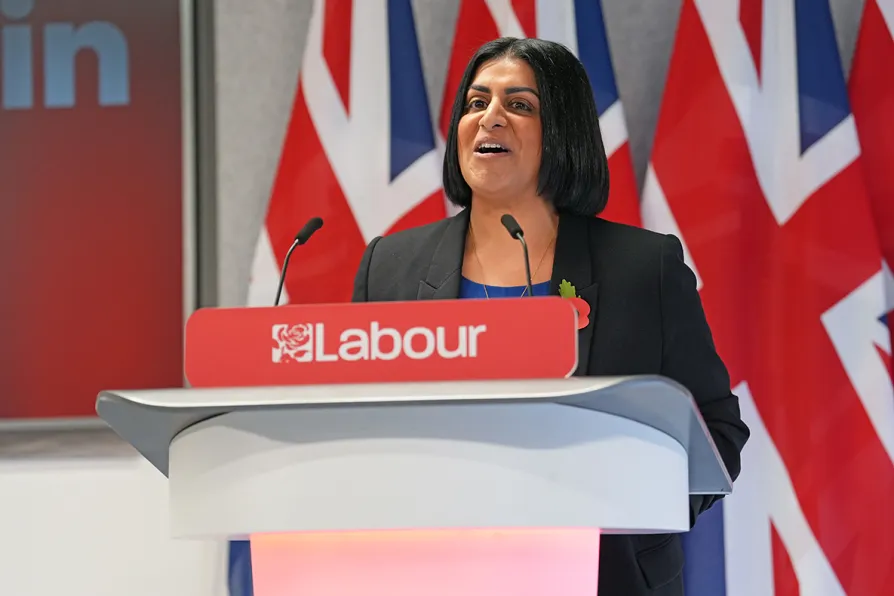
DIANE ABBOTT warns that Shabana Mahmood’s draconian asylum proposals fuel racist scapegoating and risk demoralising Labour’s base – potentially paving the way for Farage to No 10
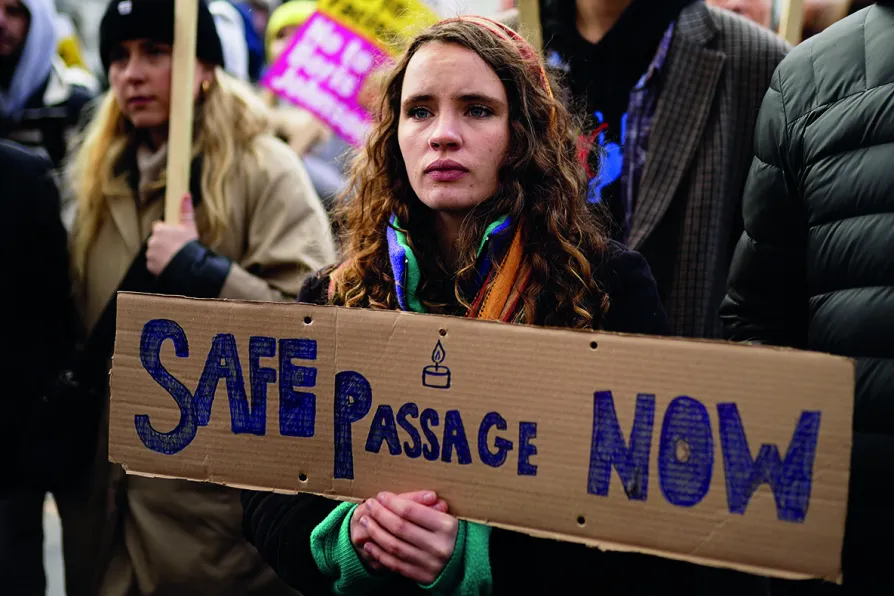
Britain’s proud asylum history, from sheltering the Kindertransport escaping Hitler to Basque children fleeing fascist Spain, required tireless campaigning against persistent opposition — and it’s up to all of us to do our part today, writes SABINA PRICE