DAVID YEARSLEY is fascinated by the account of four composers who transformed their experiences of the second world war and the Holocaust into deeply moving works of art


 Latest editorial
The Great Unrest, then and now
ANDREW MURRAY applauds a thorough history of the great pre-WWI strike wave, and the resonances it has with the present day
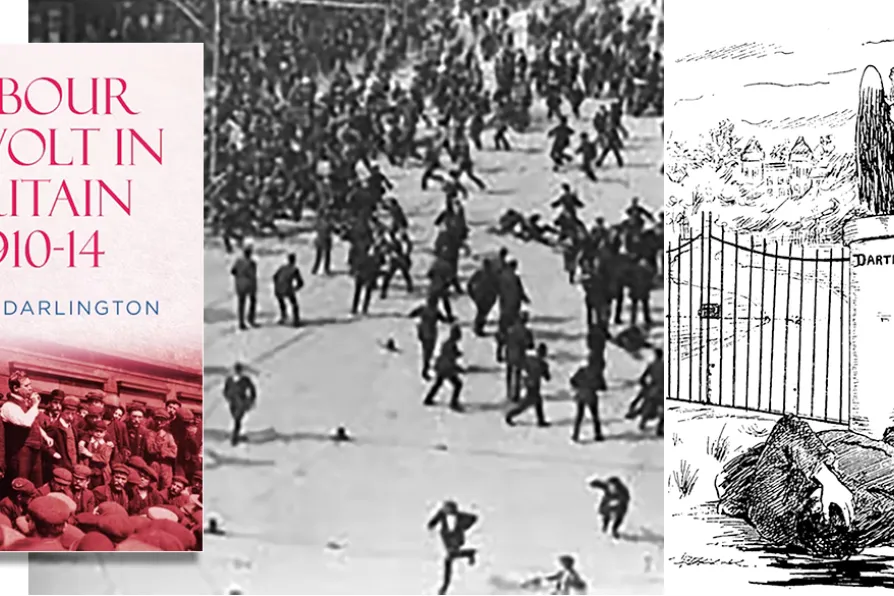 Contemporary satirical cartoon The Demon of Death by Dublin Metropolitan Police break up a union rally on Dublin's Sackville Street, August 1913; Ernest Kavanagh of William ‘Murder’’ Murphy preying over Jim Larkin, September 6 1913 in Irish Worker
[Public Domain/CC]
Contemporary satirical cartoon The Demon of Death by Dublin Metropolitan Police break up a union rally on Dublin's Sackville Street, August 1913; Ernest Kavanagh of William ‘Murder’’ Murphy preying over Jim Larkin, September 6 1913 in Irish Worker
[Public Domain/CC]
PETER MASON thrills to the sound of south London-born Yussef Dayes, and the galaxy of musicians drawn into his orbit
From post-human revolution in Puerto Rico to trans poetics and queer mythmaking, these three books that imagine new ways of being together
JAMIE BRITTON recommends that we all buy at least two copies of a remarkable book of poems
Re-releases from Iain Matthews, Quicksilver Messenger Service, and The Charlie Daniels Band
JAMIE BRITTON recommends that we all buy at least two copies of a remarkable book of poems


Labour Revolt in Britain 1910-14
Ralph Darlington, Pluto Press, £19.99
THIS survey of one of the greatest upsurges in labour action in Britain’s industrial history appears at an opportune time, amidst another significant wave of strike action. The struggles of 110 years ago have, the author concludes, features “which remain of considerable relevance for contemporary union activists and socialists.”
Indeed, it is tempting to read this outstanding historical survey with one eye on the present throughout. Yet the strikes, large and small, that Darlington describes are also of an industrial and political period long left behind.
His heroes are coal miners, dockers, textile workers, Midlands metal workers, Cornish clay workers, and other trades now either dead or, at any event, radically diminished in number and social impact. Railway workers do provide a common thread between the two centuries of struggle, but this serves to draw attention to the central part played by railway transport in the production and realisation of surplus value for large sections of capital a hundred years ago, which is no longer the case.

Similar stories

The General Strike exposed the power of the working class — and the limits of its leadership, writes Dr DYLAN MURPHY

In part II of a serialisation of his new book, JOHN McINALLY explores how witch-hunting drives took hold in the Civil Service as the cold war emerged in the wake of WWII

Corbyn and Sultana’s ‘Your Party’ represents the first attempt at mass socialist organisation since the CPGB’s formation in 1921, argues DYLAN MURPHY
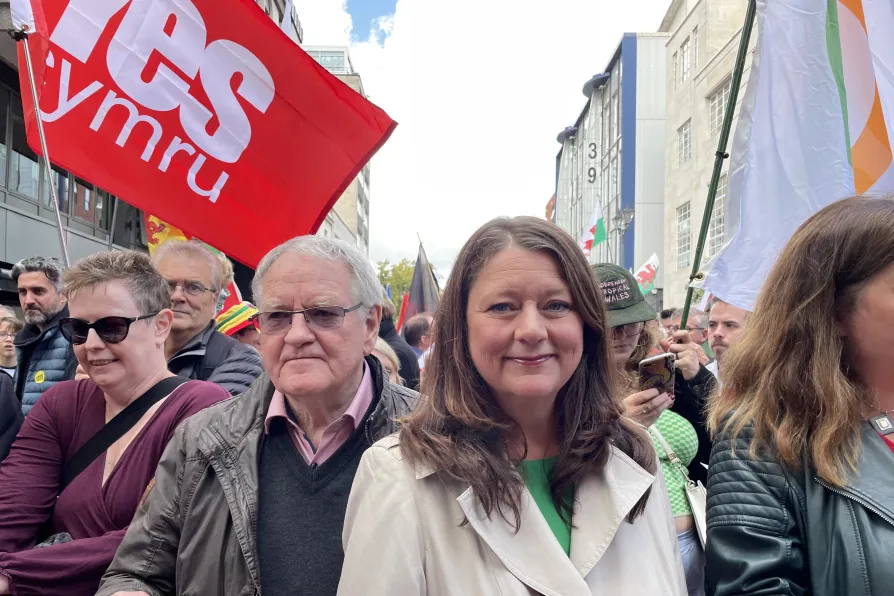
The historic heartland of anti-fascist resistance and mining militancy now faces a new battle — stopping Nigel Farage. ANDREW MURRAY meets ex-Labour MP Beth Winter and former Plaid leader Leanne Wood, the two socialists leading the resistance