South Africa: Two weeks to cobble together coalitions after local elections

SOUTH AFRICAN political parties have a fortnight to agree on coalition arrangements in a number of municipalities or submit to fresh elections after final results for last Wednesday’s polls were reported on Saturday.

The results made grim reading for the African National Congress (ANC) although a majority, 53 per cent, of voters backed the former liberation movement across the country.

But the ANC has lost control of key metropolitan areas — Nelson Mandela Bay, which includes Port Elizabeth, Tshwane around Pretoria, Ekurhuleni, formerly known as the East Rand, and the largest city Johannesburg.

The 95th Anniversary Appeal
Support the Morning Star
You have reached the free limit.
Subscribe to continue reading.
Similar stories
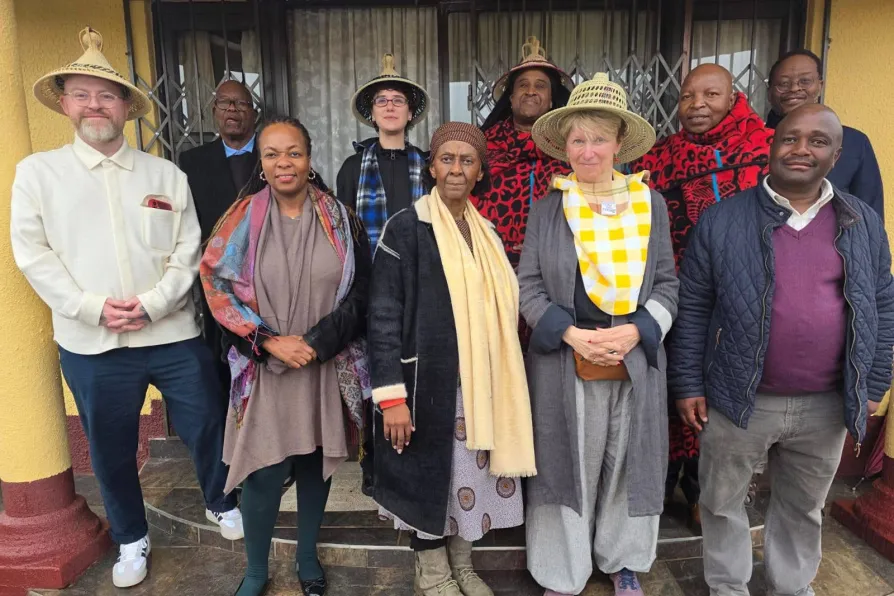
me and the party from Manifesto Press with the Bakoena Royal Council in KwaZulu Natal
South Africa / 14 May 2026
14 May 2026

ROGER McKENZIE looks at how ancient traditions practiced today can be the cornerstone of anti-imperialism in Africa
CHANGING TIMES: Delegates at a South African Communist Party national congress at the University of Johannesburg. Photo: GCIS/Creative Commons
Features / 17 July 2025
17 July 2025

The shared path of the South African Communist Party and the ANC to the ballot box has found itself at a junction. SABINA PRICE reports

first
Book Review / 11 July 2025
11 July 2025

SALEEM BADAT and VASU REDDY introduce a new book about an outstanding interpreter of the world, and an activist scholar committed to changing society

HISTORIC DREAM UNFULFILLED: The Freedom Charter seen here written on the wall of a cell in the Palace of Justice in Pretoria during the 1964 Rivonia Trial, where Nelson Mandela was sentenced to life imprisonment. Photo: Creative Commons — PHParsons
Features / 7 July 2025
7 July 2025

The charter emerged from a profoundly democratic process where people across South Africa answered ‘What kind of country do we want?’ — but imperial backlash and neoliberal compromise deferred its deepest transformations, argues RONNIE KASRILS