Durham Miners’ Association chair STEPHEN GUY speaks to Ben Chacko about the Reform threat, what’s needed from Labour and why the Big Meeting will never lose its politics


 Latest editorial
Kill the Bill: We killed a trade union bill in the ’70s – here’s how
Conrad Landin talks to ex-Ford union convener and communist industrial organiser Kevin Halpin about the Industrial Relations Act
![Durham Miners' Gala 2026 [Pic: Neil Terry]](https://morningstaronline.co.uk/sites/default/files/styles/desktop/public/2026-07/SSS_20260711_DURHAM_MINERS_GALA_0-21.jpg.webp?itok=NUVjowji)
Andy Burnham’s message of hope will defeat Reform if Labour delivers the New Deal for Working People in full, says JOANNE THOMAS
General Federation of Trade Unions president and bakers’ union general secretary, SARAH WOOLLEY, guides us through the GFTU’s Summer School happening this week at Quorn Grange Hotel
The government’s latest asylum proposals abandon labour movement values and fuel division by aping Reform UK, writes DIANE ABBOTT MP
Can Andy Burnham’s programme deliver a productive economy – or merely a softer version of capitalism, asks VINCE MILLS
IAN LAVERY MP warns that decades of neoliberal policies have left former industrial communities behind — but a renewed Labour commitment to working people could change the political landscape


When Sajid Javid announced the terms of punitive new union laws, the labour movement was left pondering serious questions.
The past five years have seen vibrant campaigns against NHS privatisation, the gagging laws, the privatisation of Royal Mail — but only in a few exceptional cases have campaigners defeated Tory laws politically.
Some still advocate for the Kill the Bill campaign to focus on undermining the new, albeit small, Tory majority in the House of Commons, while others see parliamentary lobbying as a non-starter.

Similar stories

The General Strike exposed the power of the working class — and the limits of its leadership, writes Dr DYLAN MURPHY

In part II of a serialisation of his new book, JOHN McINALLY explores how witch-hunting drives took hold in the Civil Service as the cold war emerged in the wake of WWII
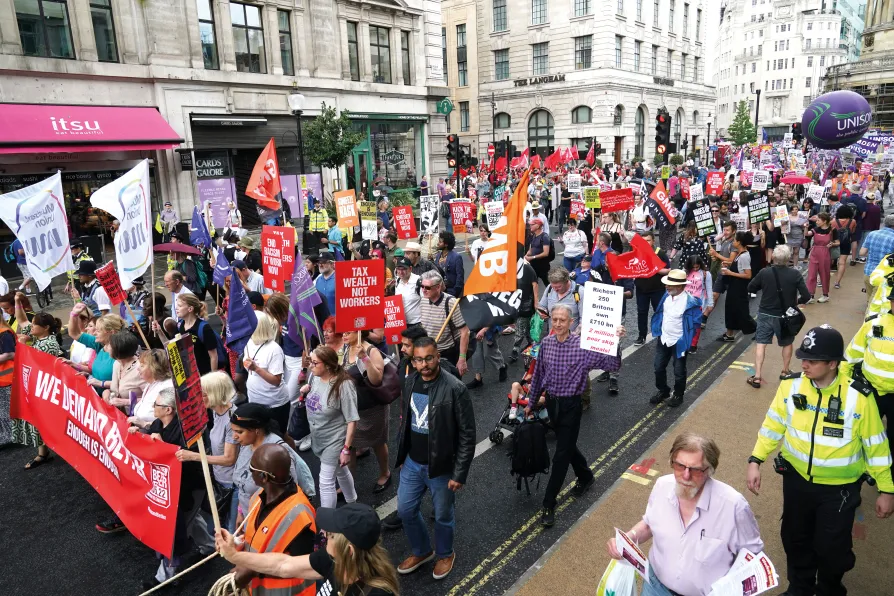
Labour must not allow unelected members of the upper house to erode a single provision of the Employment Rights Bill, argues ANDY MCDONALD MP

It is only trade union power at work that will materially improve the lot of working people as a class but without sector-wide collective bargaining and a right to take sympathetic strike action, we are hamstrung in the fight to tilt back the balance of power, argues ADRIAN WEIR