KEVIN DONNELLY suggests that the task of transforming cultural spaces is far from over and that photography still has a key role to play


 Latest editorial
Spring sprouts blousy
ALAN MORRISON welcomes a new collection from the most imaginative and committed ecopoet of our time

RITA DI SANTO talks to Scottish-Irish filmmaker MARK COUSINS about his new series The Story of Documentary Film
CAL McBRIDE relishes the lyrical truth of an unstable identity in an over-tidy and conventional social realist treatment
New releases from Shearwater, Florry, and Navy Blue
CHRIS SEARLE welcomes a startling vision of contemporary Newport from a veteran photographer of the British working class
ANGUS REID recommends a very unusual documentary: a love story between two disillusioned journalists


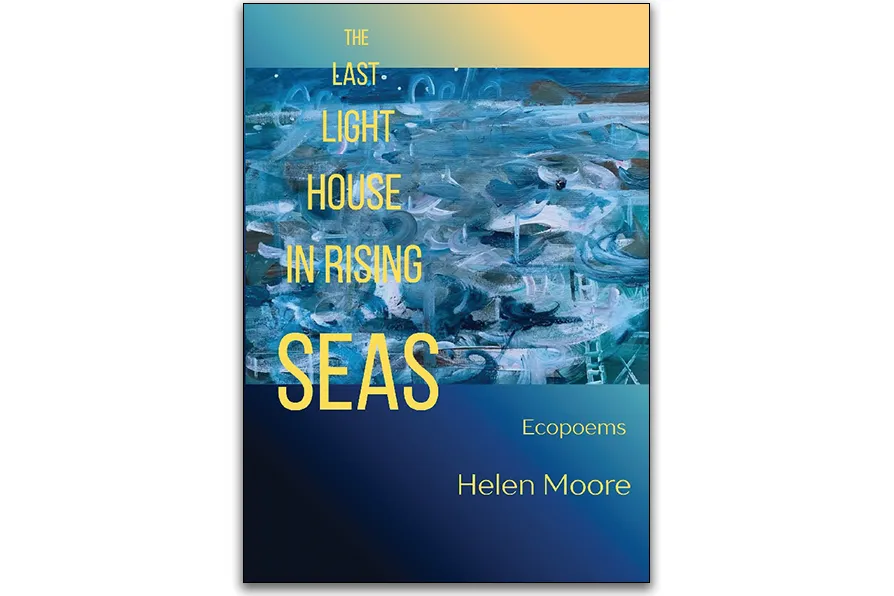
The Last Lighthouse in Rising Seas
Helen Moore, Palewell Press, 2026
IN eco-poet Helen Moore’s fourth collection, The Last Lighthouse in Rising Seas, the plight of migrants, and the 2020-22 pandemic are seamlessly merged into one macro-theme of planetary momentum.
Moore combines eco-polemic with highly accomplished poetic form. Her natural descriptions are frequently startling: “Spring sprouts blousy/ sulphur-coloured Poppies,” “the bright semaphore of Bluebells,” “dark rents in the crisp pearlescence,” “sip nectar from raggy/ yellow blooms.”
Madonna & Child, Portrait In Blue depicts a tented, Nativity-like scene in a refugee camp: “A downtown icon/ in Old Master colours — the ultramarine/ tarpaulin… / the ailing child you cradle/ wrapped in… [a] crown/ of white cloth.” The mother’s ambition is to reach the “socialist utopia of Sweden.”
The powerful Carpet Beater at once references the poet’s grandmother at her domestic chore, the titular tool of the chore, and the grandmother again as a metaphorical carpet beaten by her father and husband. In Tale Of An Australian Opal the poet’s dying aunt bequeaths a ring “Bluey-green set in silver filigree.” Firebreaks: A Wild Wedding details ecocide by cigarette: “Gorse had blazed along cliff-tops near Hopeman –/ …dense prickly thickets// into which a cigarette was flicked.”
In The Secret Economies Of English Houses, Snapshots 2020-21 Moore shows an unusual self-awareness regarding her poetic identity: “On my social media feed, I style the room as ‘ecopoet’s’/ studio, posting pics of flagstone sills with jars of/ Snowdrops.” Precarity during the pandemic is addressed: “In time of plague, rentals are hen’s teeth.” Nature, at least, flourished during the cleaner-aired lockdowns.
In Quizás there is the strikingly figurative “star-pricked night/ gathers skirts around us.” In Spectrogram, Sparrows we get a sublime insight: “…from these feathered/ dendrites of Earth’s nervous system/ rapid spurts of flight. Frequently as a kid,/ your own sensitivities were critiqued.” The poem later touches on the Hegelian-Marxian concept of “Entfremdung” (Alienation) whereby workers are dehumanised while copywriters imbue the products of their labour with personalities.
Poems such as Petroleum Girls, 1971, An Ecocritical Reconstruction call to mind the polemics of Susan Sontag or Roland Barthes: “that climactic gusher,/ all sticky & unstoppable/ to usher in the age/ of Chevrolet,/ Cadillac,/ Buick.” The titular portmanteau of Petronarcosis has an echo of Heathcoate Williams’ Autogeddon. The Ballardian Auto Eroticism, A Petrolhead’s Onanistic Dreams closes on a Marxian apothegm: “Human desires are the steam which makes the social machine/ work.” Auto Mobile deconstructs consumerism: “purgatories of pollution with Babylon/ temples to the drive-by lifestyle/ where you stop off to worship/ … built-in obsolescence.”
P Is For Play! is a visceral response to machinery which brings to mind the 1975 television serial The Changes in which a mysterious sonic signal triggers the human population to destroy all technological items.
In Portrait Of A Domestic Extremist those who try to live more sustainably with the environment are demonised by the materialistic society they abstain from: “Dirty hippies, say the tabloids, pitching up unbidden/ with our pallet kitchens, compost toilets,/ caravans & tents…/ True our camp is decidedly ‘rainbow’.” Thom’s Co-op Bike Café & Workshop recounts cyclists killed in collisions with cars: “Jorie on her bright-green Raleigh/ decked with fake flowers & an old Dutch bell/ which tinkled, silvery-warm like her laugh.”
Of Poets’ Tools is meticulously descriptive: “the tricorne nib/ & ribbed, beetle underside // the tools/ of Snyder, Forché, Lorde …/ lineage of iron-gall script/ & quills…// Abelard & Héloise, monks scribing The Book of Kells.// Lászlo Biró’s sticky ball meant paradox./ Through theft of Mesozoic sunlight.” A pen is also the symbolic focus of Sumud, For Maisara Baroud, 2024: “After Zionist bombs destroyed the college…/ …your broken heart alighted on a pen/ it’s served you night after night… / under flapping tarpaulins.”
In Mycelium And The Mental Dance Of Fruiting Bodies there is a genitomorphic focus on plant life worthy of Plath: “Stinkhorn’s pointy, hollow finger/ texture of sliced white,/ and capped/ with a slimy/ dark, olive head.”
Climate Adaptation, #3 starts with a quote on “intraconnected wholeness” by Dr Daniel J Siegel who coined collective pronouns “MWe” and “MWus.” Moore projects futuristically towards a post-capitalist utopia: “Billionaires are long gone./ They came to share their vast hoardings/ to serve the highest good.// The giant digital screens once inflicted on our streets/ became …vertical canvases/ with honeycomb visions of artists & poets// hive mind now connects through telepathy & touch.” One is reminded of Swedish poet Harry Martinson’s Aniara, and Ursula Le Guin’s The Word For World Is Forest.
The closing title poem segues the migrant and climate crises: “We pilgrims pray beneath our breath/ & sometimes mirage a giant lighthouse.”
The Last Lighthouse in Rising Seas confirms Helen Moore as the most imaginative and committed ecopoet of our time.

Similar stories
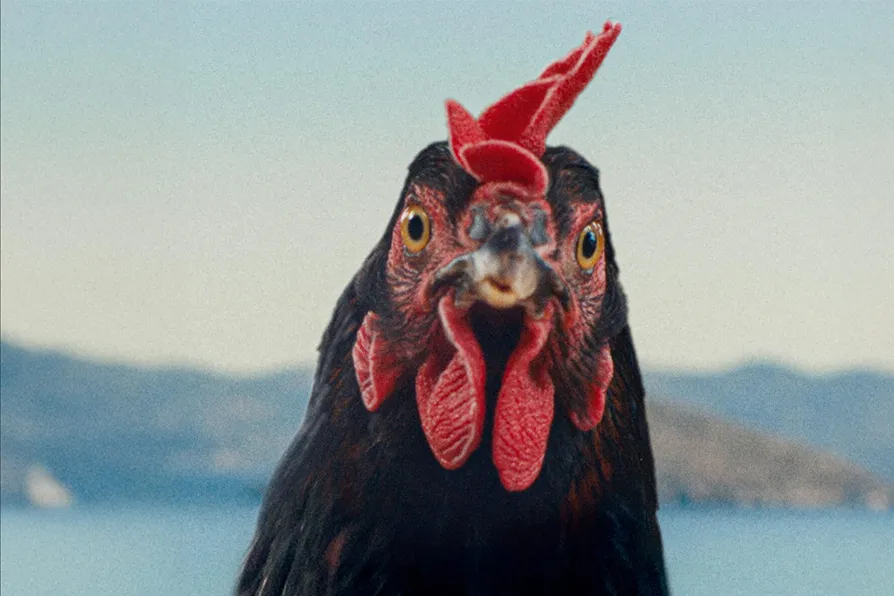
ANDY HEDGECOCK is astonished by a portrait of contemporary Greece, complete with political protest, organised crime and people trafficking, told from the point of view of — wait for it — runaway poultry

Read this book and be aware that this is our history, says RUTH AYLETT
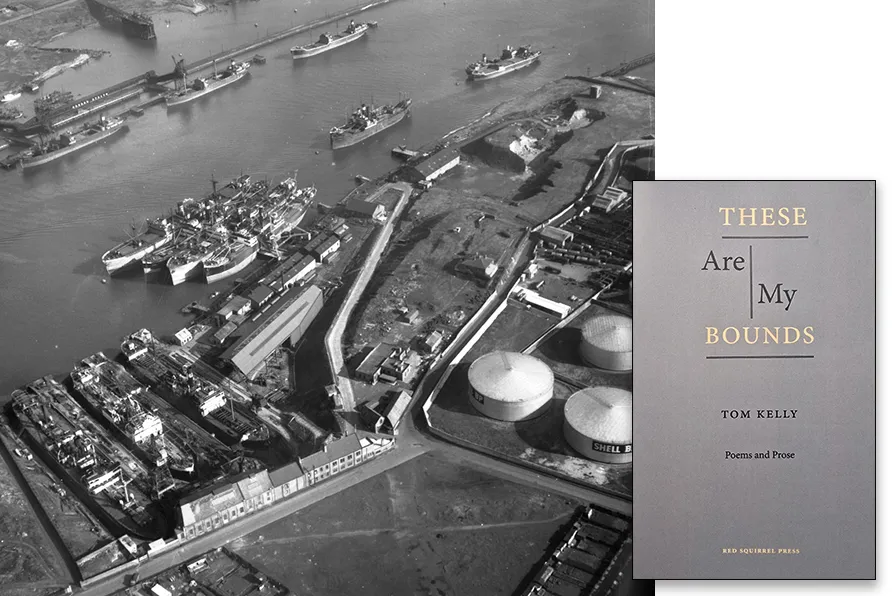
ALAN MORRISON recommends a consummate, heart-warming collection about a working-class upbringing in the industrial north-east
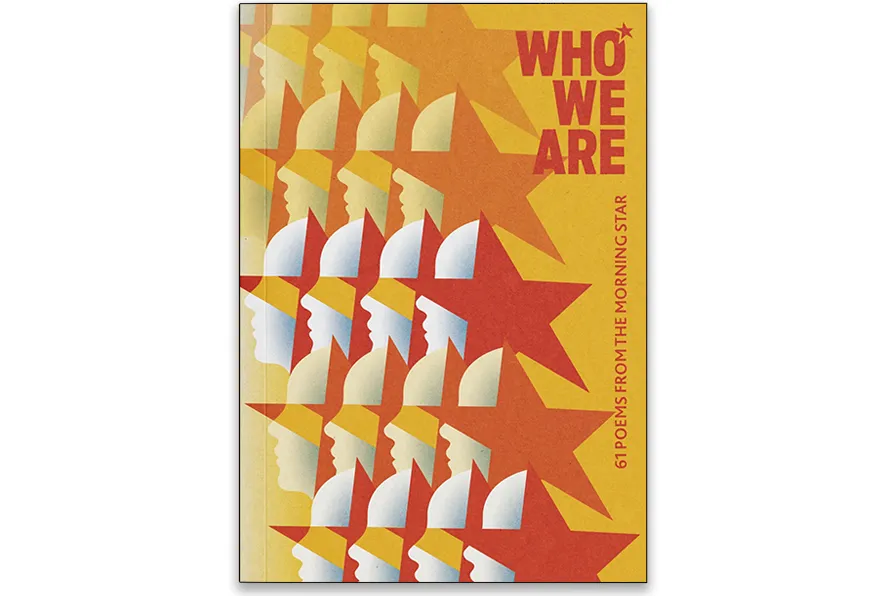
ANDY CROFT welcomes the publication of an anthology of recent poems published by the Morning Star, and hopes it becomes an annual event