Durham Miners’ Association chair STEPHEN GUY speaks to Ben Chacko about the Reform threat, what’s needed from Labour and why the Big Meeting will never lose its politics


 Latest editorial
How the Volhynia Massacre still haunts Poland-Ukraine relations
Poland’s anger over Ukraine’s celebration of the Nazi collaborationist UPA reflects more than historical grievance, says KENNY COYLE
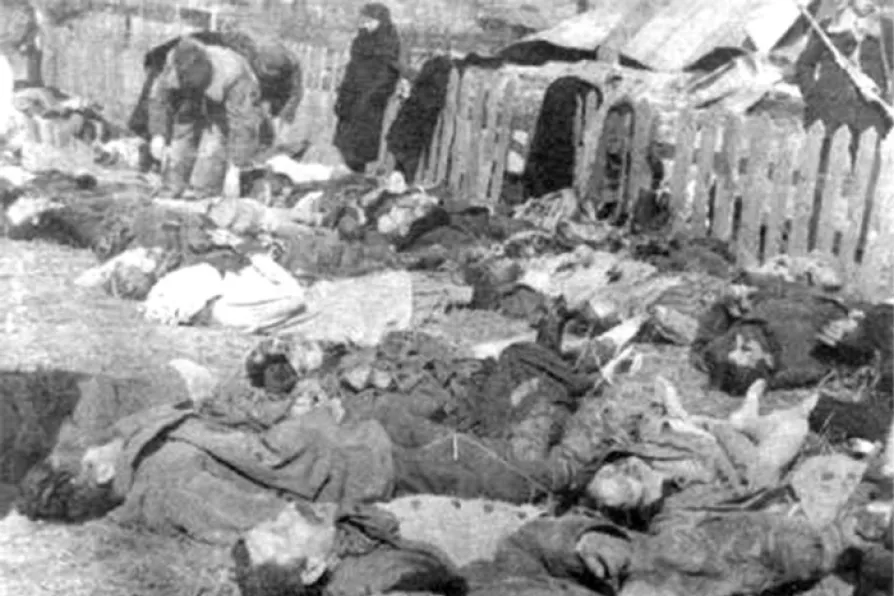 Polish victims of a massacre committed by the Ukrainian Insurgent Army in the village of Lipniki, Wołyń (Volhynia), 1943
![Durham Miners' Gala 2026 [Pic: Neil Terry]](https://morningstaronline.co.uk/sites/default/files/styles/desktop/public/2026-07/SSS_20260711_DURHAM_MINERS_GALA_0-21.jpg.webp?itok=NUVjowji)
Andy Burnham’s message of hope will defeat Reform if Labour delivers the New Deal for Working People in full, says JOANNE THOMAS
General Federation of Trade Unions president and bakers’ union general secretary, SARAH WOOLLEY, guides us through the GFTU’s Summer School happening this week at Quorn Grange Hotel
The government’s latest asylum proposals abandon labour movement values and fuel division by aping Reform UK, writes DIANE ABBOTT MP
Can Andy Burnham’s programme deliver a productive economy – or merely a softer version of capitalism, asks VINCE MILLS
IAN LAVERY MP warns that decades of neoliberal policies have left former industrial communities behind — but a renewed Labour commitment to working people could change the political landscape


ON JULY 11, Poles marked the anniversary of the beginning of the Volhynia Massacre in 1943, one of the largest atrocities committed against non-Jewish civilians in Europe during World War II.
The mass killing of ethnic Poles, totalling perhaps as many as 100,000 civilians, was perpetrated by units of the Ukrainian Insurgent Army (Ukrainian acronym, UPA).
The savagery of Volhynia remains an open wound among Poles and is a major source of conflict with its Ukrainian neighbour since, over recent years, Kiev has consistently whitewashed the reputation of the UPA.
Ukraine’s nationwide glorification of the UPA has taken the form of revising history books, renaming streets and squares, erecting monuments to its key figures and so on.
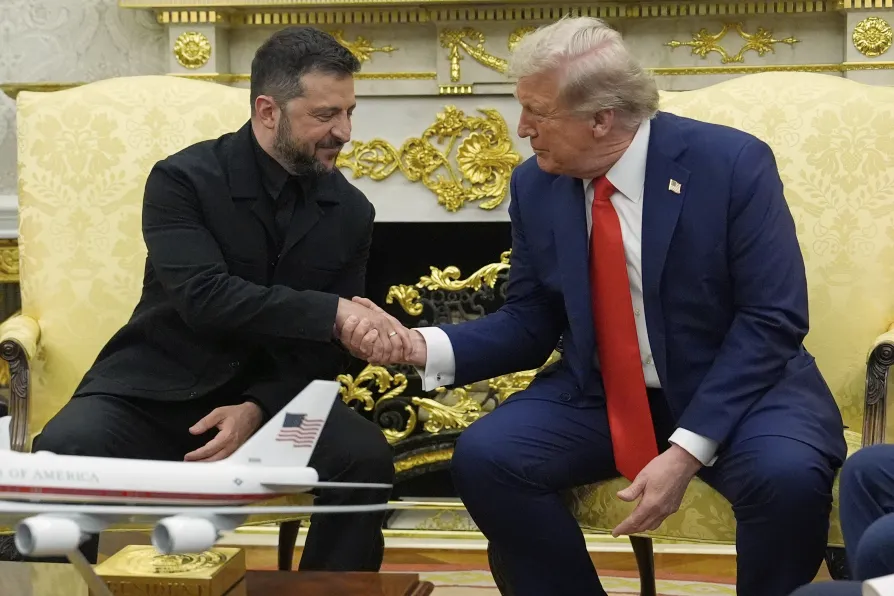
When Ukrainian leader Volodymyr Zelensky’s decided earlier this year to rename a unit of the official Ukrainian army’s special forces as “Heroes of the UPA,” this enraged even the die-hard anti-Moscow hawks in Warsaw.
In 2023, Poland presented Zelensky with its highest honour, the Order of the White Eagle, but on June 19 this year Polish President Karol Nawrocki, rescinded the award.
The dispute is note merely ceremonial. Poland has said it will block any attempt by Ukraine to join the EU and Nato as long as Kiev continues to lionise the UPA.
There is also the domestic factor of a growing war fatigue in Poland. This has occasionally flared up into bad-tempered spats with the million or so Ukrainian refugees in the country, and protests by Polish farmers against what they have seen as preferential treatment for Ukrainian agricultural imports.
Poland remains the main land conduit for Nato arms shipments to Kiev’s forces and has contributed billions of euros in support to the war effort.
The term Volhynia Massacre does not simply describe a single event to the killings within the specific region of Volhynia but is used more broadly to refer to a sustained genocidal campaign by the UPA that lasted from 1943 to 1945, when the Soviet Red Army finally liberated all of Ukraine from the fascists.
According to official Polish accounts “around 100,000 Polish nationals were killed in the massacre, including 40,000 to 60,000 in Volhynia and 20,000 to 40,000 in Eastern Galicia, and at least 4,000 on the territory of today’s Poland.”
In addition, other ethnicities such as Roma were also murdered, although the Jewish population of the region had already been decimated by Nazis and their Ukrainian fascist allies from the very first days of the German invasion.
According to the Polish Institute of National Rememberance: “In the summer of 1941 Germans initiated a series of pogroms of Jews in Volhynia and Eastern Galicia, which the Ukrainian militia formed by Banderites, took part in. For instance, during the Petlura Days (July 25-27) approx. 1,500 people were killed in Lvov. The former Volhynian Voivodeship and parts of the Lvov and Polesie voivodeships were incorporated as Generalbezirk Wolhynien und Podolien into Reichskommissariat Ukraine with its capital in Rowne… Soon, the Ukrainian police in German service and Einsatzkommandos began to organize mass executions of Volhynian Jews. The Jews from the ghettos were not transported to death camps, but killed on the spot, that is, in ditches outside cities or at the edge of forests. By October 1942 the Germans had killed approx. 247,000 Volhynian Jews (97 per cent of all local Jews).”
Many Poles see Zelensky’s move to rehabilitate the memory of the UPA not as ingratitude but as a provocation. In recent months, there has been a sharp turn in Polish public opinion on the Ukrainian issue: 74 per cent of Poles supported revoking Poland’s honour to Zelensky, and nearly 60 per cent now oppose Ukraine’s membership in the EU.
Even the toothless European Parliament meekly noted on July 8 that “regarding the renaming of an elite military unit of the Ukrainian Armed Forces after the heroes of the Ukrainian Insurgent Army (UPA), MEPs regret the disregard for Polish sensitivities and grief and consider that this decision undermines neighbourly relations, calling for de-escalation and renewed efforts in good faith towards reconciliation.”
The amendment was supported across the spectrum by all the Polish parties represented in the European Parliament.
Defending his decision, Zelensky said the unit had requested the new name and that it was his duty as commander-in-chief to comply.
“If they are motivated by our heroes … and if this is very important to them, I must do whatever they tell me.”
This last point may be the key. As long as Zelensky formally retains the office of president, he has outlasted his constitutional term, he is legally immune from prosecution from the many allegations of corruption and embezzlement that have enveloped his administration.
His inner circle has been progressively reduced by the arrests of some close aides and the flight overseas of friendly oligarchs. Some believe Zelensky has had to appease the well-organised far right within the military establishment to assure his own survival, political and perhaps physical.
Whatever the truth of that, this position is a far cry from the fresh-faced comedian who won a landslide 2019 victory promising an end to the conflict in the Donbass, to root out endemic corruption and promote national reconciliation.
Zelensky seemed to be the ideal candidate to both mend fences with Russia as well as restore internal unity between Russian-identifying communities in the east and other Ukrainians and fend off the far-right danger.
He is a native Russian speaker who comes from a secular Soviet Jewish background. His grandfather Seymon fought fascism in the ranks of the Red Army, three of Seymon’s brothers and both his parents were murdered in the Holocaust.
Zelensky’s current stance is not simply rancid opportunism it is historical revisionism at its most treacherous.
The row also reflects a deeper problem, the difficulty of defining a modern Ukrainian identity freed from an extremism that is directed not only against ethnic Russians, often referrred to by far-right nationalists with derogatory terms such as Moskals (Muscovites) or “orcs” the subhuman species from Tolkien’s Lord of the Rings, but also against Poles, Hungarians and other ethnic and national minorities.
Yet, despite Western media hype, Ukraine is not winning its war against Russia, notwithstanding the new Ukrainian tactics of drone and missile warfare striking deep into the Russian hinterland.
War-weariness within Ukraine is growing as it is in Russia. But while Russia,has been able to replenish its forces without mass press-ganging of its population, popular opposition to forced mobilisation into the Ukrainian military is taking on an ever larger scale and is reaching into areas of traditional nationalist support in western Ukraine.
On July 8, according to the Kiev Independent, “About 200 people clashed with military recruitment personnel and police in Lviv on July 8 after a document check related to Ukraine’s mobilisation campaign escalated into a public confrontation.
“The incident, one of the most visible eruptions yet in Ukraine’s long-simmering mobilisation crisis, has raised alarm that those tensions could escalate into a security threat if left unaddressed.” (“How a street check in Lviv became a warning sign for Ukraine’s mobilisation system” Tania Myronyshena, July 9 2026.)
In January this year, Ukrainian Defence Minister Mykhailo Fedorov revealed that 200,000 of its soldiers are absent without official leave and that some two million Ukrainians are “wanted” for avoiding military service.
The Jewish Ukrainian academic Marta Havryshko has detailed the widespread influence of neofascist groups within the Ukrainian military. Once identified as a serious problem by Western mainstream media, these groups are now sanitised by them.
“Neonazi networks are deeply embedded in parts of Ukraine’s military structure. Their presence is visible in units such as Azov, the Third Assault Brigade, the Russian Volunteer Corps, Bratstvo, the German Volunteer Corps, Karpatska Sich, and others. Yet Ukraine’s Western backers continue to arm, fund, and train these units without meaningful scrutiny.
“Even more striking is the normalisation of Nazi imagery itself. Official Ukrainian military channels and mainstream media regularly publish images of soldiers wearing swastikas, Waffen-SS insignia, and patches linked to neonazi groups like Combat 18 and Misanthropic Division. This is no longer treated as scandalous. It has been normalised.” (“Ukraine’s military has a real Nazi problem.”)
In these dire circumstances, it is little wonder that Zelensky is appeasing his last military core, the far-right battalions that are battle hardened and ideologically fanatical, even at the expense of alienating a core regional ally and supplier.

Similar stories
SEVIM DAGDELEN says European Nato states are escalating ever closer to direct conflict with a nuclear power, and sacrificing welfare states built up over a century to finance it
Washington plays innocent bystander while pouring weapons and intelligence into Ukraine, just as it enables the Gaza genocide — but every US escalation leaves Ukraine weaker than the neutrality deal rejected in 2022, argue MEDEA BENJAMIN and NICOLAS JS DAVIES