Durham Miners’ Association chair STEPHEN GUY speaks to Ben Chacko about the Reform threat, what’s needed from Labour and why the Big Meeting will never lose its politics


 Latest editorial
Rebuilding our private-sector union power is a priority for the whole movement
Strike Map co-founder HENRY FOWLER discusses the significance of today’s joint union letter to video game giant Rockstar, demanding trade union recognition for its workers. Their conversation highlights how our movement can harness its collective power to rebuild union power across the private sector
![Durham Miners' Gala 2026 [Pic: Neil Terry]](https://morningstaronline.co.uk/sites/default/files/styles/desktop/public/2026-07/SSS_20260711_DURHAM_MINERS_GALA_0-21.jpg.webp?itok=NUVjowji)
Andy Burnham’s message of hope will defeat Reform if Labour delivers the New Deal for Working People in full, says JOANNE THOMAS
General Federation of Trade Unions president and bakers’ union general secretary, SARAH WOOLLEY, guides us through the GFTU’s Summer School happening this week at Quorn Grange Hotel
The government’s latest asylum proposals abandon labour movement values and fuel division by aping Reform UK, writes DIANE ABBOTT MP
Can Andy Burnham’s programme deliver a productive economy – or merely a softer version of capitalism, asks VINCE MILLS
IAN LAVERY MP warns that decades of neoliberal policies have left former industrial communities behind — but a renewed Labour commitment to working people could change the political landscape


LIKE many of you, we look forward each June to the government’s annual release of trade union membership statistics.
For most of our lives, these figures have served as a sobering reminder of the long-term decline in union membership that our movement has been living through.
This year’s figures, however, told a slightly different story. While the increase is modest, union membership rose by 0.4 percentage points, with 22.4 per cent of all employees now belonging to a trade union across the public and private sectors.
It is a small but encouraging shift. It may reflect the impact of the recent wave of industrial action, the trade union movement’s response during the Covid-19 pandemic, and the high levels of public support that unions have enjoyed throughout the ongoing cost-of-living crisis.
Scratch beneath the surface, however, and these figures reveal a stark reality for the private sector. Since 1995, trade union membership in the private sector has fallen by 841,000 — a decline of 25 per cent.
Union density now stands at just 12 per cent of private-sector employees, even though four in five workers are employed in the private sector. As Nigel Flanagan argued in this paper earlier this summer, this imbalance lays bare the scale of the organising challenge facing our movement.
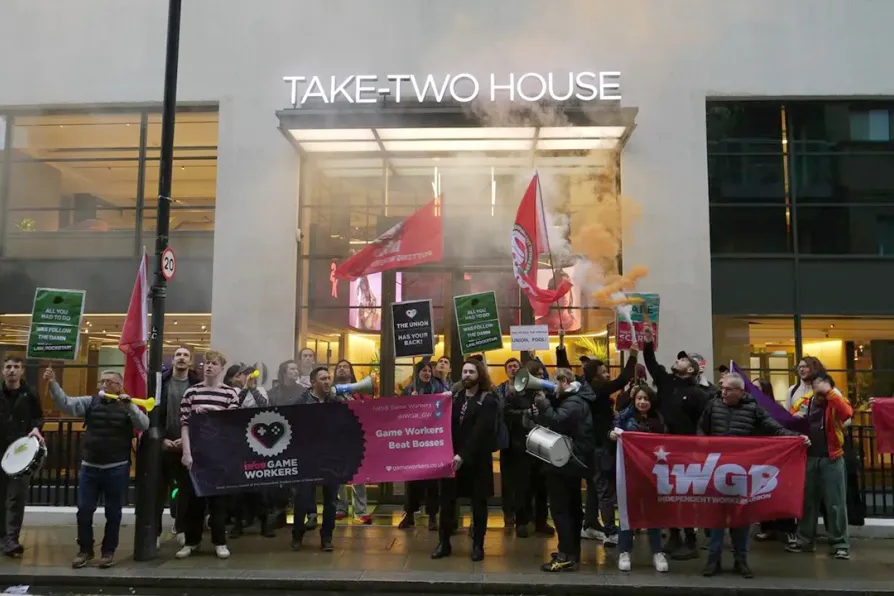
It is in this context that workers at Rockstar Games, one of the world’s most successful video game companies, is organising for trade union recognition. Best known for blockbuster titles such as Grand Theft Auto (GTA), Rockstar is preparing to release Grand Theft Auto VI in November 2026.
The highly anticipated game has reportedly generated around $3 billion (£2.27bn) in pre-sales alone, highlighting both the company’s extraordinary commercial success and the immense value created by its workforce.
Yet despite that success — made possible by the talent, creativity and dedication of its developers and other employees — Rockstar has so far refused to recognise the workers’ chosen union, the IWGB Game Workers Union.
Years of patient and determined organising by these workers has brought them to a point where union recognition is not only possible — it is within reach. If Rockstar does not agree to voluntary recognition, Rockstar workers have announced plans to pursue a statutory recognition claim and potentially industrial action.
If successful, this campaign would see Rockstar become only the second UK games studio, after ZA/UM, to recognise a trade union. Such a victory would send a powerful message about what collective action can achieve and the significance of rebuilding union power across the private sector.
It has been inspiring to see the strength of support from across the trade union movement in today’s action targeting Rockstar.
Senior leaders from 22 trade unions and community groups, representing more than 1.3 million members, are calling on the company to voluntarily recognise the IWGB as the recognised trade union for its workforce.
Key private-sector unions, such as the BFAWU, have given their full support to this action. For BFAWU general secretary Sarah Woolley this campaign reflects a core principle of the union movement: that building our own strength goes hand in hand with helping others organise and win recognition.
“Our members understand that growing our own union goes hand in hand with supporting other unions to organise and win recognition. Building union strength is in the interests of every worker.”
This commitment is not limited to private-sector unions. Public-sector unions with high levels of membership density also recognise that the future strength of the trade union movement depends on organising across the whole economy. The FBU is one such example. Having been a vocal supporter of the Birmingham bin workers, mobilising for mass solidarity actions and raising thousands of pounds in support of their strike, the union has a long and proud history of standing with workers in struggle.
FBU general secretary Steve Wright underlined the importance of today’s action: “The Employment Rights Act 2025 provides new opportunities for unions to reach workers across the private sector and organise at scale.We must seize those opportunities to launch a new wave of unionisation. We will only begin to rebalance wealth and power when workers across both the private and public sectors have a strong collective voice at work.”
Wright raises an important point about this campaign, the wider context in which we are operating, and the new rights introduced through the Employment Rights Act 2025. The powers for unions to access workers, including through digital access, as well as the reduced thresholds required to begin a statutory recognition process, create a significant opportunity to grow the trade union movement across every sector of the economy.
Today’s collective joint union action demonstrates what is possible when the movement acts together: we are stronger, more visible, and better able to challenge employers. It is with this in mind that we must seize the opportunities created by this new legislative landscape, while recognising that further reform — including an Employment Rights Bill 2 — is urgently needed to deliver the rights and protections workers deserve.
Doing so will require a cross-union strategy, organised around sectors and shared goals, where unions work collaboratively to grow the movement regardless of which union workers ultimately choose to join.
Initiatives such as Organise Now have sought to develop this kind of strategic approach, focusing on building worker power and achieving organising outcomes rather than simply measuring success through membership figures alone.
Crucially, this approach also creates opportunities for activists to develop their organising and industrial experience, strengthening the movement for the future.
Ultimately, the growth of our movement cannot be measured solely through membership numbers or density statistics. It must be about building power: the power to transform working lives, improve conditions, and shape the wider society we want to see.
To do this, we need a shared understanding across the movement of the strategic “choke points” within our economy. Global capitalism remains vulnerable because neoliberal restructuring has concentrated production, supply chains and economic influence in key areas. This creates opportunities for workers to organise strategically, using collective power to disrupt business as usual and demonstrate the essential role workers play in keeping the economy moving.
Rather than waiting for government commitments, such as the promise of “the largest insourcing of a generation,” to rebuild private-sector union membership, the responsibility lies with the whole trade union movement to organise the whole working class, one we should prioritise as a whole movement.
Henry Fowler is the co-founder of Strike Map.

Similar stories

Assistant general secretary of the General Federation of Trade Unions HENRY FOWLER reports on day 1 from the GFTU’s residential Summer School at Quorn Grange Hotel
![IWGB union members protest outside Take-Two House, Rockstar's offices in London, [Pic: IWGB]](https://morningstaronline.co.uk/sites/default/files/styles/desktop/public/2026-07/img-96d2d96e-1fda-4b3c-aa23-b4e13b42587a.jpeg.webp?itok=QPz0DRyK)

General Federation of Trade Unions president and bakers’ union general secretary, SARAH WOOLLEY, guides us through the GFTU’s Summer School happening this week at Quorn Grange Hotel
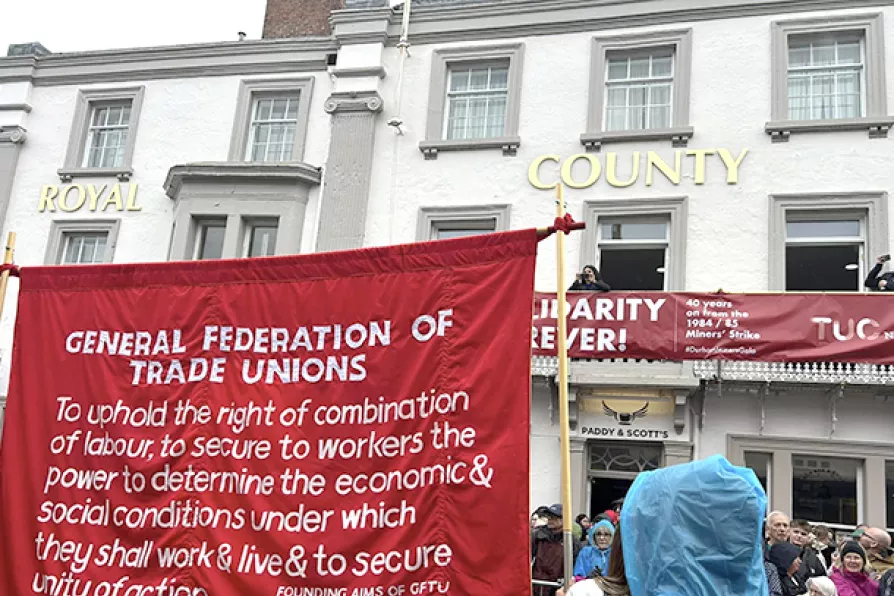
HENRY FOWLER outlines the GFTU’s new 2026-27 education programme and argues that investing in trade union education is essential to building worker power, developing leaders and strengthening collective action