ANGUS REID, ANDY HEDGECOCK and MARIA DUARTE review On The Sea, A Useful Ghost, Brunello: The Gracious Visionary, and Pinocchio Unstrung


 Latest editorial

Why Odysseus couldn’t say ‘I’m home’
The Odyssey is a tale of evasions and half-truths; this reflects the effects of traumatic ‘moral injury’ common to war veterans, suggests STEPHAN BLUM
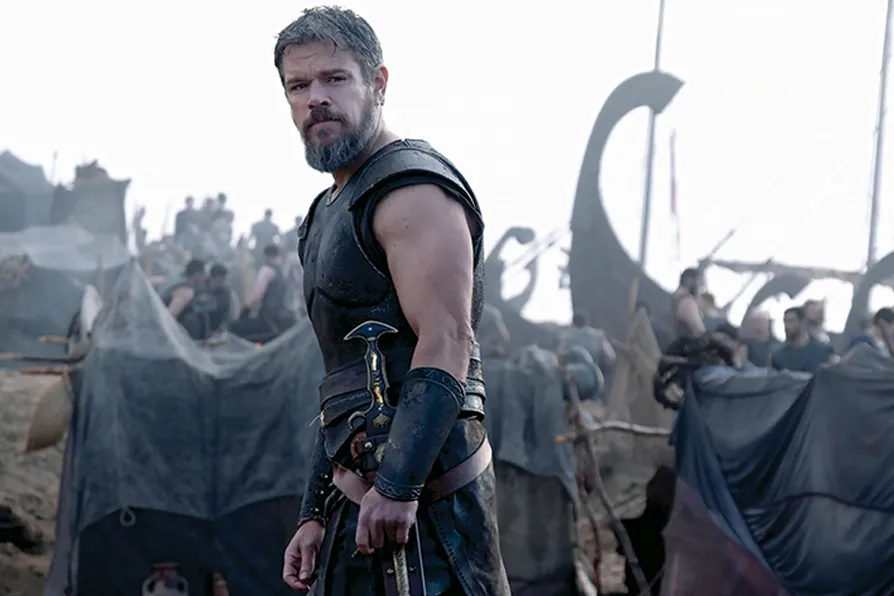
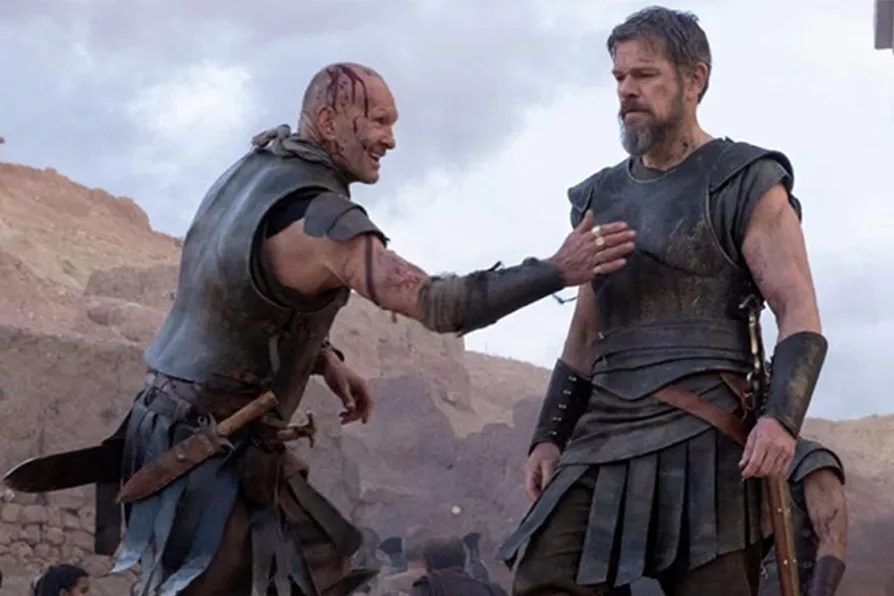 TRAUMATIC MEMORY: Matt Damon, Andrew Howard in The Odyssey [Pic: IMDb]
RON JACOBS enjoys a great tale, told by a US communist, of the lives of working-class New Yorkers
BRENT CUTLER searches a new history of contemporary Iran for an understanding of the Islamic Republic, finding both interesting detail and glaring omissions
MARIA DUARTE recommends the true story of the remarkable woman who sued Donald Trump for sexual assault not once, but twice
KENNY MacASKILL is disappointed by a polemical, rather than factual, account of the Lone Star State and its political path since the civil war
PAUL DONOVAN is fascinated by the lives of Charles and Mary Bagot, and the insight this biography shines on the morals of pre-Victorian society
GORDON PARSONS appreciates fine performances and a feel for ambiguity, but misses the music of the dialogue


TEN years at Troy. Ten more lost at sea. When Odysseus finally reaches Ithaca — in Homer’s poem and again, played by Matt Damon in Christopher Nolan’s new film — he doesn’t walk through the door and say who he is. He lies. He invents a stranger’s life story. He tests his wife Penelope (played by Anne Hathaway), his father, even his old nurse before he lets any of them see him as himself. For a man who has spent 20 years trying to get home, he is remarkably reluctant to arrive.
That reluctance is usually read as suspense, or cunning, or simple survival instinct. But there’s a more unsettling possibility: that Odysseus cannot tell his own story because, on some level, he cannot yet bear to know it.
The comparison Nolan suggests between Odysseus and a returning veteran isn’t new. The psychiatrist Jonathan Shay built an entire body of work on it, arguing in Odysseus in America (2002) that Homer’s hero shows the same shattered trust, numbness and hypervigilance he observed in Vietnam veterans.
Countless essays since have asked some version of “did Odysseus have post-traumatic stress disorder?” It’s a fair question, but by now familiar enough to risk becoming reflex rather than insight. The more interesting question isn’t whether Odysseus suffered — Homer leaves little doubt that he returns a profoundly changed man. It’s why the poem refuses to let him simply say so.
Modern trauma theory gives us a vocabulary that can illuminate something the Odyssey explores with remarkable precision. Since the 1990s, scholars following US literary critic Cathy Caruth have argued that trauma isn’t defined by the event itself, but by the impossibility of experiencing it fully at the time, which means it can’t be narrated directly afterwards either.
Instead, trauma returns sideways, through repetition, disguise and fragmented forms of remembering, rather than as a clean account. Sigmund Freud had earlier described a related phenomenon: traumatic experience returning through repetition rather than straightforward recollection.
Image
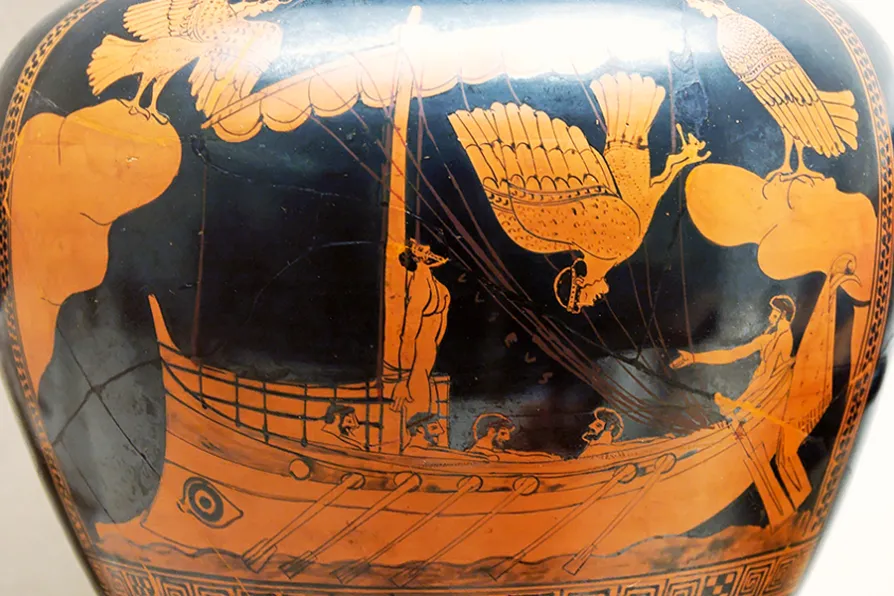
Read against that idea, the second half of the Odyssey looks less like a homecoming story with psychological colour added, and more like a structural performance of avoidance.
Odysseus doesn’t walk into his own hall and announce himself; he arrives disguised as a beggar. When his old nurse recognises a scar from a boyhood hunting accident, his first instinct is to threaten her into silence. When Penelope finally asks him for his story, he answers with another invented biography — a lie told so convincingly that she weeps at it. Even once the suitors are dead and husband and wife are alone, he still doesn’t tell her everything before announcing he must leave again.
The poem is oddly precise about who is and isn’t allowed to recognise Odysseus. Every human recognition in the Odyssey requires proof — a scar, a test, a story checked against memory.
Odysseus’s faithful hunting dog Argos alone recognises his master without a test. The old dog, dying on a dung heap, simply lifts his head and knows him — it’s a loyalty that predates Troy and requires no proof of explanation.
Through his tests and deceptions, Odysseus appears to be a man unable to fold what happened at Troy into a version of himself he can hand to the people who love him. He builds alternative selves rather than inhabiting the one who did those things.
Rather than asking whether Odysseus had PTSD, a more productive lens may be moral injury. This is not a diagnosis but a concept describing the damage of having caused, permitted or failed to prevent something that violates someone’s own values.
Where PTSD centres on fear, moral injury centres on guilt. Odysseus loses every companion who sailed with him, narrating their deaths again and again, as though the retelling were unfinished business. His famous cleverness curdles into rumination: endless second-guessing of choices that got his men killed.
Nolan’s newly released film pushes toward a similar image. Athena, revealed late in the story, appears to be less a goddess than a manifestation of Odysseus’s memory of a priestess killed at Troy — guilt wearing a familiar face, not fear.
Seen this way, Odysseus isn’t primarily hiding from Ithaca. He’s hiding from having to say, out loud, what he did and failed to do at Troy.
This isn’t only a literary curiosity. Programmes like Bryan Doerries’ Theatre of War have staged Greek tragedy for veterans for years, on the premise that these stories offer a sanctioned way to approach what people otherwise can’t say directly. The truth about violence and loss rarely arrives head-on. It has to be smuggled in.
Homer never resolves this. The poem ends with Odysseus preparing to leave home again, story still untold. The Odyssey has lasted 3,000 years less for its monsters than for something it understood early: wars end, but the story that would let a survivor be fully known again is often the one thing he cannot yet bring himself to tell.
Stephan Blum is research associate at the Institute for Prehistory and Early History and Medieval Archaeology at the University of Tubingen.
This article is republished from TheConversation.com under a Creative Commons licence.


Similar stories
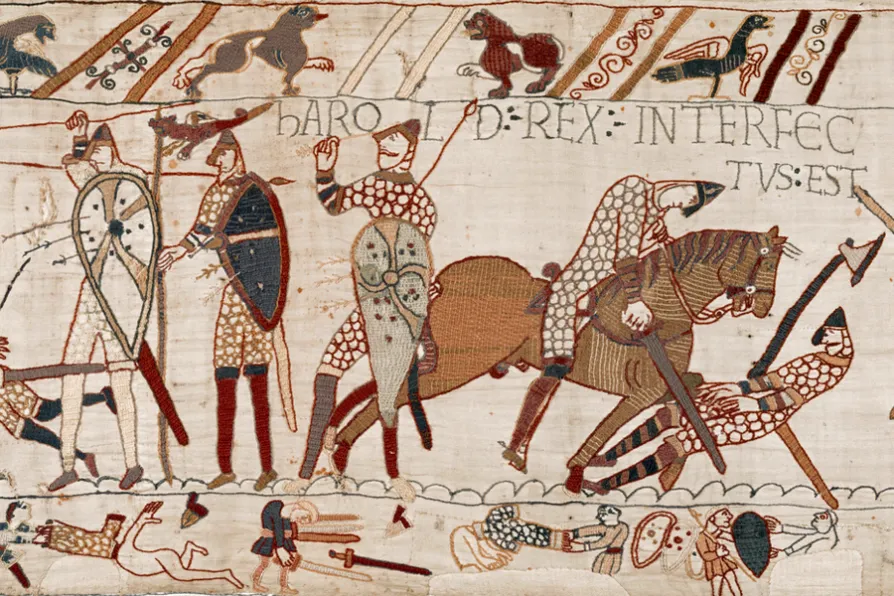
STEPHANIE BROWN draws attention to the hidden labour of the female embroiderers, and how a 19th century replica made no such error
MARIA DUARTE admires the scale of Christopher Nolan’s adaptation of Homer
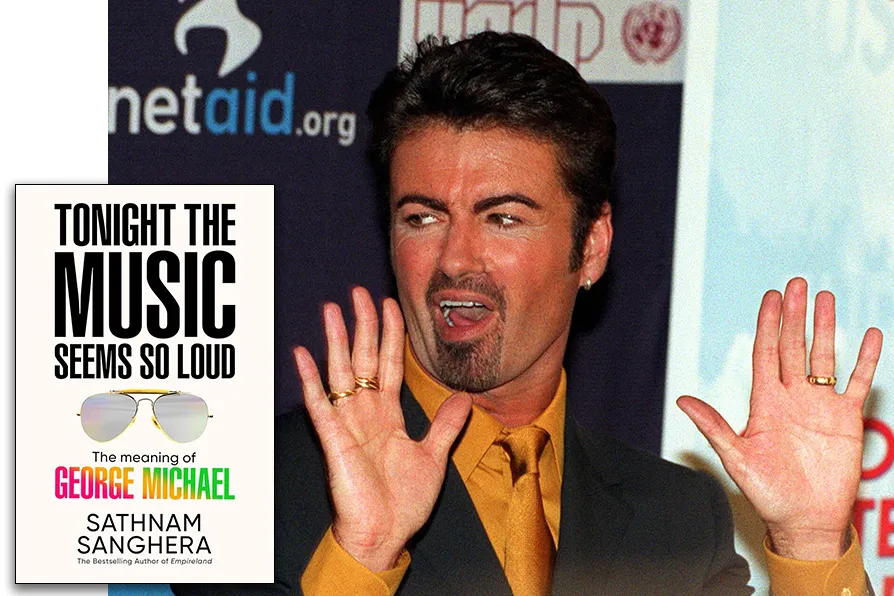
GLENN FOSBRAEY recommends a biography worth reading for both existing George Michael fans and those yet to be converted
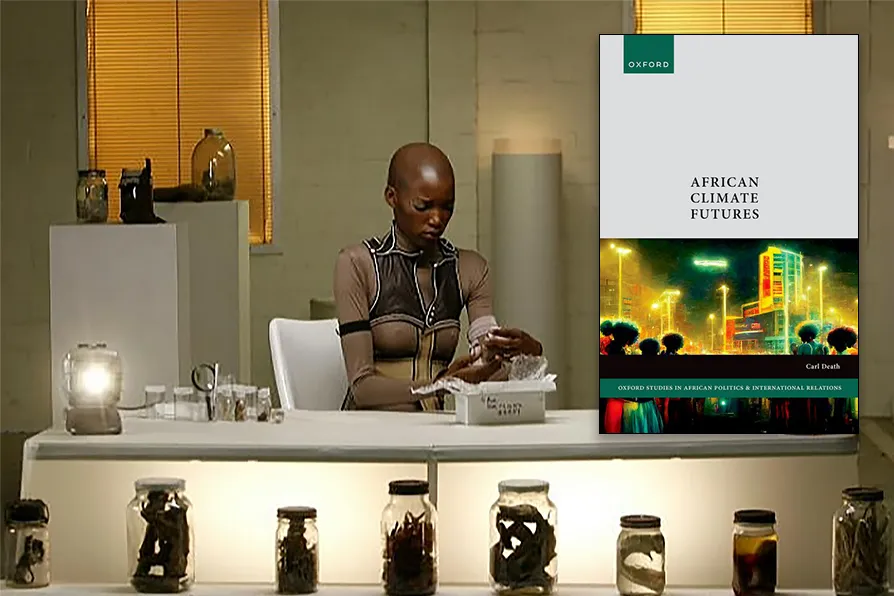
CARL DEATH introduces a new book which explores how African science fiction is addressing climate change