

 Latest editorial

Waiting for the grander vision to emerge


“CAN our nuclear subs fire missiles from under the Arctic ice?” This was a question posed jokingly at a meeting of the House of Commons defence committee earlier this summer.
It did not need an answer. The intent was to validate Britain’s adoption of an additional airborne system for its nuclear strike force. It is with such levity that some of our legislators seem to frame the most deadly shifts in policy.
The July edition of the Bulletin of the Nuclear Scientists has outlined the background to this decision to finance a new and supplementary delivery system for Britain’s nuclear bomb. It was a decision only announced publicly in the very last week of the Starmer government and was closely linked to the fracas over the additional £15 billion for military hardware in the Defence Investment Plan.
But why, anyway, should Britain be wanting to fire missiles from “under the Arctic ice.”
This again is linked to policy developments that have largely escaped public scrutiny. It concerns Britain’s leadership role within the Joint Expeditionary Force. Set up in 2014 this sounded like a fairly harmless left-over from some earlier war.
It is not. This “Force” is legally independent of Nato and not bound by any requirements for unanimity in the use of nuclear weapons. It is composed of the Baltic and Scandinavian states plus the Netherlands and Britain. Its territorial remit, within the current Nato division of responsibilities, is the “High North,” effectively Russia’s icebound Arctic frontiers. Hence the need for airborne nukes.
We don’t yet know too much about the logistical implications of this decision. But earlier meetings of the Commons defence committee and also of the Scottish affairs committee give some strong indications. In terms of the deployment of supporting army, navy and air force units Scotland is seen to be the focus. Arbroath and Lossiemouth are cited. For the airborne nukes Lakenheath seems to be at least the interim base. But the nukes may also, for obvious logistical reasons, go north.
Are there deadlines for the implementation of these war preparations? Again the Commons defence committee minutes give some indications: 2030 onwards.
And this brings us to the wider context. Britain has no particular economic interests in the “High North.” As one of Europe’s two nuclear powers, it is taking part in a wider division of labour whereby nuclear-armed France teams up with Germany to cover central Europe. And this again is within a still wider division of labour that allows the US to focus its full military might on China.
Our media have built up “Russia” as the aggressor that threatens us all. But the bigger picture makes it quite clear that China is the overall strategic target.
The current vacillations by Andy Burnham and some members of his Cabinet over the 3 per cent GDP target on arms by 2030 may indicate some awareness of the wider dangers implicit in this decision — as well as its dire consequences for the funding of any progressive social policies.
The current issue of the US journal Foreign Affairs carries an article from Ely Ratner, formerly Joe Biden’s assistant secretary defence Asia-Pacific, making a clear bid for a more senior position in a future Democrat administration from 2030. His article is about how to hobble and, if necessary, militarily defeat a resurgent China.
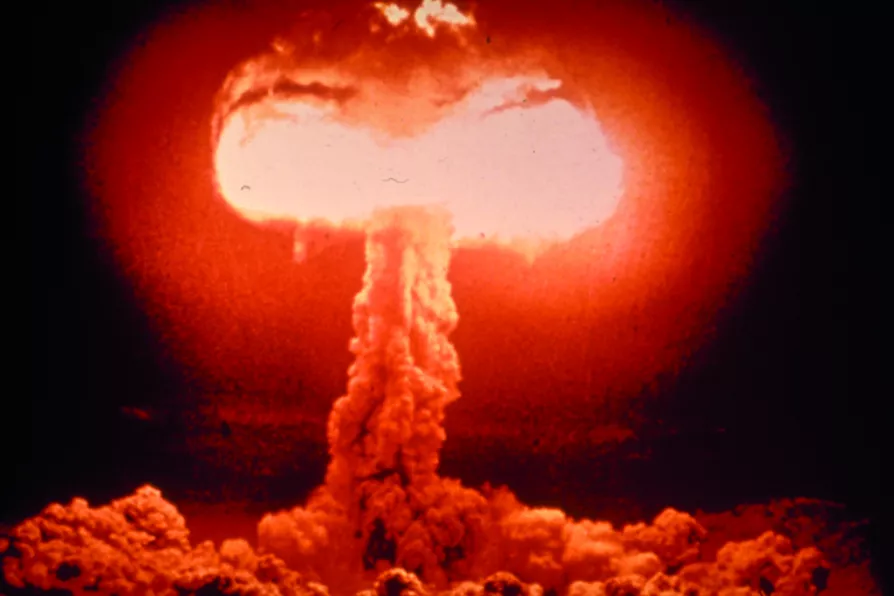
As we approach one further anniversary of Hiroshima, the trade union and labour movement need to mobilise alongside our working-class communities. The costs of potentially devastating warfare are being posed against what is needed for welfare — and for a war that ultimately serves a dying imperialist superpower. Decisions will be made over the next few weeks.


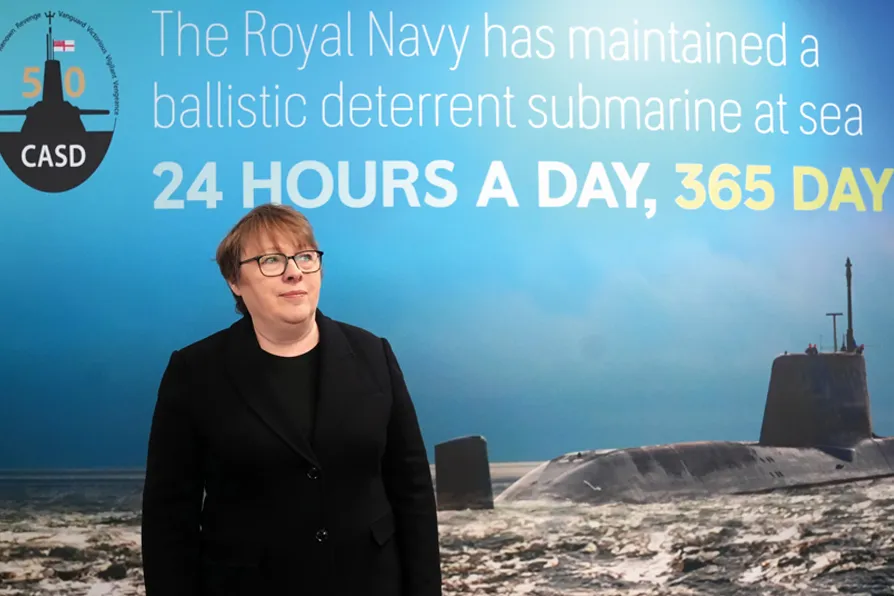
Expanding Britain’s nuclear capability increases the risk of nuclear confrontation. It does not keep us safe – it makes us a target, argues CAROL TURNER

The defence secretary’s resignation reveals not a split over principle but a dispute over pace of military spending, as Britain’s political Establishment unites behind deeper Nato commitments, argues NICK WRIGHT
