The Milburn review presents itself as a plan to help young people into work, but Dr DYLAN MURPHY argues it is laying the groundwork for a harsher benefits regime


 Latest editorial
Bill Ronksley: railwayman, trade union leader and communist — 1924-2018
PETE LAZENBY writes on ‘a tower of strength for Britain’s railway workers and the whole trade union movement’ who has passed away aged 94
Campaigners from across the continent will gather in Brussels on June 14 to oppose Europe’s accelerating militarisation and cuts to public services, write MAGGIE SIMPSON and BOB ORAM of No Cold War Britain
National co-ordinator for General Strike 100, HENRY FOWLER, continues his nationwide tour of partner organisations by visiting the Modern Records Centre at Warwick University
GEOFF BOTTOMS recalls meeting Fidel Castro in the ’90s after joining a Pastors for Peace caravan to Cuba, and reflects on how international support is still vital to help the island withstand economic warfare
The Ivors Academy’s hike in entry fees could turn this respected peer-assessed event into an exclusive preserve for those wealthy enough to compete, warns BEN LUNN
Peter Murrell’s weakness for the allure of prestige goods is symptomatic of modern consumer culture, says MATT KERR


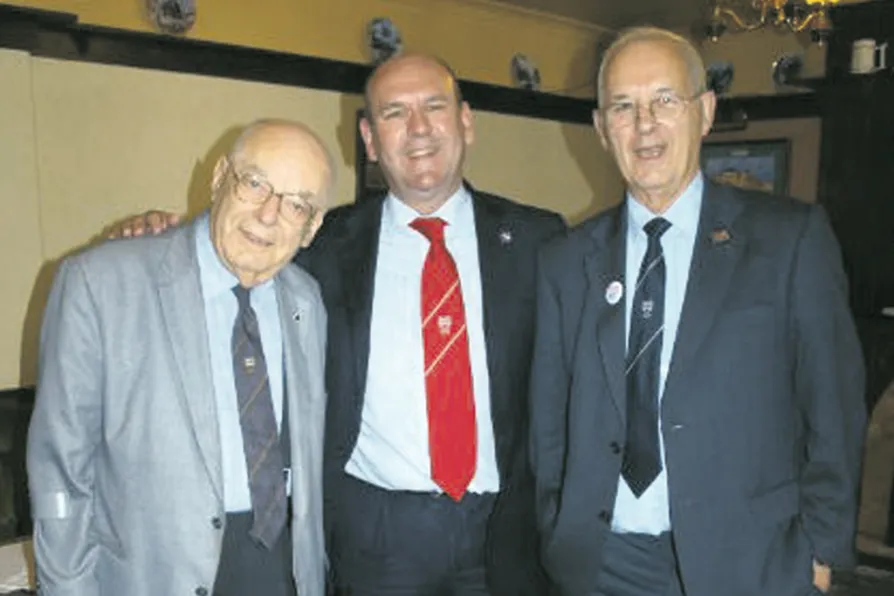
TRIBUTES have poured in for trade unionist, communist and international peace campaigner Bill Ronksley who died at the age of 94 on November 6.
Mr Ronksley became active in the trade union movement as a teenager in his home county, Yorkshire.
In 1939 he became a train driver and later went on the become president of drivers’ union Aslef.
A member of the Communist Party, he was involved in peace delegations to the Soviet Union and across Eastern Europe and was held in great respect there.
Since his death, stories about him from friends and comrades have flooded into the Morning Star, painting a picture of an activist with passionate beliefs, committed to working tirelessly in support of his principles.
They also depict a man always prepared to help others, with wise counsel, steadfast support — and action.
Mick Appleyard, who met Mr Ronksley in 1974, was a miner at Sharlston colliery in West Yorkshire during the 1984-5 strike against pit closures.
He recalled: “There was a railway line going into Eggborough power station to deliver coal. Bill told me: ‘If you put a banner over that bridge, there won’t be a train goes in there.’ And there wasn’t, throughout the strike. No coal was moved by rail.”
One of the most famous stories about Mr Ronksley was how, in 1950, he went to Sheffield railway station to meet Pablo Picasso, who was due to speak at a peace forum in Sheffield.
Later Picasso drew doves of peace to give away as souvenirs.
“Maybe I should have asked for one,” Mr Ronksley said later.
After retirement Mr Ronksley became secretary of Sheffield Trades Union Council.
Current secretary Martin Mayer said: “Bill spent his entire life in the trade union movement and held lay office throughout his life till his death.
“His knowledge and experience of working class history both here in Britain and internationally was immense.
“He was of course a life-long member of the Communist Party but was never dogmatic or forceful in his views when discussing politics with others. A quietly spoken man he shunned the limelight and was personally very modest.
“One of his proudest moments was during the 1984/85 Miners Strike when his union Aslef won the support of its members to refuse to move coal during the entire strike — one of the reasons why Thatcher had to get trucks to move coal to the coking plant at Orgreave, thus paving the way for the battle over which we are still fighting for justice today.
“He encouraged young people to get involved in the trade union movement and, in recognition of this, the Yorkshire and Humber Regional TUC launched the Bill Ronksley Award for Young Trade Unionist of the Year.
“He earned the huge respect of all who knew him both here in Sheffield and internationally and will be sadly missed.”
Tosh McDonald, former president of Aslef, said: “Bill, who I met when I joined the railway, was the full-time officer in District 4 then. He took me under his wing and for that I will always be grateful. He was a giant of Aslef and did so much for this trade union.”
Rob Griffiths, general secretary of the Communist Party of Britain, said: “Bill Ronksley was one of the finest of many fine trade union leaders produced by the Communist Party.
“Hugely knowledgeable, deeply political, straight-talking and fair-minded, he was a tower of strength for Britain’s railway workers and the whole trade union movement in the 1950s, 1960s, 1970s and 1980s.
“More of a doer than those who mostly just talk about it, he knew all about organising and winning strikes and securing solidarity for other workers in dispute.
“I know what he would be saying now, in the words of Joe Hill, ‘don’t mourn – organise’.”

Similar stories
A lifelong communist and community organiser, Pinder helped shape anti-racist and anti-colonial activism in Britain while dedicating himself to youth work and collective struggle, writes David Horsley
Maggie Bowden was a trailblazing campaigning lawyer at Birnberg and Thompsons, women’s organiser of the Communist Party, and general secretary of Liberation
Robinson successfully defended his school from closure, fought for the unification of the teaching unions, mentored future trade union leaders and transformed teaching at the Marx Memorial Library, writes JOHN FOSTER
KATE CLARK recalls an occasion when the president of the Scottish National Union of Mineworkers might just have saved a Chilean prisoner’s life