

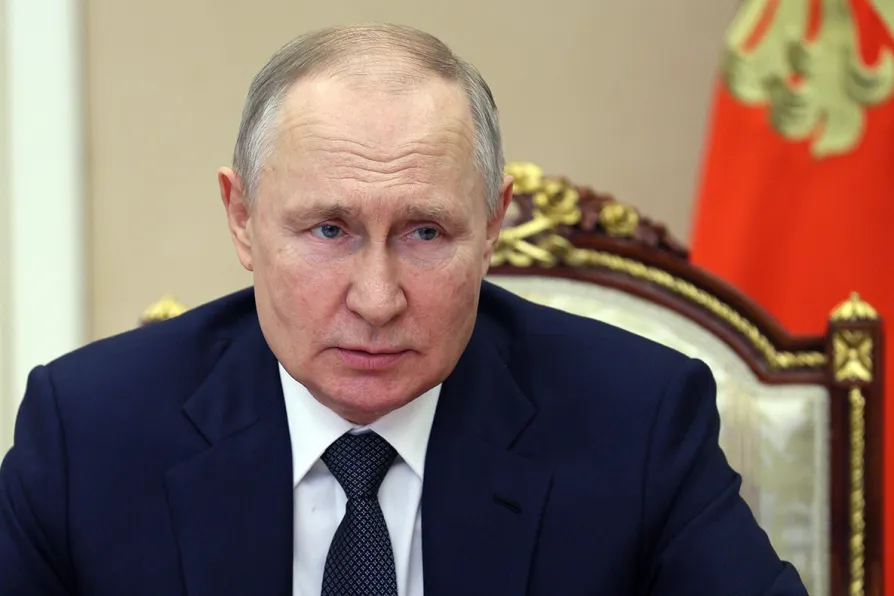
 Russian President Vladimir Putin chairs a Security Council meeting in Moscow



ESCALATION has consequences. Russia’s decision to base nuclear missiles in Belarus reminds us both of the horrific potential of the Ukraine war spreading — and how it could have been prevented in the first place.
A mutual commitment not to deploy nuclear weapons in third countries was one of the proposals Moscow made to Washington in December 2021, alongside a commitment that Ukraine would not join Nato. Despite its loud warnings that a Russian attack on Ukraine was pending, the White House showed no interest in any of the de-escalation suggestions put forward.
Such an idea was “not serious,” said the State Department of a country with nuclear warheads stationed in Belgium, Germany, Italy and Turkey. There would be no concessions.
Vladimir Putin cites Britain’s decision to send depleted uranium weaponry to Ukraine as the immediate provocation to which he’s responding.
It is certainly provocative. Britain is confirming its reputation as the most reckless and unscrupulous state in the whole Nato alliance.
Depleted uranium munitions are radioactive and toxic. Their heavy use in the Yugoslavia and Iraq wars has been linked to birth defects and cancers.
Together with white phosphorus, it has been tied to “the highest rate of genetic damage in any population ever studied” in Fallujah, the city subjected to two brutal US sieges during the invasion of Iraq.
Its toxicity has been accepted by many Nato states. Italy changed the law in 2019 to make it easier for veterans to sue for damages to exposure to depleted uranium when sent to Yugoslavia: 366 Italian soldiers had died with conditions considered linked to the substance. The European Parliament has called for its use to be banned.
Though Britain is not alone in arming Ukraine, its willingness to send armaments likely to poison troops on both sides of the conflict, as well as civilians in the territory being fought over, does make it an outlier.
Ukraine was demanding cluster bombs and phosphorus munitions at the Munich Security Conference last month, but European states demurred, citing their illegality. Following Britain’s latest announcement, the United States was quick to assure Russia it had no intention of sending such munitions to Ukraine.
The use of depleted uranium after what we saw in Yugoslavia and Iraq is disgraceful, and it shames our so-called opposition that the government has not been challenged for sending it to Ukraine.
But the real significance of the nuclear weapons in Belarus lies deeper.
As with the Cuban missile crisis of 1962, it is retaliatory: Moscow is drawing attention to the US missiles stationed close to its borders.
The cold war saw mass campaigns against Europe being turned into a US-Soviet firing range. Women camped out for years at Greenham Common to oppose the siting of US cruise missiles on British soil.
Those missiles were removed in 1991 in line with the Intermediate Nuclear Forces treaty. That treaty has since been ripped up by the US, which is again planning to base nuclear-armed bombers in Britain at Lakenheath in Suffolk.
The dangers today echo those of the cold war. But we are less alive to them.
The mutual withdrawal of missiles from Cuba and Turkey in 1962 defused the Cuban crisis. No such compromise is being discussed today.
And while the Campaign for Nuclear Disarmament is right to protest about US bombers arriving in Lakenheath, the peace movement lacks the numbers to put pressure on politicians to talk disarmament, as it managed to do in the 1970s and ’80s.
Russia’s move will prompt predictable calls for yet another tit for tat escalation from warmongering pundits and MPs.
We can keep going down that road, but so can Moscow: and the logical end point is nuclear war.
Far better to see the Belarus deployment as a wake-up call. We need to negotiate an end to the Ukraine war before it sets all Europe ablaze.

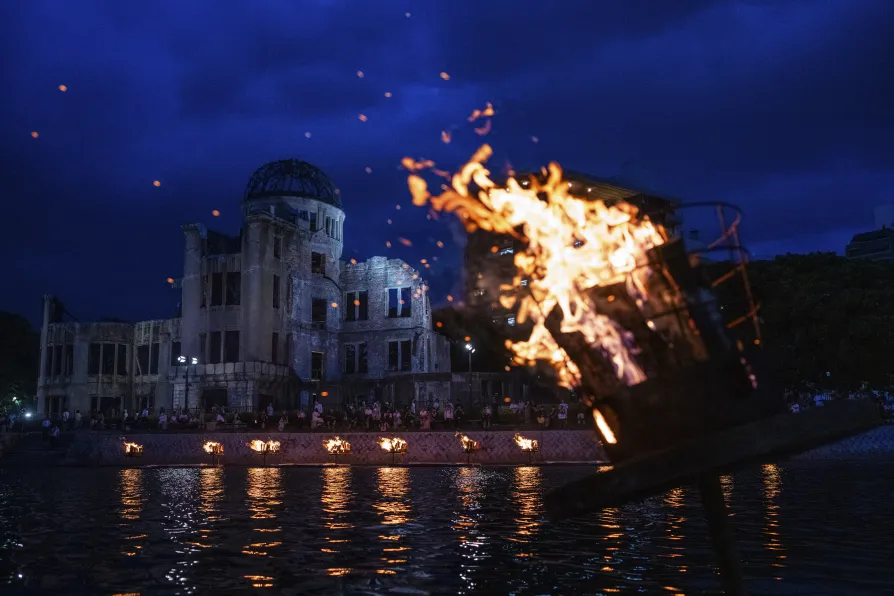
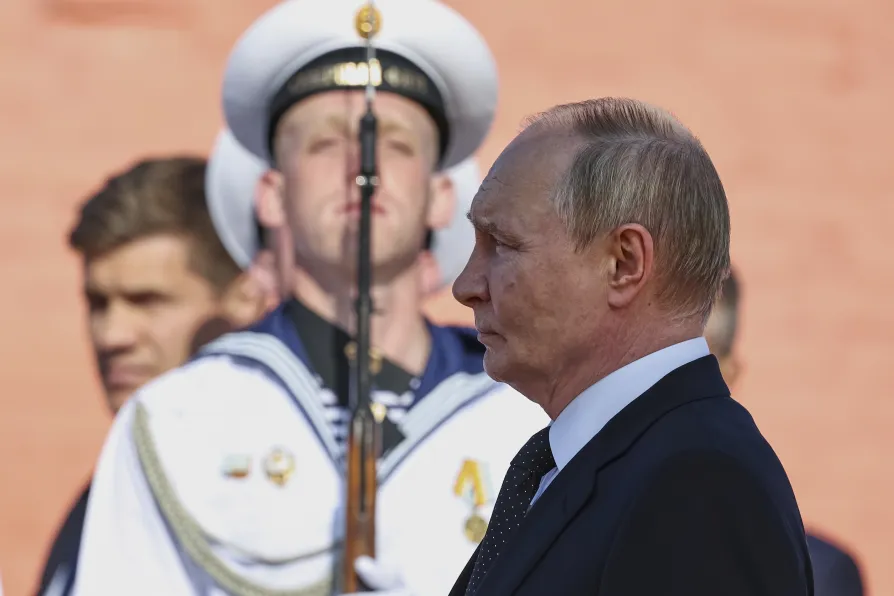
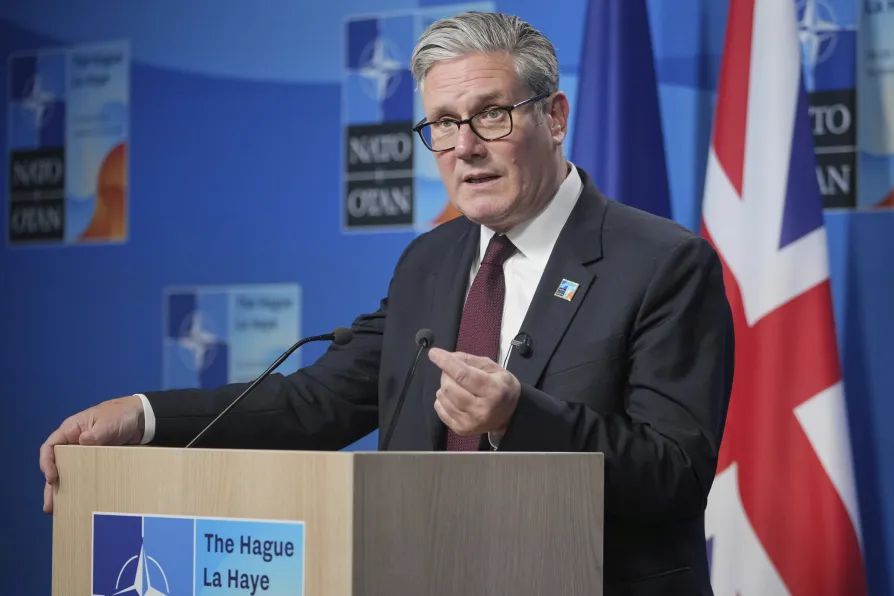
SOLOMON HUGHES explains how the PM is channelling the spirit of Reagan and Thatcher with a ‘two-tier’ nuclear deterrent, whose Greenham Common predecessor was eventually fought off by a bunch of ‘punks and crazies’
