ANGUS REID, ANDY HEDGECOCK and MARIA DUARTE review On The Sea, A Useful Ghost, Brunello: The Gracious Visionary, and Pinocchio Unstrung


 Latest editorial

Books - Non-fiction: Flawed insight on Korean war
KENNY COYLE is left unsatisfied by an analysis of the peninsula's history since the 1950-53 war
RON JACOBS enjoys a great tale, told by a US communist, of the lives of working-class New Yorkers
BRENT CUTLER searches a new history of contemporary Iran for an understanding of the Islamic Republic, finding both interesting detail and glaring omissions
MARIA DUARTE recommends the true story of the remarkable woman who sued Donald Trump for sexual assault not once, but twice
KENNY MacASKILL is disappointed by a polemical, rather than factual, account of the Lone Star State and its political path since the civil war
PAUL DONOVAN is fascinated by the lives of Charles and Mary Bagot, and the insight this biography shines on the morals of pre-Victorian society
GORDON PARSONS appreciates fine performances and a feel for ambiguity, but misses the music of the dialogue


Brothers at War: The Unending Conflict In Korea
by Sheila Miyoshi Jager
(Profile Books, £25)
The core of Sheila Kiyoshi Jager's book analyses the causes and conduct of the Korean war from 1950-53.
But it continues through to the 1990s, dealing with the famine in the North and the recurring military crises and comes right up to the present day with the arrival of the new leaderships in North and South Korea of Kim Jong Un and Park Geun-hye respectively.
Much of the debate on the Korean war has centred on the question "Who started it?" avoiding the more pertinent "What caused it?"
The post-1991 discovery of documents in the Soviet archives showing Kim Il Sung's repeated requests for Stalin's approval for a move southward to reunify the country have been presented as final proof of unprovoked communist aggression.
Yet the Korean war was essentially the eruption of a smouldering civil war, in which foreign intervention was a belated and secondary factor.
As Jager shows, South Korea's dictator Syngman Rhee was champing at the bit to invade the North. When full-scale war did break out on the 38th Parallel in June 1950 it was after years of border clashes and incursions - any one of which could have sparked the greater conflagration - to say nothing of the violent repression of leftists and nationalists throughout the south. The real wonder is that war did not break out earlier.
While the book's sections on the war are solidly researched, they add little in the way of new evidence or novel interpretation, unlike the work of Bruce Cumings whose groundbreaking work on the war over the past two decades toppled the dominant cold war interpretations.
But when Jager moves on to more recent controversies about the North she too uncritically accepts much of the narratives from defectors and self-styled human rights activists without distinguishing between the sadly credible and the utterly implausible.
The main weakness of Jager's approach is that she pays too little attention to the underlying political divisions of pre-1945 colonial Korea, pitting resisters to Japanese rule versus collaborators, which have been a fundamental factor in the antagonism between the two states.
Today North Korea is ruled by Kim Jong Un, heir of resistance leader Kim Il Sung, while the South's president Park Geun-hye is the daughter of South Korean dictator Park Chung-hee, a volunteer officer in Japan's imperial army. These divergent dynasties are not simply playing out a cold war drama but reflect a deeper historical faultline.
Jager's controversial conclusion is that the future of the DPRK is in China's hands and that it will gradually absorb the North's fractured economy, preventing the military threat of a united Korea under US hegemony from coming to fruition.

Similar stories
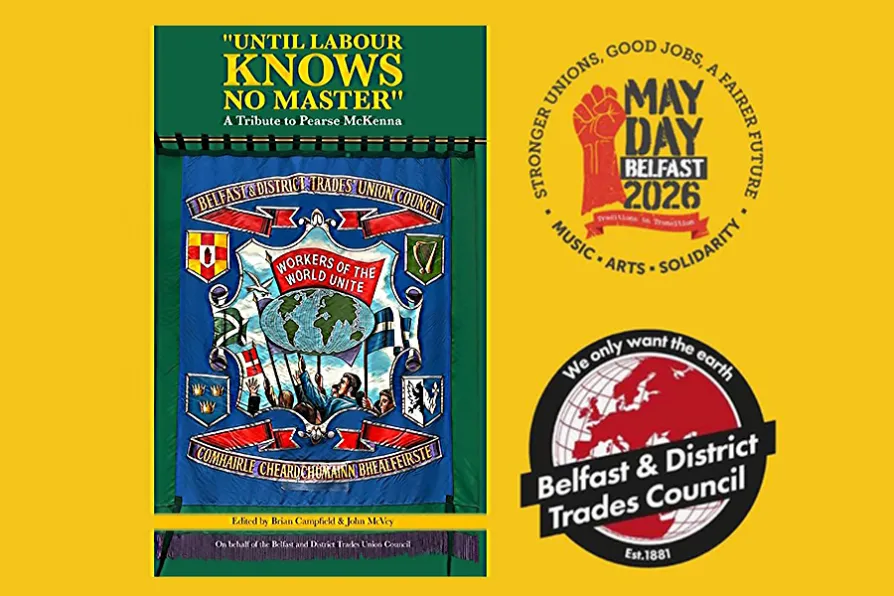
FRANCIS DEVINE introduces a new collection of essays that draws on Pease McKenna’s example to indicate future paths for the movement