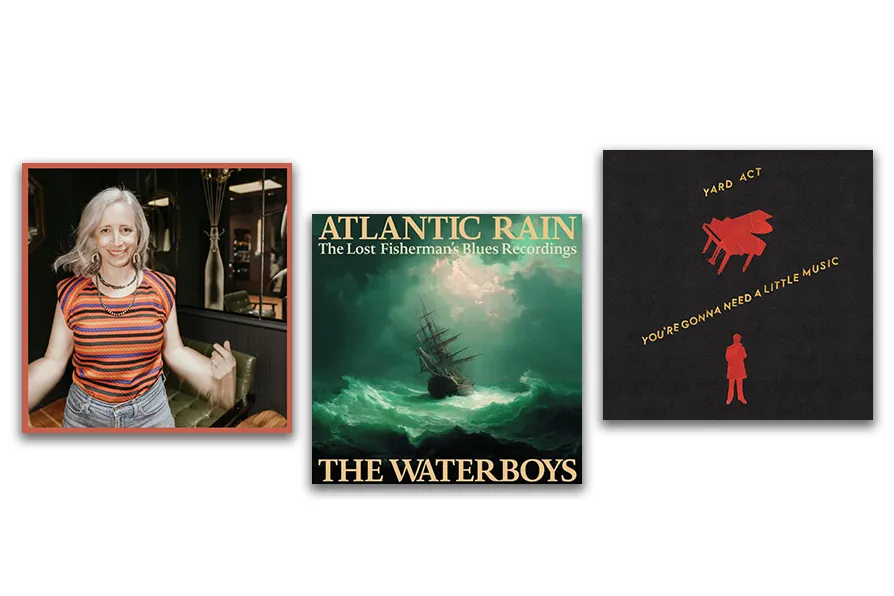
New releases from Laura Veirs, The Waterboys, and Yard Act


 Latest editorial
A nothing-burger that fails to convey historical trauma
FIONA O’CONNOR questions the achievement of this year’s Orwell prize winner for political fiction
 Pic: Free Clip Art/CC
Ron's rages are sincere and — according to his wife — healthily cathartic. But can these splenetic outbursts loosen the grip of capitalism at its most monstrous?
ANGUS REID considers the power of the podcast as a vehicle for consensus building in opposition to mainstream media narratives
GLENN FOSBRAEY recommends a biography worth reading for both existing George Michael fans and those yet to be converted
FRANCIS DEVINE introduces a new collection of essays that draws on Pease McKenna’s example to indicate future paths for the movement
KEVIN DONNELLY and MARIA DUARTE review Shoot the People, The Last One For The Road, Rosebush Pruning, and Moana
JAMES WALSH recommends an exceptional documentary about the experience of Western doctors in Gaza


TRANSCRIPTION, a novel by American writer Ben Lerner, has won the 2026 Orwell Political Fiction Prize. The book examines insidious habits of virtual living, lives mediated through tech algorithms, brains kidnapped by smartphones. Judges said of the book: “As states and individuals struggle to respond to the altered, screen-dominated fabric of our world, Transcription articulates some of the central issues of our time with all the subtlety, indirection, and philosophical resonance which is the hallmark of fiction at its best.”
The Orwell prize for political fiction was set up in 2019. Winners include Anna Burns, Ali Smith, Tom Crewe, and Claire Keegan, whose book Small Things Like These (Faber, 2021) created a male hero for the Magdalen Laundries’s scandal; a scandal of unwanted women and children in which, ironically, not a single male ever was implicated. The prize is awarded for the work which comes closest to George Orwell’s ambition to make political writing into an art.
Having begun as a poet, Transcription is Lerner’s fourth novel. Lerner’s biography reads like a fictional list of glittering prizes one might attach if creating a charmed literary star protagonist. He brings to his novels elements of poetic technique and language facility that refresh the form. His novels are grounded also in conventions of autofiction, psychoanalytical ideas and critical theory. He is the JK Rowling of middlebrow intellectuals, his latest publications keenly anticipated, like Harry Potters were for kids in the 2000s.
But is Transcription a work of political fiction at its best?
The novel is a short, elegant work in three sections. A narrator speaking in the first person returns to his college town, Providence (where Lerner himself studied and was mentored), to record an interview with an elderly mentor, Thomas. Sitting, facing backwards on the train, the spectre of Walter Benjamin is introduced through reference to Paul Klee’s painting Angelus Novus (1920), The Angel of History. A number of satisfying associations are set off by this image, leading to the recollection of a tragic suicide. It promotes the book in hand into a repository of privileged knowledge as the reader travels backwards towards the future.
The plot is advanced by the narrator accidentally wrecking his smartphone. Failing to admit this fact to the austere Thomas, a farcical interview is conducted to a dead recording device. To pit low grade funny/shame against highbrow aesthetic rumination is a motif that runs through all of Lerner’s books. The interview ranges from quantum mechanics to so-called psychoacoustics, ideational waves that circle the core depth-charge of a childhood memory: Hitler’s voice from a radio that could not be made dead.
Emotionally fragile fathers and their offspring — intergenerational transmission — is the dominant theme, mediated through the problematics of a tech-dependent distracted age. Not uncommon phases in child development generate vast quantities of anxiety for respective fathers, all accompanied by literary citations – “hungerkuntsler” anyone?
A child finds unboxing videos “satisfying” in the sense that a breastfed baby is satisfied after a good feed. Lerner has commented that “attention has become the currency of the political sphere”; the mirror concept is distraction. Symmetries abound but memories swirl between characters; one “son” fakes a recording of the patrician Thomas, the real son steals one.
Here, for me, is where the question lies regarding the book’s political achievement. Poetic innovation has been instrumental to literature’s correctives of our man-made catastrophic breakdowns. After the Holocaust, the poet Paul Celan brought the German language back from its obliterative failure. We find a similar redemption of language in TS Eliot’s The Waste Land, or WB Yeats’ writing on the Irish nationalist revolution, that renewed the collective imagination. Anna Burns’ Milkman invented a language for civil violence during The Troubles.
Poetry works obliquely, metaphors detonate meanings at a remove; this novel draws on opacity and indirection, as the Orwell prize judges note. But, can such evasive knowingness meet the immense darkness lowering in current times?
“The meaning is in the cut. The splice. So what you cut is present, the dark matter,” says the nonagenarian, Adorno-adjacent, Thomas. He has chosen to “cut the line” of his life at Dignitas. This is a first world privilege of choice in contrast to tens of thousands killed in the American-tech-facilitated atrocities in Gaza.
Combing the texture of the novel for such cuts, the array of sparkling prose conveys a middle-class US cotton-balled in tech as junk-nurture. The lethality underpinning this virtual display remains unnamed.

Similar stories

LEO BOIX reviews two powerful Latin American novels in which myth and crime fiction expose the deadly consequences of patriarchy, clandestine abortion and state violence
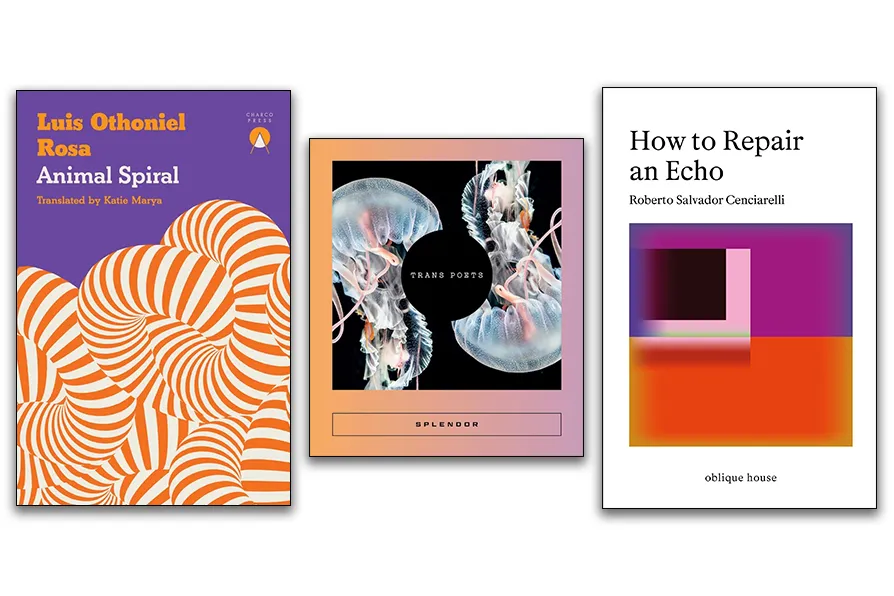
From post-human revolution in Puerto Rico to trans poetics and queer mythmaking, these three books that imagine new ways of being together
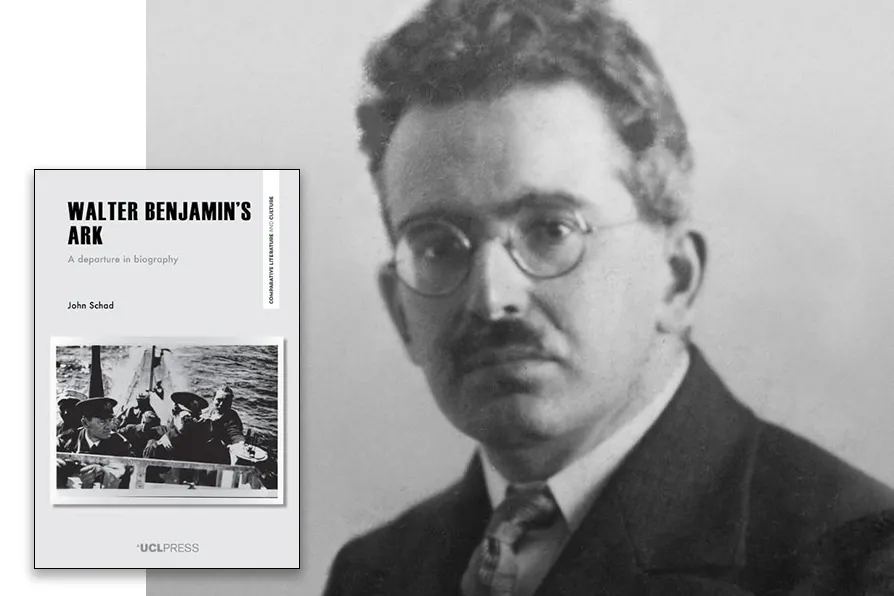
GORDON PARSONS is intrigued by a biography of the Marxist intellectual and author, made from the point of view of his son
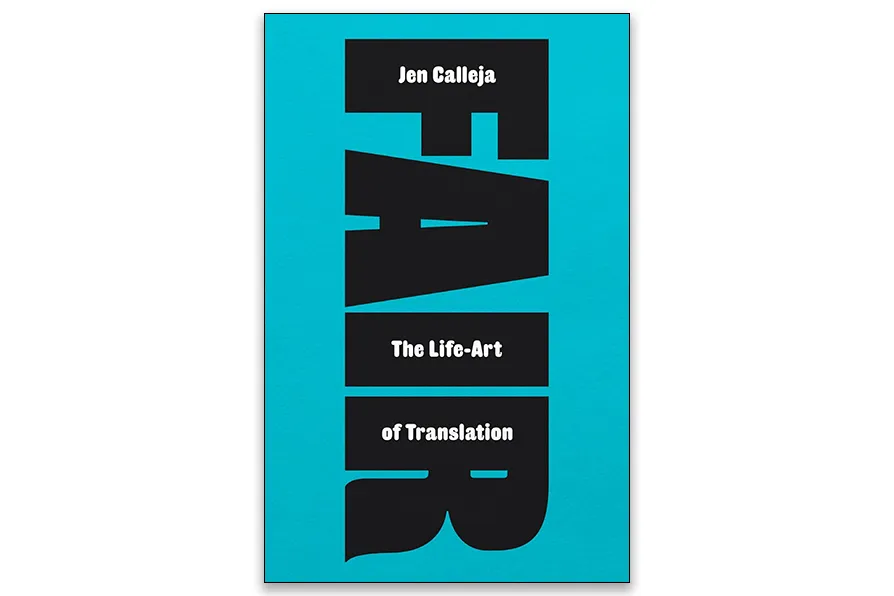
KEN COCKBURN relishes the memoir of a translator, but wonders whether the autobiography underlying the impulse would make a better book