JAMES WALSH recommends an exceptional documentary about the experience of Western doctors in Gaza


Should I stay or should I go?
MARJ MAYO sees the contemporary relevance of this account of the consequences of a society’s accommodation with evil
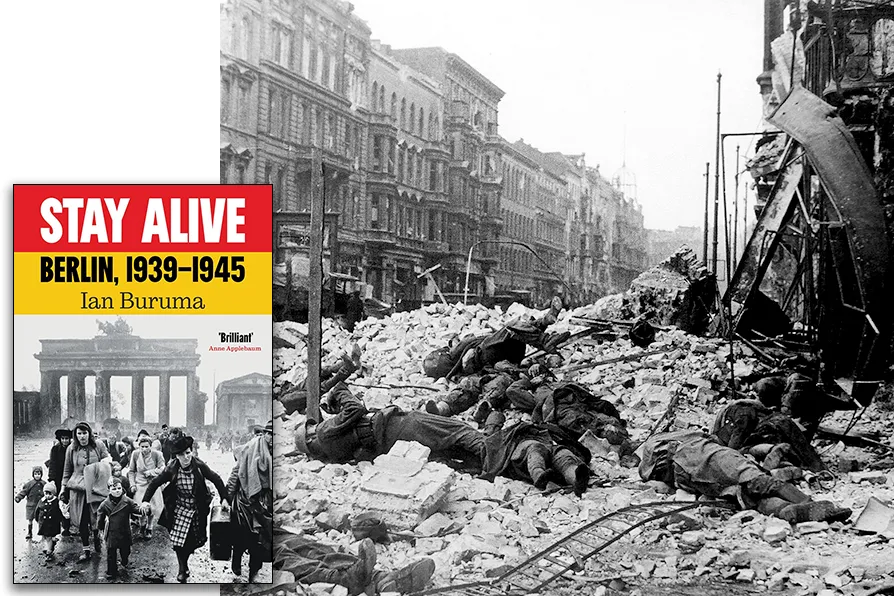
 The bodies of dead German soldiers on a pile of stones on Friedrichstrasse in Berlin, 1945 [Pic: CC BY-NC-SA @ Museum Berlin-Karlshorst]

KEVIN DONNELLY suggests that the task of transforming cultural spaces is far from over and that photography still has a key role to play
RITA DI SANTO talks to Scottish-Irish filmmaker MARK COUSINS about his new panorama of world cinema The Story of Documentary Film
ALAN MORRISON welcomes a new collection from the most imaginative and committed ecopoet of our time
CAL McBRIDE relishes the lyrical truth of an unstable identity in an over-tidy and conventional social realist treatment
New releases from Shearwater, Florry, and Navy Blue
CHRIS SEARLE welcomes a startling vision of contemporary Newport from a veteran photographer of the British working class


Stay Alive: Berlin, 1939-1945
Ian Buruma, Atlantic Books, £22
AS Ariel Dorfman, the Chilean playwright reflects, this book reminds us how, in our own time, the temptation to look away from persecution and injustice has terrifying consequences. Although Stay Alive focuses on Berlin during the second world war, Buruma points to the contemporary relevance of a society’s accommodation with evil, one compromise after another. The potential parallels scarcely need further emphasis.
Stay Alive draws upon original materials, letters, diaries and interviews with some elderly survivors of those extraordinary Berlin days. In addition, Ian Buruma draws on his father Leo’s time in Berlin as a Dutch student, forced to work in a factory that made brakes and machine guns, from 1943 to 1945. These insights give the book particular interest – although Leo’s own experiences only really emerge towards the end, from 1943 onwards.
The book’s title comes from the final stages of the war, when Berliners came to say goodbye to each other by wishing them the good fortune to “Stay Alive” amongst the surrounding chaos and destruction.
The horrors of war are only too clearly described, particularly the horrors experienced by the Jewish population. Some even managed to survive the war by living “underground,” supported by sympathisers who were prepared to take the risks that this entailed. But other Berliners were less courageous or even actively hostile.
Buruma explores the complexity of Berliners’ responses, those who resisted, those who made compromises, and those who actively supported the Nazi regime, along with those who tried to remain loyal to their country whilst opposing Nazism.
The contradictions emerge with particular clarity with respect to the arts and those involved with the arts. First there were contradictions and dilemmas for artists themselves, whether to leave — the choice made by writers Brecht and Thomas Mann for example — or whether to stay and face continuing pressures to make compromises in order to survive and to work whilst avoiding moral and artistic corruption, the dilemmas faced by the conductor Furtwangler for example.
Ironically, Buruma reflects, Furtwanger was treated very badly, after the war, compared with others who had been far more complicit in the crimes of Nazism.
There were contradictions too, in the ways in which the arts survived, and were indeed used, for the purposes of Nazi propaganda. Films were promoted to build and maintain morale. A comedy was even produced to divert attention from the disastrous (from the Nazi perspective) defeat at Stalingrad in 1942.
In the early days of the war Berliners had continued to enjoy visits to theatres, cinemas and concert halls. Despite the subsequent shortages and the horrors of the air raids, Leo Buruma reported attending a concert of classical music not so long before the fall of Berlin. These leisure pursuits continued, to some extent at least, along with the leisure pursuits of high ranking Nazis, who enjoyed fine dining, washed down with champagne from occupied France, until the latter stages of the war.
In summary, the book would have been strengthened by further discussion of Leo’s experiences and dilemmas as an anti-Nazi, although by no means a hater of Germans, more generally. He had faced such dilemmas right from the start; whether to work for the enemy or risk potentially fatal reprisals against his father, for example. Further examples of his experiences and dilemmas would have added to the book’s depth – and its potential relevance for more recent times.
This is not an analytical account of the structural factors that underpinned the rise and subsequent fall of Nazism in Berlin. The focus is on individuals and groups and how they coped in these extraordinary circumstances. Nor are the materials entirely original; the author draws from previously published accounts as well as from his own interviews and from materials from his father – which could usefully have been explored more fully, as already suggested.
But this is a very readable account of Berliners’ own experiences in the exceptional circumstances of the second world war. The challenges of the choices to be faced; resistance, or compromise after compromise, complicity and eventual corruption, have only too much relevance in the context of amoral authoritarianism, wherever and whenever encountered.

Similar stories
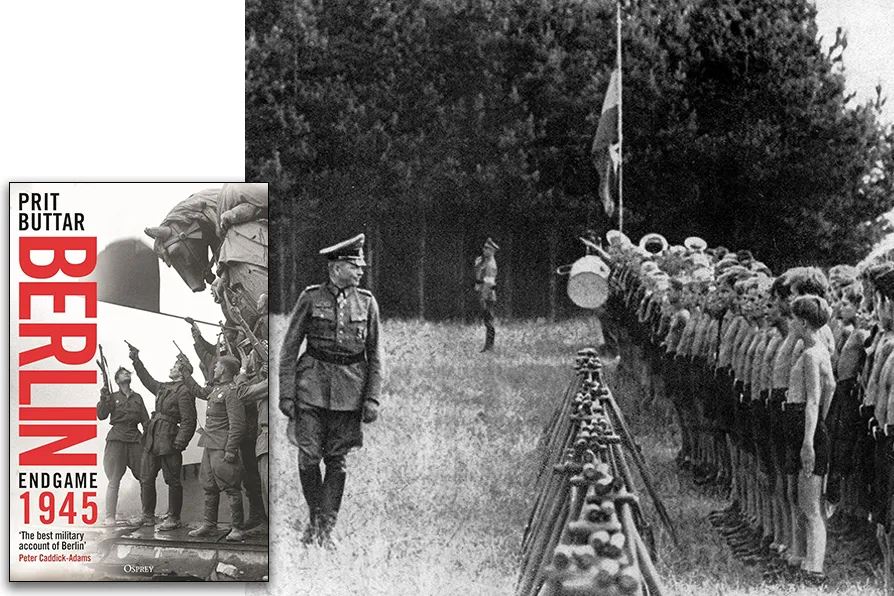
WILL PODMORE admires an account of the liberation of Berlin that overthrows the conventional US army-inspired account
MARJORIE MAYO recommends a highly useful guide to the benefits and hazards of different approaches to immigration

MARJ MAYO recommends a well illustrated and very positive account of an extraordinary period in local government history
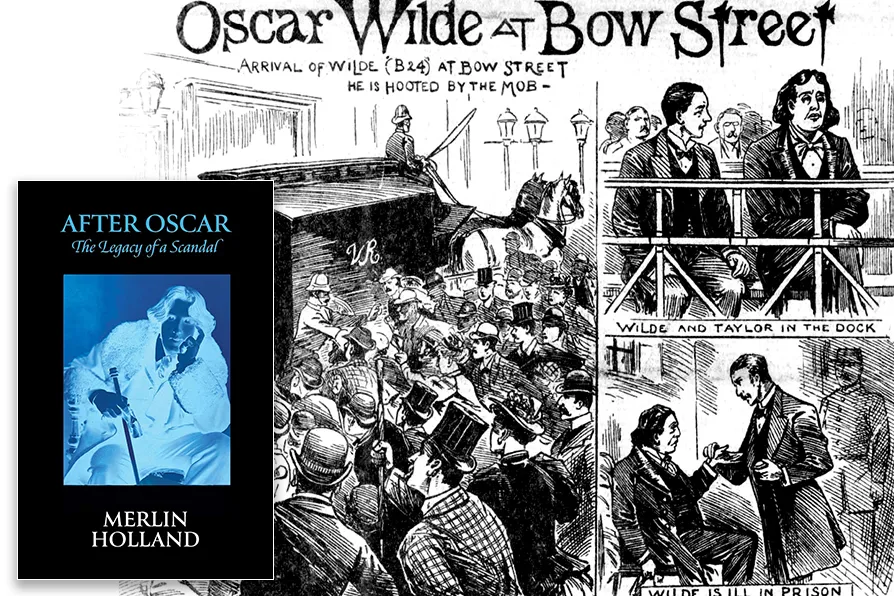
MARJORIE MAYO welcomes an account of family life after Oscar Wilde, a cathartic exercise, written by his grandson